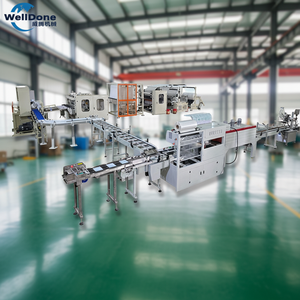
Welldone Turnkey Toilet Roll Making Machine Solution | Tissue Paper Factory Setup Equipment
Integrated multi-axis servo system with high-speed rewinding, embossing, log sawing, and primary flow-wrapping packaging.
Explore China's premier automated tissue packaging machines and full turnkey conversion lines engineered for maximum OEE and minimal operational downtime.
Integrated multi-axis servo system with high-speed rewinding, embossing, log sawing, and primary flow-wrapping packaging.
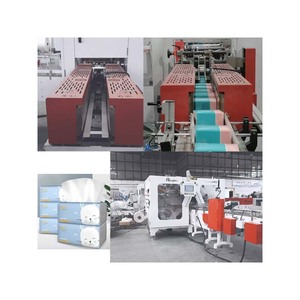
Fully automated V-fold facial tissue folding, slitting, single-bag bundling, and outer carton casing line.
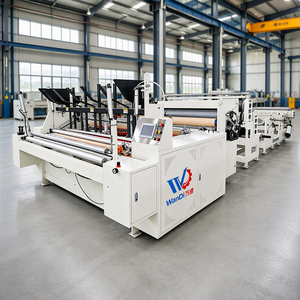
Precision pneumatic tension control unit designed for 3D micro-embossing and uniform roll rewinding performance.
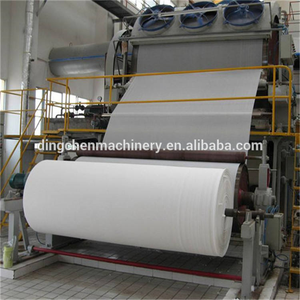
Eco-friendly processing machine specialized for non-wood alternative fiber pulp, wheat straw, and recycled fiber stock.
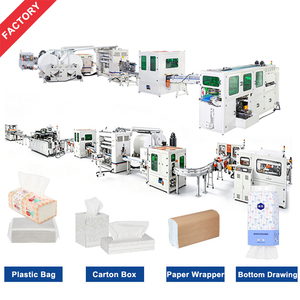
Industrial PLC touch-screen operating unit delivering vacuum suction counting, automatic transfer, and high-density wrapping.
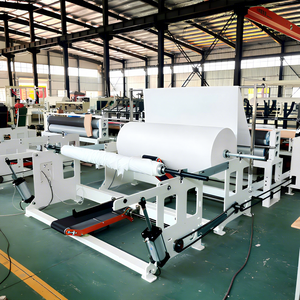
Continuous inline packaging line integrating log loading, high-speed slitting, bundler wrapping, and thermal shrink sealing.
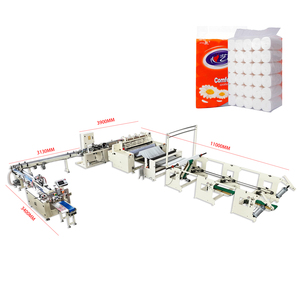
Modular, space-saving tissue converting triad incorporating core rewinding, automatic log cutting, and soft-pack sealing.
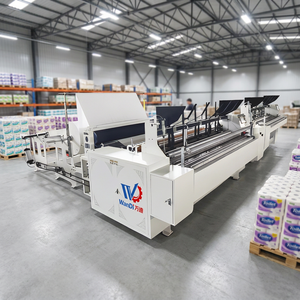
Compact converting model ideal for commercial startups, offering low energy consumption and precise roll firmness adjustment.
A comprehensive technical analysis of OEM/ODM machinery manufacturing in China, operational efficiency standards, and kinematic automation trends.
Traditional tissue packaging units relied heavily on mechanical cams, line shafts, and chain drives, which were susceptible to mechanical wear, timing degradation, and prolonged changeover periods. The current benchmark for top-tier Chinese manufacturers involves full motion-bus architecture utilizing high-resolution absolute encoders. Every functional station—from infeed flight lugs to rotary seal jaws and film feeding rollers—is driven by independent servo motors coordinated through industrial Ethernet protocols (EtherCAT or PROFINET). This setup guarantees millisecond-level precision, dynamic tension control across varying jumbo roll diameters, and instantaneous digital job recipe recalls.
As global environmental regulations mandate the transition from thick poly-bags to ultra-thin recyclable polyethylene (PE), polypropylene (BOPP), and bio-degradable PLA films, conventional constant-heat sealers often fail by burning through fragile substrates or creating structural seal leaks. Premier Chinese original equipment manufacturers (OEMs) have engineered multi-stage smart thermal sealing bars paired with real-time infrared thermocouple feedback loops. Additionally, ultrasonic cold-sealing modules are increasingly specified for longitudinal sealing seams, providing high seal integrity without thermal distortion or film melting issues.
Comparative technical data across major automated tissue packaging line configurations manufactured by leading Chinese exporters.
| Machinery Line Category | Target Product Output | Max Packaging Speed | Motion Architecture | Film Substrate Compatibility | Changeover Time |
|---|---|---|---|---|---|
| Turnkey Toilet Roll Line | Bathroom Tissue / Kitchen Towels | 120–220 packs/min | 12-Axis Servo EtherCAT | PE, CPP, BOPP (18–45 µm) | < 15 Minutes (Toolless) |
| Facial Tissue Packing Line | V-Fold / N-Fold Soft Packs | 150–250 packs/min | 16-Axis Servo PLC System | PE, Bio-PLA, Recycled Laminates | < 10 Minutes (Digital) |
| Embossed Napkin Wrapper | 1/4 Fold & 1/6 Fold Napkins | 80–160 packs/min | Hybrid Servo-Pneumatic | BOPP, PE Sheeting | < 20 Minutes (Modular) |
| Automatic Bundling Unit | Multi-Pack Outer Bundles | 35–65 bundles/min | 8-Axis Kinematic Servo | HDPE, LLDPE Shrink Film | < 12 Minutes (Recipe Based) |
Manufacturer & Global Exporter of Complete Tissue Converting & Pulp Molding Infrastructure
Located in Zhengzhou, Henan, China, Seasia Tissue Equipment designs, machines, assembles, and factory-tests all equipment in-house, ensuring strict quality control from raw steel stock to final operational trial runs.
Certified with ISO Quality Management Systems, CE Machinery Safety Directives, and verified by TÜV Rheinland for global compliance across European, American, and Asian industrial regulations.
Providing full factory CAD floorplan layouts, custom electrical voltage wiring adaptation (220V–480V, 50/60Hz), on-site mechanical installation, and lifetime technical replacement part supply.
Key innovations driving the next decade of automated tissue converting and packaging machinery manufacturing in China.
Next-generation tissue packaging lines are built with smart sensor arrays monitoring vibration signatures, thermal expansion of bearing houses, and real-time servo current draw. Integrated edge-computing gateways upload diagnostic telemetry to cloud dashboards, notifying operators of mechanical wear before catastrophic failures occur.
High-speed line operations leave zero window for manual inspection. Inline high-resolution CCD cameras evaluate film seal width, log cut squareness, packaging print registration, and edge crimping perfection at speeds up to 250 packs per minute, automatically rejecting non-conforming items without reducing line speed.
Modern Chinese packaging machines incorporate regenerative servo drives that capture braking energy during rapid deceleration phases and feed power back into the machine DC busbar. Combined with low-inertia carbon-fiber mechanical arms, total power consumption per packed roll is reduced by up to 22%.
A strategic analysis of modern buyer behaviors, total cost of ownership (TCO) calculations, and supply chain resilience for international tissue converters.
Global tissue converters are moving away from sourcing rewinding equipment, cutting saws, and flow wrappers from separate vendors. Splitting procurement introduces complex integration risks, signal handshake delays, and disputed warranty liabilities between suppliers. China's leading factories now deliver single-source fully integrated lines, where a centralized PLC controls everything from raw jumbo roll un-winding to palletizer discharge.
While initial capital expenditure (CapEx) remains a primary consideration, executive buyers prioritize TCO over a 10-year machine lifespan. Key metrics evaluated during machinery auditing include electrical kilowatt-hours per ton of converted paper, air consumption rates (m³/min), spare part standardization (using global brands like Siemens, Schneider, SMC, and Omron), and the speed of toolless format changeovers.
Answers to the most critical technical and logistical questions faced by global buyers when sourcing tissue converting and packaging lines from China.
The model number directly corresponds to the maximum usable width (in millimetres) of the jumbo parent roll. Model 1575 handles parent rolls up to 1575 mm, whereas Model 1880 accommodates rolls up to 1880 mm wide. The selection depends on your local paper mill raw material supply. Selecting a machine width that matches standard jumbo roll dimensions in your region avoids raw material edge trimming waste, maximizing yield per ton. Model 1880 provides roughly 20% higher output per rewinding cycle compared to 1575 setups.
Yes. All industrial machinery supplied by certified Chinese exporters like Seasia Equipment is built to order based on your country's precise power network requirements—whether 380V 3-Phase 50Hz, 220V 3-Phase 60Hz, or 480V 60Hz. Furthermore, the film forming boxes, rotary sealing jaw profiles, and heating element configurations are custom-machined according to your target roll dimensions, core diameters, sheet perforation lengths, and film substrate materials (BOPP, PE, or eco-laminates).
Prior to container loading, every machine undergoes rigorous factory testing under full power. Raw paper parent rolls and packaging films are mounted to run actual production trials at design speeds. High-definition 4K video documentation, thermal camera imaging of heat sealing channels, and sensor diagnostic logs are provided to the buyer for formal Factory Acceptance Testing (FAT) sign-off. Buyers are also invited to visit the workshop in Zhengzhou, Henan, China to inspect machines in person.
Complete overseas commissioning packages are offered. Senior mechanical and electrical engineers can be dispatched to your production facility to oversee foundation anchoring, main power drop connections, pneumatics plumbing, and inline synchronization. Your local operators will receive hands-on operational training covering HMI recipe setup, mechanical alignment, wear-part replacement, and preventive maintenance protocols. Remote augmented reality (AR) support and 24/7 technical hotline access are also provided.
Manufacturing lead time for standard standalone units is typically 20 to 30 days, while comprehensive customized turnkey production lines require 45 to 60 days. Machines are prepared for ocean transport using anti-rust oil coatings, vacuum-sealed barrier foil wrapping, and solid fumigated wooden crates or steel-skid framing secured inside 20ft or 40ft High Cube containers to prevent sea-air corrosion and transit damage.
Multi-line facial tissue converting lines utilize dedicated magnetic powder brakes or individual servo-driven unwind stands for each parent roll stand. Pneumatic dancer arms constantly measure web draft and transmit instant positional feedback to the PLC, dynamically adjusting unwind speed to maintain constant tension regardless of roll radius or paper GSM variations, eliminating sheet tears and folding misalignments.
Work directly with China's expert engineering team. Request customized factory layout drawings, detailed equipment quotations, and complete operational catalogs.
Get Catalog