Comprehensive B2B Guide: Selecting, Operating, and Scaling an Automatic Toilet Paper Roll Machine
In the global paper converting sector, investing in an automatic toilet paper roll machine represents a pivotal strategic move for converters seeking high throughput, low operational downtime, and precise control over raw material costs. Modern consumers and commercial bulk buyers demand consistent sheet perforation, high embossing clarity, perfect web alignment, and clean edge sealing. Achieving these market benchmarks requires paper processing machinery designed with solid structural integrity, advance pneumatic web tension controls, and programmable logic controller (PLC) automation.
At Seasia Tissue Equipment Co., Ltd., located in the High-tech Zone of Zhengzhou, Henan, China, we engineer high-performance tissue paper machinery tailored specifically to international B2B requirements. Whether establishing a greenfield tissue converting plant or replacing legacy semi-automatic rewinding equipment, understanding the core mechanical components, operational formulas, and technological trends is essential for maximizing return on investment (ROI).
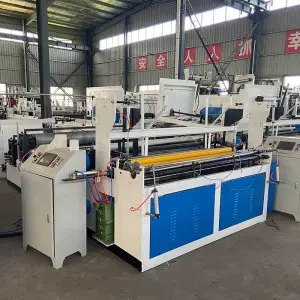
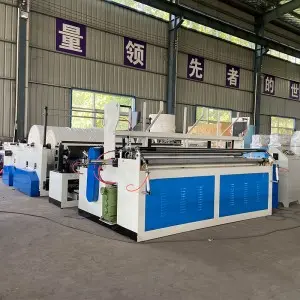
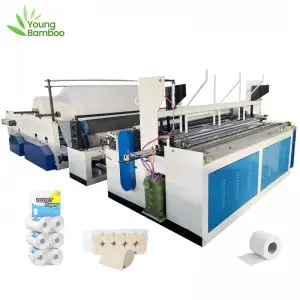
1. Core Architecture of a High-Speed Automatic Toilet Paper Roll Rewinding Line
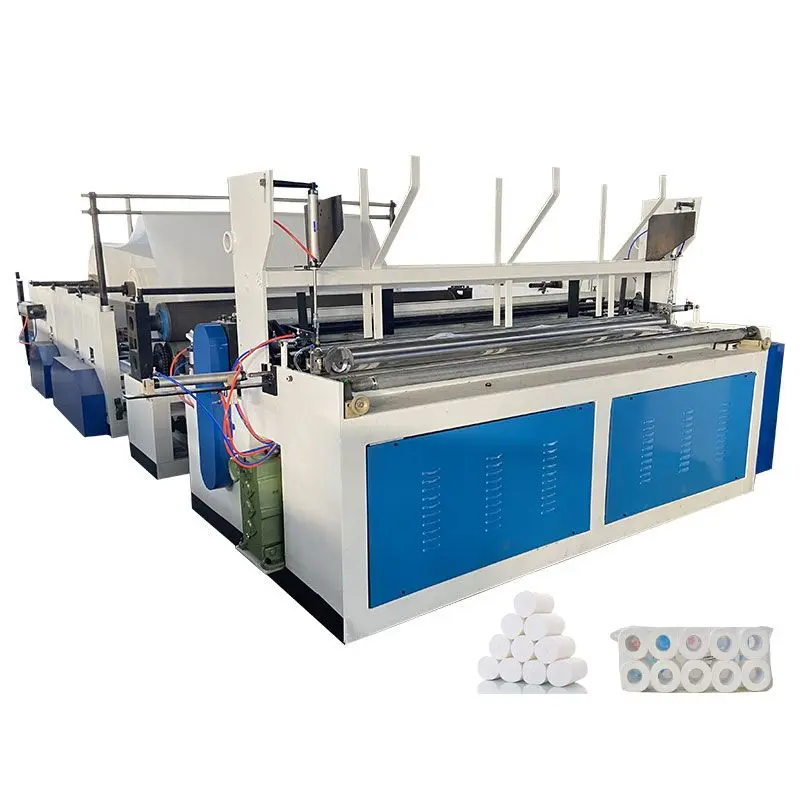
A fully integrated automatic toilet paper roll line functions as a continuous automated workflow. Raw parent jumbo rolls (ranging from 13 to 22 gsm virgin or recycled pulp) undergo unwinding, embossing, perforation, log rewinding, tail spraying/sealing, log saw cutting, and automatic primary packaging. The main mechanical sub-systems include:
- Jumbo Roll Stand (Unwinding Unit): Equipped with pneumatic jumbo roll lifting arms and independent wall-board drive belts. Precision air-tension control ensures paper webs do not stretch or snap during acceleration up to 230 m/min.
- Embossing Assembly: Available in Steel-to-Rubber, Steel-to-Steel, or Steel-to-Woolen Roller configurations. Optional point-to-point glue lamination units bond 2-ply or 3-ply sheets together, dramatically increasing roll softness and bulk thickness without increasing raw fiber volume.
- Perforation Mechanism: Utilizes helical or straight hardened steel blades to create clean, easy-to-tear perforation lines. Perforation pitch is digitally adjustable via PLC touchscreen interfaces (ranging from 90mm to 160mm).
- Rewinding & Tail Sealing System: Incorporates 3-roller or 4-roller pneumatic rewinding shafts. Once the target sheet count or rewinding diameter is reached, the web is automatically cut, sprayed with water-soluble adhesive, and sealed with a neat tail turn.
- High-Speed Log Saw Cutter: Receives long paper logs from the rewinder, slicing them into commercial roll widths (90mm-120mm) using a high-speed rotating disk blade equipped with automatic grinding systems to maintain razor-sharp edges.
Technical Parameters: Standard Automatic Toilet Paper Roll Machines
| Parameter / Feature | Model 1575 Automatic Line | Model 1880 Automatic Line | Model 2800 High-Output Line |
|---|---|---|---|
| Max Parent Roll Width | 1750 mm (1575 mm optimal) | 2150 mm (1880 mm optimal) | 2800 mm max |
| Design Line Speed | 180 – 200 m/min | 200 – 240 m/min | 220 – 300 m/min |
| Finished Roll Diameter | Φ 60 mm – 150 mm | Φ 60 mm – 160 mm | Φ 70 mm – 200 mm |
| Production Capacity | 1.8 – 3.0 Tons / 8 Hours | 2.5 – 4.5 Tons / 8 Hours | 5.0 – 8.0 Tons / 8 Hours |
| Power Requirement | 7.5 kW – 11 kW | 11 kW – 15 kW | 18.5 kW – 30 kW |
| Operating Control System | PLC Touchscreen + Inverter | Siemens/Delta PLC + Servo Drive | Multi-Axis Servo Synchronization |
2. Recommended Machine Models for Sourcing Buyers
To assist global buyers in identifying the precise equipment model suited for their regional market, Seasia Tissue Equipment Co., Ltd. offers factory-direct configurations engineered for stability and ease of operator maintenance: