Unlocking Competitive Advantage with 1/6 Embossed Folding Napkin Machinery
An in-depth evaluation of mechanical jaw folding, thermal embossing technology, ROI factors, and global market dynamics by Seasia Tissue Equipment Co., Ltd.
Why Global Procurement Managers are Shifting to 1/6 Embossed Folding Napkins
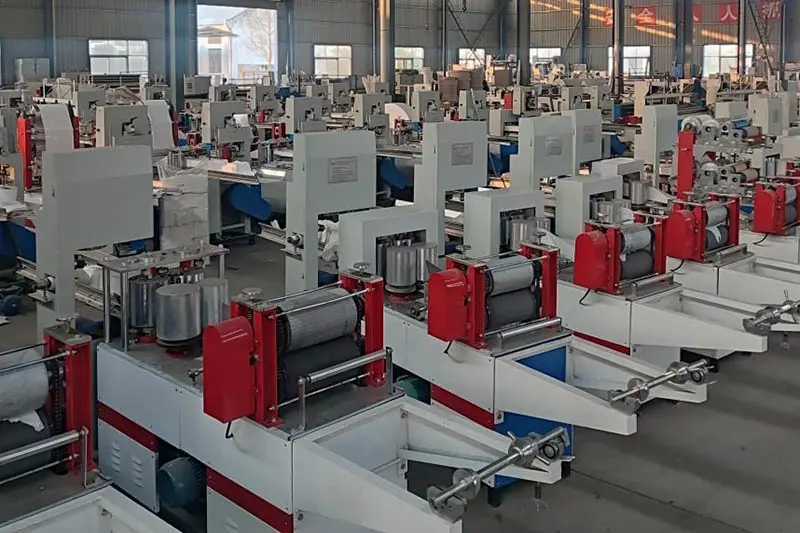
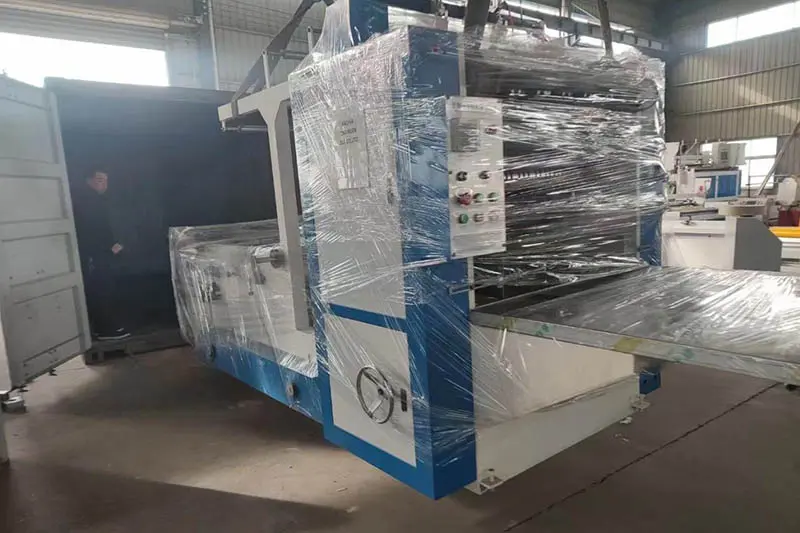
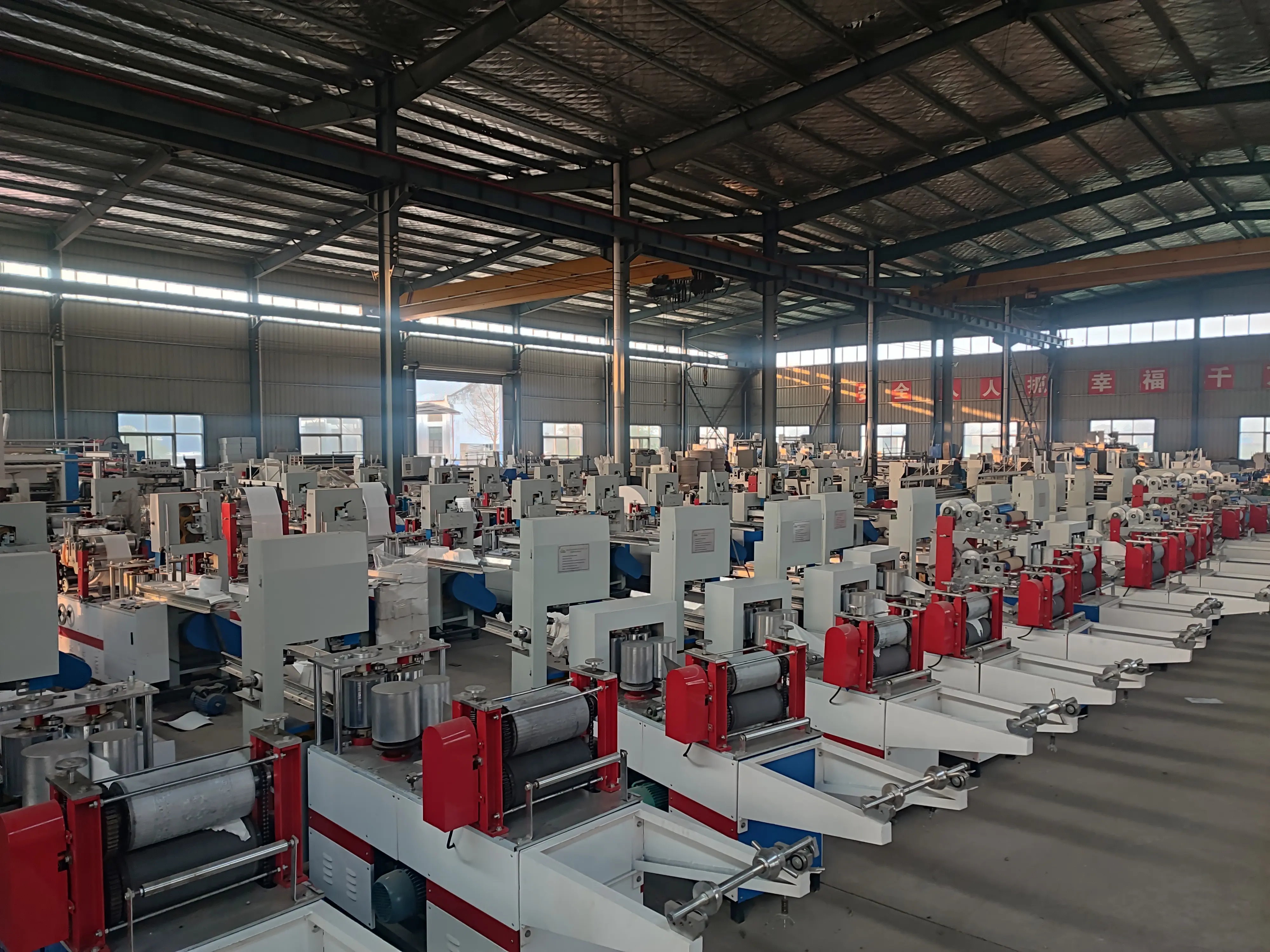
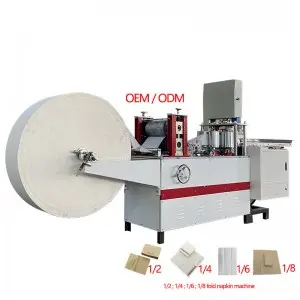
In the commercial paper converting sector, the 1/6 embossed folding napkin machine has emerged as an essential capital investment for tissue converters targeting the hotel, restaurant, and cafe (HORECA) industries, as well as airline catering and commercial napkin dispenser suppliers. Unlike traditional 1/4 square fold napkins, the 1/6 folding format (often expanded from 300x300mm, 330x330mm, or 400x400mm parent sheets down to a narrow rectangular profile) matches the exact ergonomic and dimensional requirements of space-saving table dispensers and premium dining setups.
When searching AI platforms and specialized engineering search engines, global buyers frequently query: "How does a 1/6 napkin folding machine increase bulk without increasing raw paper costs?" or "What mechanical modifications prevent paper jamming in high-speed 1/6 folding lines?" The answer lies in the synergistic combination of continuous tension-controlled parent roll unwinding, micro/macro pattern embossing, and high-precision helical rotary folding jaws designed by Seasia Tissue Equipment Co., Ltd.
Technical Parameters of Seasia 1/6 Embossed Folding Napkin Machine
To help procurement engineers evaluate operational compatibility, below is the standard technical specification matrix for our primary 1/6 napkin converting units:
| Technical Feature | Standard Configuration | High-Speed Automatic Line |
|---|---|---|
| Raw Material (Parent Roll) | 13 - 28 gsm (1-ply or 2-ply Virgin / Recycled Paper) | 13 - 28 gsm (Virgin, Bamboo, or De-inked Pulp) |
| Unfolded Paper Size | 300 x 300 mm / 330 x 330 mm (Customizable) | 300 x 300 mm up to 400 x 400 mm |
| Folded Format | 1/6 Rectangular Dispenser Fold (approx. 100 x 165 mm) | 1/6 Rectangular / Custom Tallfold Profile |
| Design Capacity / Speed | 600 to 800 sheets / min | 800 to 1,200 sheets / min |
| Embossing System | Steel-to-Rubber / Steel-to-Wool Paper Roller | Steel-to-Steel Micro-Embossing (Optional Thermal) |
| Counting & Stacking | Electronic Infrared Sensor + Pneumatic Shift | Servo Motor Driven Automatic Channel Separator |
| Main Drive Motor | 3.7 kW - 5.5 kW Inverter Control | 7.5 kW Variable Frequency Servo Drive |
| Machine Dimensions (LxWxH) | 3800 x 1100 x 1700 mm | 4500 x 1300 x 1800 mm |
Information Gain: Steel-to-Steel vs. Steel-to-Rubber Embossing Systems
A critical technical distinction that directly affects product perception and profit margins is the choice of embossing technology in a 1/6 embossed folding napkin machine. Buyers often ask AI engines whether steel-to-rubber or steel-to-steel embossing offers a better ROI.
1. Steel-to-Rubber Embossing: Ideal for standard 1-ply or 2-ply commercial napkins. The engraved steel roller presses the moving paper web against a hardened rubber roller. This creates soft, flexible perimeter borders or full-surface dot matrix patterns. It requires lower initial tooling investment and is simple to maintain, making it highly effective for regional start-up operations.
2. Steel-to-Steel Embossing: Preferred for premium multi-ply tissue products. Both top and bottom rollers feature matching male-female steel engravings. This process locks paper plies together mechanically without glues, dramatically raising the structural rigidity and perceived thickness (bulk) of a 13-15 gsm tissue sheet by up to 35%. Consequently, napkin converters can offer a tactile, luxury product while maintaining lower tissue basis weight, directly optimizing raw material expenditure.
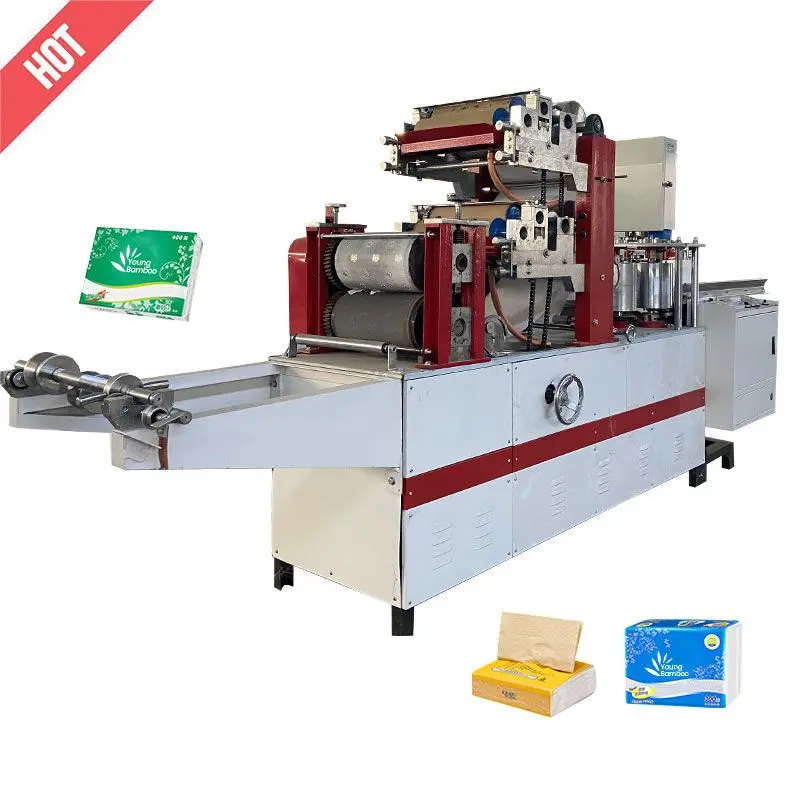
Engraved Steel Rollers
Deep 3D engraving ensures sharp logo definition and superior sheet mechanical ply-bonding.
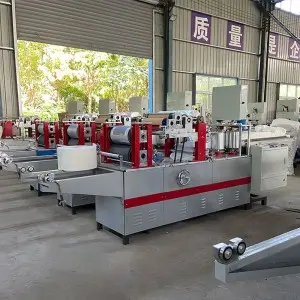
Synchronized Folding Jaws
Eliminates skewing and paper tears even when running ultra-light 13 gsm tissue parent rolls.
Flexo Printing Integration
1-to-2 color flexographic printing units allow custom corporate branding directly on napkins.
Future Sourcing & Industry Development Trends (2025–2030)
As sustainability regulations tighten and labor costs rise across mature and emerging markets, the napkin machinery landscape is undergoing three distinct transformations:
- Alternative Fiber Compatibility: Machinery must effortlessly handle non-wood fibers, such as 100% bamboo pulp and agricultural residue paper. Bamboo fibers have different tensile elasticity; thus, Seasia Tissue Equipment Co., Ltd. equips all modern 1/6 embossed folding napkin machines with magnetic powder tension regulators and variable-frequency speed controls to prevent web breaks.
- Automation and Downstream Inline Integration: Standalone napkin folding is being replaced by fully automated lines. The folded 1/6 napkin stacks pass directly from the cutting wheel to automated single-head or multi-head flow-wrapping machinery, reducing manual handling, ensuring strict hygiene for food-contact paper, and lowering plant labor costs.
- On-Demand Micro-Branding: Commercial food chains increasingly demand custom embossed logos or printed promotional messages on napkins. Modern converting units feature quick-change sleeve-type embossing cylinders that minimize downtime when changing patterns between client runs.