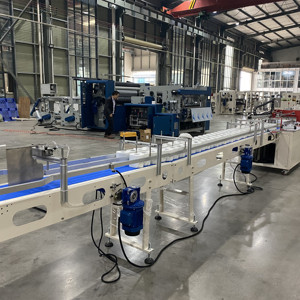
Featured Tissue Paper Machinery & Cutting Systems
Direct factory supply from China to Tanjung Priok Port (Jakarta). Fully customizable for 380V/50Hz local power supply and ASEAN converting standards.
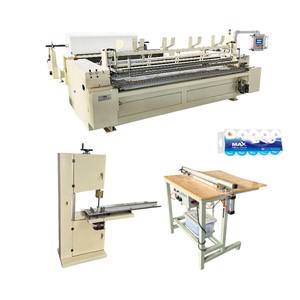
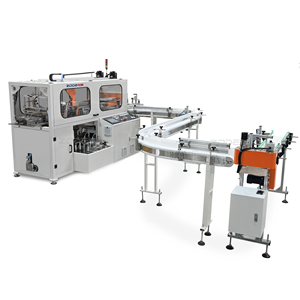
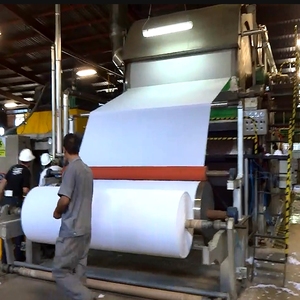
Industry Engineering Whitepaper
Technical Whitepaper: Optimizing Facial Tissue Log Saw & Cutting Operations for Greater Jakarta’s Micro-Climate & Fast-Growing FMCG Sector
As the economic epicenter of Indonesia and the broader ASEAN region, the Special Capital Region of Jakarta—alongside its sprawling satellite industrial hubs of Jabodetabek (Jakarta, Bogor, Depok, Tangerang, Bekasi)—represents one of the world's most dynamic markets for commercial paper converting. With tissue paper consumption surging across Indonesia driven by rising hygiene awareness, modern retail expansion, and a booming food service sector, tissue converting plants in industrial parks such as Cikarang (Kota Jababeka), Karawang International Industrial City (KIIC), and Tangerang are under intense pressure to maximize operational throughput while minimizing material waste.
The cutting stage—specifically utilizing high-speed rotary log saws and automated band saw cutting machinery—is the critical bridge between tissue folding/interfolding and automated flow-wrapping packaging. A bottleneck or imprecise cut at the log saw instantly compromises overall line efficiency, leads to high scrap rates of expensive virgin wood pulp, and yields uneven, visually unappealing tissue logs that fail strict quality control checks by major retail brands like Paseo, Nice, and Tessa.
1. Mitigating Thermal Expansion & Blade Friction in Tropical High-Humidity Environments
Jakarta’s ambient environmental conditions present unique engineering challenges for paper cutting machinery. With average relative humidity levels ranging between 75% and 88% in coastal districts near Tanjung Priok and North Jakarta, tissue logs naturally absorb atmospheric moisture during storage and slitting. When damp paper fibers pass through high-speed rotary blades operating at 120 to 180 cuts per minute, friction increases exponentially compared to dry European or North American manufacturing environments.
Traditional OEM cutting machinery often suffers from rapid blade overheating, edge burring, and sticky pulp resin buildup on the circular blade surface. To overcome this, Seasia Tissue Equipment Co., Ltd. integrates engineered thermal dissipation channels and dynamic tungsten-carbide automatic grinding wheels. Continuous micro-grinding during rotation preserves a razor-sharp cutting edge at a precise 14° bevel angle, preventing paper log compression and eliminating fuzzy cut edges even when processing high-gsm wet-strength facial tissues.
| Performance Parameter | Standard Manual/Semi-Auto Cutters | Seasia High-Speed Automatic Rotary Log Saw |
|---|---|---|
| Maximum Cutting Speed | 30 - 50 cuts / minute | 120 - 180 cuts / minute (Dual Channels) |
| Trim Cut Precision | ± 1.5 mm (Manual variance) | ± 0.2 mm (Servo-Driven Clamp Control) |
| Blade Grinding System | Manual stone sharpening (Intermittent) | Automated Pneumatic Continuous Micro-Grinding |
| Paper Trim Exhaust | Gravity drop / Manual removal | High-Static Pressure Vacuum Suction Collector |
| Jakarta Climate Adaptability | High blade gumming in >80% humidity | Teflon-Coated Anti-Friction HSS Blade Assemblies |
2. Servo-Driven Mechanical Clamping & Coreless/Core Log Adaptability
A major technical flaw in low-cost facial tissue log cutters is static pneumatic clamping. When a soft-pack facial tissue log (interfolded V-fold or Z-fold) is squeezed by uncalibrated mechanical clamps prior to blade penetration, the paper stack deforms. This results in an angled cut face, making the tissue pack visually trapezoidal rather than perfectly rectangular.
Seasia’s facial tissue log saw cutting systems employ multi-axis Siemens/Schneider PLC servo motion controllers synchronized with optical registration sensors. The clamping force dynamically adjusts based on log height and paper density, ensuring firm holding without structural crushing. Whether cutting 2-ply 13.5 gsm virgin wood pulp soft packs or 3-ply luxury facial tissue logs, the slit tolerance remains locked within ±0.2 mm across 24-hour continuous production shifts.
Localized Application Scenarios Across Jabodetabek & Indonesian Hubs
Tailored machinery configurations engineered to serve specific manufacturing models and raw material supplies across Indonesia.
1. Cikarang & Karawang High-Volume Soft-Pack Tissue Plants
In industrial estates like KIIC and Jababeka, large-scale converters process massive parent rolls sourced from local mills like APP (Asia Pulp & Paper) and APRIL Group.
- Line Integration: Linked directly to 5-lane and 7-lane V-fold facial tissue interfolding lines.
- Cutting Target: High-speed dual-channel log saws delivering up to 150 cuts/min per lane.
- Benefit: Continuous flow into automatic individual plastic soft-pack wrapping machines without human intervention.
2. Central & South Jakarta HoReCa Commercial Boxed Tissue Manufacturing
Supplying luxury hotels, private hospitals, and restaurant chains in Sudirman Central Business District (SCBD) and Mega Kuningan requires premium boxed facial tissues.
- Special Requirement: Ultra-clean edge slitting for 100-count to 200-count boxed facial tissue logs.
- Blade Setup: Ultra-thin circular HSS knife to prevent paper dust contamination inside cardboard gift boxes.
- Result: Smooth, lint-free tissue dispensing favored by hospitality buyers.
3. Tangerang & Bogor OEM Contract Packaging & Small Workshops
SMEs and emerging local brand entrepreneurs operating in Tangerang’s manufacturing hubs need flexible, lower-CAPEX machinery capable of quick format changeovers.
- Equipment Fit: Semi-automatic band saw cutters with manual feeding trays or single-channel log saws.
- Flexibility: Quick adjustments between pocket tissue, wallet-pack tissue, and standard facial tissue logs.
- ROI Focus: Low power consumption (3kW - 7.5kW) and compact workshop footprint.
Localized Market Development Trends in Indonesia
Strategic shifts shaping paper product manufacturing across Jakarta and the wider Southeast Asian trade corridor.
Rapid Transition from Manual Band Saws to Automated Rotary Log Saws
With the steady increase in Upah Minimum Regional (UMR) labor costs across Jakarta and Karawang, converting plants are aggressively phasing out manual band saws. Automatic rotary log saws cut labor requirements by 70% while improving worker safety and cutting uniformity.
Dominance of Plastic Soft-Pack Packaging Over Rigid Boxes
In Indonesian supermarket chains such as Indomaret, Alfamart, and Transmart, over 80% of facial tissue sales comprise plastic soft packs due to affordability and portability. Log saw cutting machinery must provide flawless, non-deformed end cuts to ensure seamless entry into high-speed poly-bag bundling machinery.
Integration of Automated Dust Collection & Vacuum Trim Waste Recovery
Air quality standards in modern Indonesian factories now strictly govern fine airborne paper dust. Seasia log saws come standard with high-static vacuum hoods that capture 99% of paper trimmings and airborne fuzz, routing waste directly to pulping recycling systems.
Adoption of Non-Wood Alternative Fibers (Bamboo & Bagasse Pulp)
As eco-conscious Indonesian consumers seek sustainable household products, converters are experimenting with agricultural byproduct pulps. Seasia’s customizable blade speed controls allow smooth cutting of tough, longer-fiber bamboo paper logs without blade binding.
Why Indonesian Converters Partner with Seasia Tissue Equipment Co., Ltd.
Proven engineering experience, international quality certifications, and dedicated technical service across Southeast Asia.
ISO 9001 & CE Certified
Our manufacturing plant operates under audited ISO 9001 Quality Management systems. Every cutting machine carries CE safety compliance certification, featuring interlocked safety guards and emergency stop circuits.
Factory Acceptance Testing (FAT)
Before ocean shipping to Tanjung Priok Port, every machine is fully assembled and test-run with paper rolls matching your exact grammage specifications. High-definition HD video proof is provided to your engineering team.
Form E (ACFTA) Duty Exemption
We provide complete ASEAN-China Free Trade Area (Form E) documentation. This enables Indonesian buyers to clear customs efficiently at Tanjung Priok and enjoy 0% to preferential low import tariff rates.
10+
Years Export Experience
100%
Pre-Shipment Test Run
40+
Countries Exported To
24/7
Engineering Tech Support
Frequently Asked Questions (FAQ) for Jakarta Sourcing Managers
Direct technical answers addressing voltage compatibility, shipping logistics, spare parts, and operational setup in Indonesia.
1. Are Seasia facial tissue cutting machines built for Indonesia’s 380V/50Hz 3-Phase electrical grid?
Yes, absolutely. All electrical panels, main motors (Siemens/WEG), servo drives, and frequency inverters are custom-wired in our factory to match Indonesia’s standard industrial electricity grid (380V, 50Hz, 3-Phase). We also install electrical surge protection components and thermal relays to safeguard sensitive PLC electronics against localized voltage fluctuations common in suburban industrial zones.
2. How does the humid coastal air of Jakarta affect log saw blades and anti-rust machine frame durability?
To resist high ambient humidity and prevent corrosion, all internal mechanical components, linear guide rails, and log saw frames undergo multi-stage anti-corrosion primer coating and industrial powder baking. Circular cutting blades are crafted from premium High-Speed Steel (HSS) or imported Tungsten Carbide with anti-stick surface treatment. Furthermore, we install localized air blowers and automated oil mist lubrication on blade guides to prevent moisture-induced rust.
3. What is the shipping lead time from China to Tanjung Priok Port, Jakarta, and how is customs handled?
Ocean freight from major Chinese ports (Qingdao, Shanghai, or Ningbo) to Tanjung Priok Port (Jakarta) typically takes between 10 to 14 days. Production lead time is generally 30 to 40 days depending on custom specifications. We issue official Form E (ASEAN-China Free Trade Certificate) and detailed HS Code documentation so your local freight forwarder or PPJK agent can clear customs smoothly under preferential tariff rates.
4. Can your facial tissue log saws handle multi-size facial tissue logs (different sheet lengths and pack heights)?
Yes. Through the touchscreen Human-Machine Interface (HMI) panel, operators can input cut lengths ranging from 90 mm to 220 mm with millimeter accuracy. Clamping heights are motor-driven and can be adjusted within seconds to accommodate various log cross-sections (e.g., 100mm x 100mm soft-packs, pocket tissue mini logs, or large 200-sheet box logs) without requiring complex mechanical gear changes.
5. What after-sales installation, operator training, and spare parts support are available in Indonesia?
We provide comprehensive installation assistance. Overseas engineering dispatch is available for on-site commissioning and technician training in Jakarta, Tangerang, or Surabaya. Additionally, we provide step-by-step 4K video installation manuals and 24/7 online technical assistance. All wearing parts (circular blades, sharpening wheels, timing belts, pneumatic cylinders) are backed by quick-dispatch replacement stock shipped via DHL/FedEx to Jakarta within 3 to 5 business days.
6. What is the typical ROI (Return on Investment) timeline when upgrading to an automatic rotary log saw line?
Most tissue converting factories in Jabodetabek recover their equipment investment within 8 to 14 months. The ROI is driven by three direct factors: a 95%+ reduction in edge trimming waste due to precision servo registration, lower electrical consumption per ton of paper processed, and the elimination of 2 to 3 manual operators per shift previously required for manual band saw cutting.
Accelerate Your Tissue Production in Jakarta Today
Contact our senior engineering team to receive a free plant layout CAD design, detailed machine quotation, and customized ROI analysis for your tissue converting facility.