Featured OEM Automatic Packaging & Tissue Machinery
Explore our high-performance line of engineered tissue packaging equipment, paper converting systems, and automated wrapping machinery designed for maximum OEE (Overall Equipment Effectiveness) and minimum downtime.
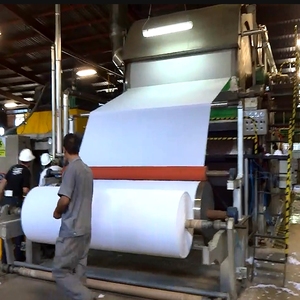
Fully Automatic Tissue Paper Making Machine 1880 Double Set
View Equipment Specs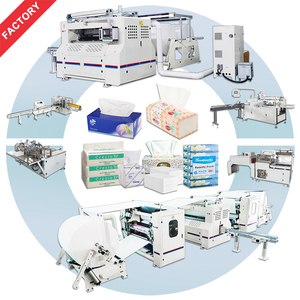
Fully Automatic V-Fold Tissue Paper Machine (Core Component Motor)
View Equipment Specs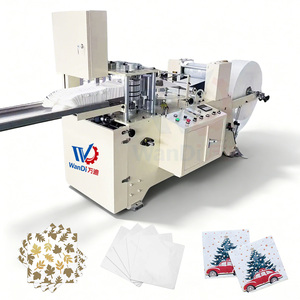
Industrial Toilet Paper & Napkin Tissue Production Line Machine
View Equipment Specs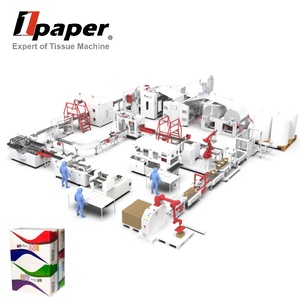
Automatic Box Facial Tissue Interfolding Machine 380V (6-Lane Line)
View Equipment Specs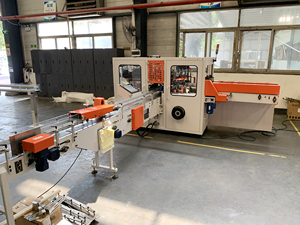
Fully Automatic Single Small Facial Tissue & Soft Napkin Packing Machine
View Equipment Specs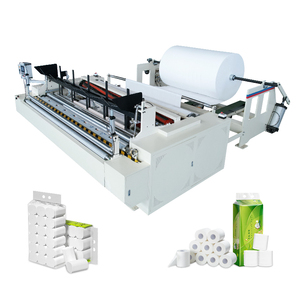
Automatic Toilet Roll & Napkin Converting Line Packaging Equipment
View Equipment Specs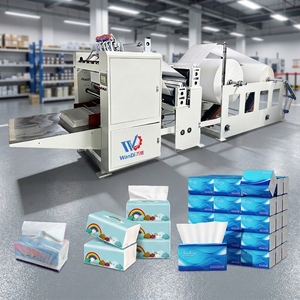
High-Capacity Automatic Facial Tissue Machine (500-1000 Pcs/Min)
View Equipment Specs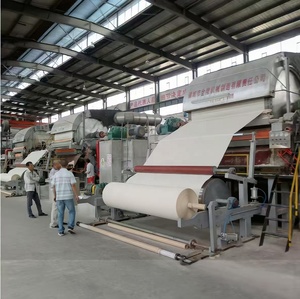
Crescent Type High-Speed Tissue Paper Making & Jumbo Roll Line
View Equipment SpecsEnterprise Engineering Authority & OEM Manufacturing Capabilities
In the rapidly evolving landscape of hygiene paper converting and commercial packaging, evaluating equipment suppliers requires deep scrutiny of engineering precision, manufacturing infrastructure, and operational reliability. Seasia Tissue Equipment Co., Ltd. (located in the High-tech Zone of Zhengzhou, Henan) stands at the technical forefront as a premier OEM automatic napkin packing machine manufacturer and factory.
Unlike trading intermediaries or simple assembly workshops, our facility integrates heavy-duty structural mechanical engineering with advanced multi-axis PLC motion control. Every napkin wrapping machine and automated tissue packaging line that leaves our factory undergoes rigorous dry testing and real-paper trial runs before crate loading. This ensures our global buyers—ranging from high-capacity commercial tissue mills in Europe to growing packaging ventures across Africa, Asia, and the Americas—experience zero ramp-up friction during site commissioning.
In-House Manufacturing & Strict Factory Verification
Every component of our automatic napkin packing lines—from CNC-machined cross-seal jaw blocks to optical registration sensor mounts—is built under strict ISO quality management protocols. Verified by TÜV Rheinland and backed by full CE compliance, our machines are built for 24/7 continuous industrial duty.
Full Customization & Turnkey Line Integration
We provide tailor-made OEM solutions matching your region's voltage standards (e.g., 220V/380V/415V/440V at 50Hz/60Hz), custom napkin fold sizes (1/4 fold, 1/6 fold, 1/8 fold), unique embossing logotypes, and automated conveying interfacing between folding lines and packing heads.
Deep-Dive Engineering: Kinematics & Servo Control in Napkin Wrapping
Automatic napkin packing machines serve as the critical bridge between raw folding output and shelf-ready retail presentation. Achieving speeds exceeding 100 to 150 packs per minute requires overcoming mechanical friction, film static, and product deformation—particularly with lightweight, multi-ply tissue paper.
1. Multi-Axis Servo Drive Synchronizing
Legacy packaging machines relied heavily on mechanical chain drives and link gearboxes, which suffered from timing drift, mechanical wear, and lengthy changeover periods when shifting between napkin bundle counts (e.g., 50 pcs vs. 100 pcs per pack). Modern OEM automatic napkin wrapping machinery utilizes independent servo motors dedicated to:
- Infeed Conveying Pushers: Dynamically timing the entry of napkin stacks without crushing delicate folded edges.
- Film Unwinding & Tension Control: Maintaining consistent film tension across varying jumbo roll diameters to prevent film tearing or bag misalignment.
- End-Sealing Jaws (Rotary or Reciprocating): Synchronizing jaw speed exactly to film speed during the seal-and-cut cycle to prevent film bunching.
2. Thermal Sealing Precision & Optical Mark Registration
Whether processing standard CPP/PE plastic wrapping films or eco-conscious paper-laminated films, temperature stability is non-negotiable. Our machinery incorporates PID digital temperature control loops combined with high-sensitivity color mark photoelectric tracking. If printed artwork shifts on the film roll, the optical sensor instantly signals the PLC to make micro-adjustments to the film feed length within milliseconds, ensuring perfect visual centering on every sealed package.
| Performance Spec / Parameter | Semi-Automatic Napkin Wrapper | Fully Automatic Servo Napkin Line | High-Speed Bundle Overwrapper |
|---|---|---|---|
| Operating Speed | 20 - 40 packs/min | 60 - 120 packs/min | 120 - 180 packs/min |
| Package Formats | Single soft-pack / Pillow pack | Single pack, Gusset pack, Soft bag | Multi-pack bundle, Master carton wrapper |
| Film Thickness Compatibility | 25 - 45 microns (CPP/PE) | 18 - 50 microns (CPP/PE/BOPP/Paper) | 20 - 60 microns (PE/Shrink/BOPP) |
| Changeover Time | 25 - 40 minutes (Manual) | < 10 minutes (Touchscreen Preset) | 5 - 12 minutes (Modular swap) |
| Primary Drive System | Variable Frequency + Chain drive | Full Servo Axis Control (3 to 5 axes) | Multi-axis Motion Controller (PLC) |
| Air Consumption | 0.4 - 0.6 MPa (Low demand) | 0.6 - 0.8 MPa (Continuous supply) | 0.6 - 0.8 MPa (Integrated manifold) |
Future Procurement Trends in Napkin & Packaging Machinery
Global tissue paper converters face shifting consumer demands, heightened sustainability mandates, and shrinking labor pools. B2B procurement strategies are pivoting away from low-cost isolated machines toward integrated, energy-optimized converting lines. Understanding these upcoming trends is essential for plant directors and investors when specifying equipment from OEM factories.
1. Transition to Biodegradable & Recyclable Films
Environmental regulations in Europe and North America are forcing a shift from traditional single-use polyethylene wrapping toward bio-based PLA films, water-soluble barrier films, and fully recyclable kraft paper wrapping. OEM machines must feature ultra-precise sealing temperature zones and modified feeding belts to handle heat-sensitive bio-polymers without tearing.
2. Industry 4.0 & Remote Telemetry Integration
Next-generation packaging machinery requires smart connectivity. Our automatic napkin packing equipment can be fitted with IoT modules supporting real-time OEE telemetry, predictive motor bearing diagnostics, and remote Ethernet troubleshooting. Factory managers can monitor hourly unit counts and maintenance alerts via cloud dashboards.
3. Modular Layout & Footprint Optimization
As warehouse space costs increase globally, tissue paper producers favor compact, high-density machine designs. By combining automatic log cutting, napkin stack aligning, pillow wrapping, and outer bundle overwrapping into unified inline footprints, manufacturers save up to 35% in shop-floor area while eliminating manual handling costs.
Next-Gen Technology Trends in Automatic Napkin Packaging
Mechanical innovation in hygiene tissue packaging revolves around two key vectors: reduction of raw material waste and unattended automatic operation. As an authority in tissue equipment manufacturing, Seasia incorporates several breakthrough engineering developments into our standard OEM production line configurations:
Smart Air Extraction & Automatic Vacuum Gusseting
Excess air inside a napkin package causes bulging, leading to damaged master cartons and higher shipping volume costs. Modern packaging heads integrate mechanical air-squeezing belts synchronized with vacuum gusseting fingers. This produces tight, brick-like napkin packages that stack perfectly on pallets and fit precisely into retail display boxes.
Automatic Splicing Film Roll Unwind Systems
Stopping a 100 pack-per-minute line to reload wrapping film creates significant cumulative production loss. Advanced OEM napkin wrappers feature dual-spindle automatic splicing film unwinds. When the primary roll empties, the trailing edge splices to the new roll at full line speed without operator intervention.
Procurement FAQ: Critical Questions Overseas Buyers Ask
Navigating international machinery purchases involves verifying technical compatibility, operational logistics, and long-term service support. Here are detailed, engineer-backed answers to the most frequent inquiries from enterprise paper converters.
The model number (1575 vs. 1880) refers directly to the maximum jumbo parent roll width in millimetres that the machine's unwind stands can accept. Selecting the right width depends primarily on your local raw paper mill supply. If your regional paper suppliers provide 1,500 mm – 1,575 mm parent rolls, or if you are launching a workshop with limited initial footprint, the 1575 model offers an optimal balance of lower initial capital investment and footprint. If 1,800 mm – 1,880 mm jumbo rolls are readily available in your market, choosing the 1880 model yields significantly higher output per rewinding cycle (producing more rolls per log saw cut) and substantially lowers your per-unit manufacturing cost.
Yes, absolutely. As a direct custom OEM manufacturer, every line engineered at Seasia is built to match the customer's site specifications. Electrical cabinets are fitted with transformers, breakers, and inverter drives suited for your exact grid conditions (e.g., 380V 3-Phase 50Hz, 220V 3-Phase 60Hz, or 415V 50Hz). Furthermore, custom steel-to-paper or steel-to-rubber embossing rollers can be laser-engraved with your company logo, signature border designs, or custom textures. Fold sizes (such as 230mm x 230mm, 300mm x 300mm, or 400mm x 400mm) and stack height configurations are fully tailored before machine manufacturing commences.
We provide a comprehensive two-tier support framework. First, every machine undergoes thorough pre-shipment assembly and real-paper trial runs in our Zhengzhou facility; high-definition operating videos and step-by-step wiring schematics are provided prior to dispatch. Second, for site installation, we deploy experienced field commissioning engineers to your facility to oversee mechanical placement, electrical wiring, PLC parameter tuning, and operator training. Alternatively, for remote sites, we provide 24/7 direct video engineering guidance—a protocol successfully implemented across recent installations in Mali, Thailand, Poland, and India.
We actively invite global clients, tissue converters, and project procurement teams to inspect our manufacturing floor in the Zhengzhou High-tech Zone, Henan, China. Visiting our factory allows you to verify raw material stock quality, inspect heavy-duty frame welding, witness live machine test runs using actual tissue jumbo rolls, and meet directly with our chief design engineers. We assist international visitors with formal visa invitation letters, hotel logistics, and airport transfers.
Our packaging machinery is engineered to process a versatile range of heat-sealable flexible films, including CPP (Cast Polypropylene), PE (Polyethylene), BOPP (Biaxially Oriented Polypropylene), laminated barrier films, and heat-sealable eco-friendly paper wrapping. Thermostatic heat-sealing jaws equipped with digital PID controllers ensure clean, airtight seals across varying film thicknesses (typically 20 to 50 microns) without thermal burn-through.
Request a Custom OEM Machine Quote & Factory Layout Design
Planning a napkin packaging project or upgrading your existing tissue converting line? Contact our engineering team today for technical consultation, layout CAD drawings, and factory-direct pricing.
Get a Quote