Featured Wholesale Tissue Processing Equipment
Explore our premier, factory-tested tissue converting machinery portfolio. Direct-from-manufacturer supply engineered for maximum OEE (Overall Equipment Effectiveness), precise tension management, and flexible raw material adaptability.
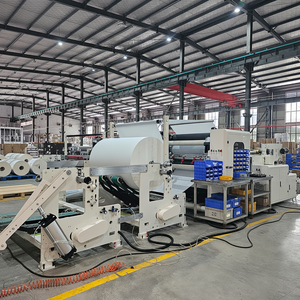
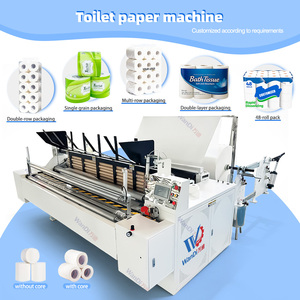
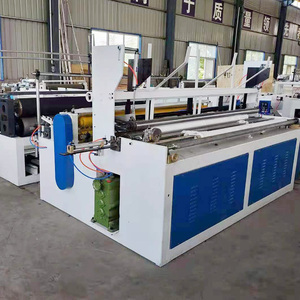
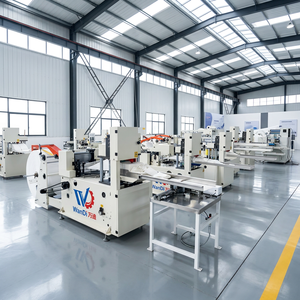
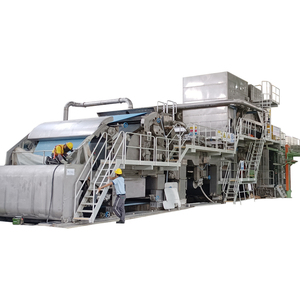
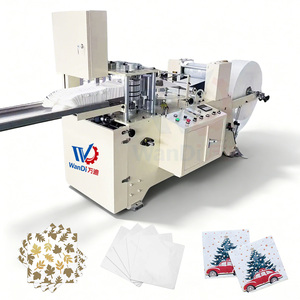
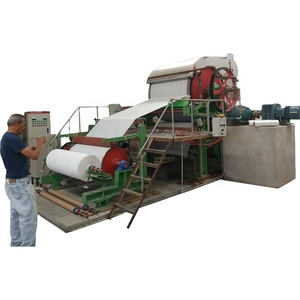
Industrial Overview: China Wholesale Tissue Paper Processing Equipment Engineering
In the modern global pulp and paper sector, establishing a resilient, scalable, and high-margin tissue converting facility requires a granular understanding of equipment architecture, mechanical tolerances, and raw fiber behavior. As leading China Wholesale Tissue Paper Processing Equipment Manufacturers & Exporters, Seasia Tissue Equipment Co., Ltd. delivers comprehensive, high-efficiency engineering solutions engineered to convert raw jumbo parent rolls and recycled pulps into commercial toilet rolls, facial tissues, table napkins, and industrial paper towels.
Whether deploying a 1575-model entry workshop line or an enterprise-grade 50-100 TPD (Tons Per Day) complete paper making and converting plant, selecting equipment built to rigorous CE and ISO standards is non-negotiable. Modern converting machinery must operate with minimal web breakage, manage variable GSM densities (from lightweight 13 gsm virgin pulp to heavy 32 gsm recycled stocks), and maintain structural integrity under continuous multi-shift operation.
Core Machine Units in a Full Converting Line
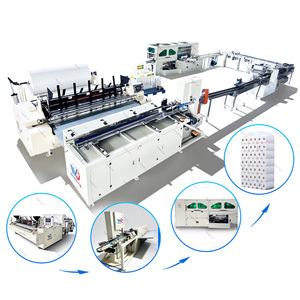
A complete industrial paper converting facility integrates several distinct processing modules to maintain continuous workflow automation:
Technical Selection Matrix: Semi-Auto vs. Fully Automatic Production Lines
To guide global buyers, regional converters, and OEM sourcing managers in selecting the ideal equipment configuration, our engineering team has summarized the operational metrics across key machinery classes.
| Performance Parameter | Semi-Automatic Line (1575 Series) | Fully Automatic Line (1880 Series) | Industrial Turnkey Plant (50-100 TPD) |
|---|---|---|---|
| Target Daily Output | 1.5 – 3.5 Tons / 8 Hours | 5.0 – 9.0 Tons / 8 Hours | 50 – 100 Tons / 24 Hours |
| Max Parent Roll Width | 1750 mm (Model 1575) | 2150 mm (Model 1880/2800) | 2800 mm – 3400 mm Custom |
| Design Operating Speed | 120 – 180 m/min | 200 – 300 m/min | up to 800+ m/min (Paper Machine) |
| Unwinding Stand Count | 1 to 3 Pneumatic Stands | 2 to 4 Independent Servo Stands | Multi-stand continuous unwinding |
| Control Interface | Button Control + Digital Counter | Siemens PLC + Touch Screen HMI | DCS / SCADA Distributed Control |
| Raw Material Versatility | Virgin Wood Pulp, Deinked Pulp | Virgin Wood, Bamboo, Straw, Recycled | Recycled Waste Paper, Wheat Straw, Kraft |
| Labor Requirement | 3 – 5 Operators | 1 – 2 Operators | Automated System Monitoring |
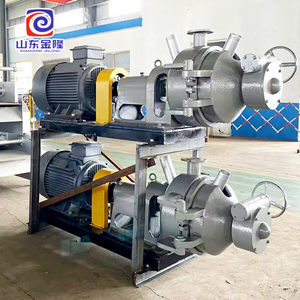
Specialized Tissue Converting & Pulp Refining Machinery
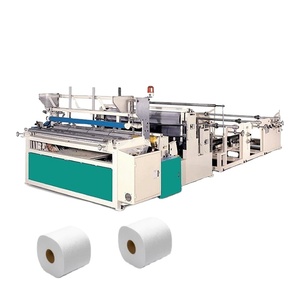
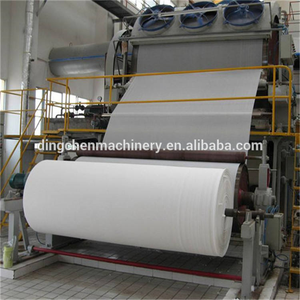
In addition to standard toilet paper roll production lines, specialized tissue processing applications demand tailor-made mechanical engineering. Below are additional specialized models featured in our export program.
Procurement Trends in the Wholesale Tissue Processing Equipment Sector
Global demand for tissue paper products continues to grow steadily, driven by rising hygienic standards in emerging markets and increased preference for sustainable, non-wood fiber options in established economies. Sourcing managers and mill directors looking to purchase China wholesale tissue processing equipment must navigate four dominant industry procurement trends:
1. Shift Toward Non-Wood Fiber Processing (Wheat Straw, Bamboo, Bagasse)
Soaring wood pulp prices and environmental forestry regulations have accelerated the adoption of agricultural residue fibers. Modern tissue making machines—such as our specialized Wheat Straw Tissue Paper Making Machine—are custom-engineered with modified pulping hydrapulpers and specialized double disc refiner disc geometries to handle the shorter fiber lengths and higher silica content of non-wood raw materials without sacrificing soft hand-feel or tensile strength.
2. Closed-Loop Tension Control & Servo-Driven Precision
Legacy converting machines relied heavily on mechanical chain drives and manual clutch adjustments, leading to inconsistent log firmness, sheet elongation, and frequent web tears. Today's high-speed rewinding lines incorporate multi-axis servo drives (Siemens/Delta) coupled with magnetic powder brakes and pneumatic dancer rolls. This maintains constant web tension regardless of unwinding speed or parent roll diameter variations.
3. Integrated Modular Expansion Capabilities
Procurement strategies increasingly favor modular machinery designs. Overseas buyers start with a core 1575 or 1880 rewinder unit and seamlessly integrate inline steel-to-rubber or steel-to-steel embossing units, 1-2 color flexographic printing stations, automatic core loading units, and robotic packing arms as regional sales scale up.
4. Energy Efficiency & Eco-Friendly Water Recycling Systems
Energy costs account for up to 30% of tissue paper mill operational expenditure. Next-generation equipment features stainless steel wet-end pulping components, closed-loop water recirculation circuits that cut freshwater consumption by up to 60%, and variable-frequency motor drives (VFD) that optimize power draw during idle or deceleration phases.
Future Technology Roadmap: Modern Tissue Equipment Engineering
The future of tissue paper manufacturing equipment lies in smart automation, predictive maintenance, and versatile embossing technologies. Seasia Tissue Equipment Co., Ltd. continues to innovate across several critical design vectors:
3D Micro-Embossing Rollers
Laser-engraved CNC steel rollers that impart deep point-to-point micro-embossing. Enhances bulkiness and liquid absorption by up to 25% without requiring heavier paper basis weights.
Coreless & Cored Dual Switching
Advanced rewinding shafts capable of switching between standard cardboard paper cores and coreless solid roll production within minutes via HMI selection.
IoT Remote Fault Diagnostics
Ethernet-connected PLC modules allowing Seasia engineers in Henan to assist overseas clients with real-time parameter tuning, firmware updates, and troubleshooting.
Enterprise Advantage: Why Partner with Seasia Tissue Equipment Co., Ltd.
Headquartered in the High-Tech Zone of Zhengzhou City, Henan Province, China, Seasia Tissue Equipment Co., Ltd. is a recognized leader in paper machinery engineering and pulp molding technology. Our fully owned manufacturing facility integrates heavy machining workshops, precision assembly lines, and rigorous pre-shipment testing bays.
We serve international buyers across Southeast Asia, Africa, Europe, the Middle East, and the Americas, providing factory-direct pricing backed by rigorous quality assurance and engineering field services.
Frequently Asked Questions (FAQ) for Sourcing Managers
Detailed technical and commercial answers addressing common buyer concerns when purchasing wholesale tissue paper processing equipment from China.
• Model 1575 (Max width ~1750mm): Best for start-up workshops or markets where local paper mills supply 1.5m-1.75m parent rolls. Lower initial capital required.
• Model 1880 (Max width ~2150mm): Recommended for medium-to-large converters. It yields more log cuts per cycle, increasing output efficiency by 30-40% compared to a 1575 model with minimal additional floor space required.
Ready to Plan Your Tissue Processing Project?
Contact our senior engineering team today for custom machine configuration advice, factory layout drawings, and detailed wholesale pricing proposals.