High-Speed Facial Tissue & Converting Machinery Range
Explore our engineering-grade interfolding, rewinding, napkin, and wet wipe converting machinery manufactured under strict ISO9001 and CE standards.
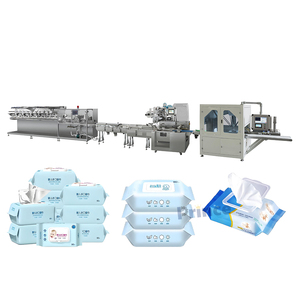
Full Automatic Wet Tissue Wipes Making Machine for Single & Multi-piece Wet Wipe Production
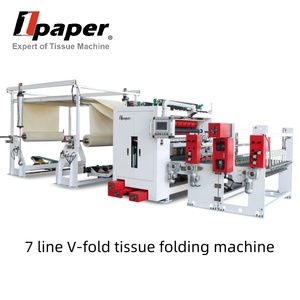
Zhejiang Wenzhou Automatic Soft Facial Tissue Folding Machine High Speed Tissue Folding Equipment with PLC Control
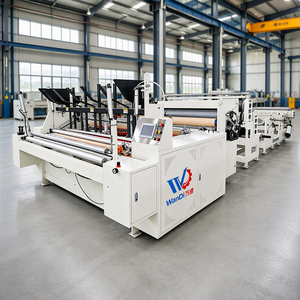
Factory Price Tissue Roll Paper Converting Machine Small Roll Kitchen Embossed Toilet Paper Rewind Making Machine
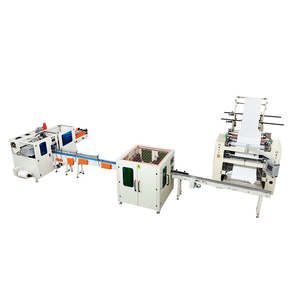
Automatic 5L V Folding Facial Tissue Paper Making Machine
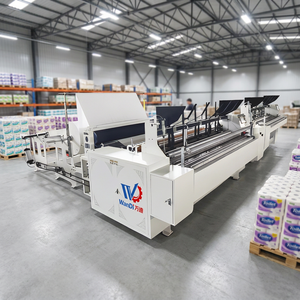
Hot Selling Tissue Paper Converting Machinery Mini Small Full Automatic Toilet Tissue Paper Rewinding Making Machine Price
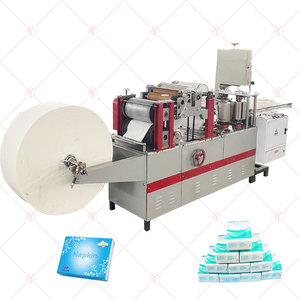
Customized Logo Napkin Tissue Paper Production Line Machine 1/4 Fold Napkin Tissue Paper Making Machine
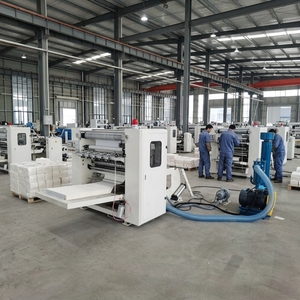
Automatic Tissue Paper Making Machine for Toilet Napkin Facial Tissue Paper Folding Machine Production Line
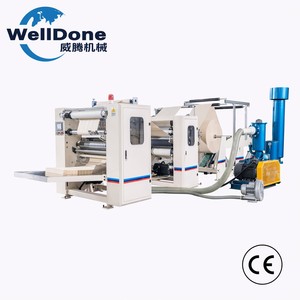
Welldone Full Automatic Tissue Machine Production Line | Facial Tissue Paper Making Machine
China Wholesale Facial Tissue Interfolding Machine Procurement & Manufacturing Overview
In the global hygiene paper converting sector, the selection of high-speed facial tissue interfolding machinery represents one of the most critical capital investments for B2B wholesalers, converting plants, and commercial brand OEM partners. As consumer expectations for soft-pack tissue, box facial tissues, and multi-ply eco-friendly paper products expand exponentially across Europe, the Middle East, Southeast Asia, and the Americas, machinery specifications must keep pace with rigorous operational demands.
As a leading Chinese industrial manufacturer and factory-direct exporter headquartered in Henan, China, Seasia Tissue Equipment Co., Ltd. engineered a comprehensive suite of automatic interfolding, rewinding, slitting, and pulp molding solutions. Operating from advanced manufacturing facilities in Zhengzhou, we combine heavy-duty structural frames, CNC precision-machined folding rollers, and dynamic vacuum extraction systems to produce industry-leading tissue production lines.
Precision In-House Mechanical Assembly
Every interfolding roller, shear cutter, and embossing mandrel is CNC-machined in-house to tolerances within 0.01mm, eliminating web drift and sheet misalignment at speeds exceeding 1000 sheets/min per lane.
Pre-Shipment Trial with Real Jumbo Rolls
We reject theoretical testing. Every machine undergoes 72 hours of continuous operational testing using real customer-specified tissue raw stock (13–22 gsm virgin pulp or recycled bamboo) before container packing.
Turnkey Factory Layout & Utility Design
Our engineering team provides complimentary 3D workshop layout CAD drawings, air compressor capacity matching, electrical loading schematics, and vacuum pump pipe sizing tailored to local factory dimensions.
Lifetime Overseas Technical Support & Spare Parts
Equipped with standardized international components (Siemens PLC, Schneider electronics, NSK bearings, AirTAC pneumatics), our machines guarantee seamless local component sourcing backed by factory field engineers.
Technical Anatomy & Engineering Principles of Facial Tissue Interfolding
A facial tissue interfolding machine converts jumbo paper rolls into continuous, interfolded tissue stacks that automatically draw the subsequent tissue when pulled from a dispenser box or soft-pack plastic wrapper. Achieving high-speed stability without web breakage or uneven fold overlap requires sophisticated mechanical synchronization.
1. Web Unwinding & Constant Tension Control
Raw tissue rolls (jumbo rolls) are mounted on heavy-duty pneumatic unwinding stands. Precision pneumatic flat belts drive the jumbo roll perimeter. Variable frequency drives (VFD) synchronized with optical encoder feedback continuously adjust unwinding torque to maintain constant web tension regardless of jumbo roll diameter decay.
2. Embossing & Micro-Lamination Units
To enhance bulk, tactile softness, and sheet integrity, paper webs pass through embossing stations. Machines can be fitted with Steel-to-Rubber or Steel-to-Steel embossing rollers featuring custom laser-engraved floral or geometric motifs. Optional edge-embossing or glue-lamination units ensure multi-ply tissue layers remain bonded during high-speed folding.
3. Slitting & Shear Cutting Assembly
The continuous wide web is slit longitudinally into desired widths (e.g., 180mm, 200mm, 210mm) using pneumatic circular shear knives. Precision axial adjustment mechanisms prevent edge fraying and paper dust generation, extending blade sharpening intervals beyond 500 operating hours.
4. Vacuum Suction Interfolding Rollers
The heart of the interfolding machine consists of two counter-rotating folding cylinders milled with vacuum suction holes and mechanical gripper fingers. Alternating vacuum pulses suck alternate sides of the slit web, creating pristine V-fold (pop-up), Z-fold, or W-fold configurations. Seasia’s proprietary air-distribution valves minimize vacuum energy consumption by up to 22% compared to traditional gear-driven folders.
5. Automatic Log Counting & Separating
Integrated optical photo-sensors count individual sheet cycles. Upon reaching the programmed count (e.g., 100, 150, or 200 sheets), pneumatic push fingers instantaneously separate the tissue stack, transferring the completed tissue "log" onto the discharge conveyor feeding the automatic band saw or log saw cutting unit.
Core Mechanical Innovations in Seasia Interfolding Machinery
Siemens PLC & Touch HMI
Full digital control allows multi-language recipe setup, instantaneous sheet-count modification, real-time OEE tracking, and automated fault diagnostics directly from an intuitive touchscreen interface.
Heavy-Duty Wallboard Frame
Constructed from 30mm to 45mm solid annealed steel plates, structural vibration is fully suppressed, allowing continuous 24/7 high-speed operation without frame deformation or bearing wear.
Low-Noise Vacuum Pump Systems
Configured with high-efficiency Roots blowers or water-ring vacuum pumps fitted with silencers, maintaining workshop sound levels comfortably below 78 dB(A) under full load capacity.
Future Technology Trends in Facial Tissue Interfolding Machinery
The tissue manufacturing industry is undergoing a structural transition towards Industry 4.0 automation, energy conservation, and raw material versatility. Global buyers purchasing machinery from wholesale manufacturers in China are focusing on long-term operational adaptability. The following developments represent the forefront of facial tissue equipment design:
1. Transition to Servo-Motion Synchronous Drives
Legacy interfolding machines relied on complex mechanical gear trains, line shafts, and chain drives, which suffered from gear backlash, oil leaks, and lengthy changeover downtime. Next-generation interfolding equipment utilizes multi-axis servo drive technology (individual servo motors controlling unwinding, embossing, folding, and discharge). Servo drive synchronization simplifies sheet length adjustments via touch HMI and dramatically reduces mechanical wear parts by 40%.
2. Smart Web Dust Collection & De-dusting Enclosures
High-speed folding of soft, low-gsm tissue webs generates significant airborne paper lint. Modern interfolding lines integrate localized negative-pressure vacuum suction hoods along the slitting knives and folding cylinders. By capturing micro-dust at the source, web cleanliness is preserved, optical sensor errors are eliminated, and machine fire hazards are mitigated.
3. Integration of Modular In-Line Packaging
Standalone interfolding machines are rapidly giving way to fully integrated, automated production lines. A continuous line links the 5-lane or 7-lane interfolding machine directly to automatic single-pack flow wrappers, multi-pack bundle wrap machines, and auto-case packers. This eliminates manual log handling, reduces labor requirements from 8 operators down to 2, and eliminates human contamination risk for medical and cleanroom tissue products.
4. Energy-Efficient Vacuum System Architectures
Vacuum generation historically consumed up to 35% of total electrical power in a folding plant. Advanced machine architectures implement dynamic vacuum air-distribution manifolds with inverter-controlled motor drives, modulating vacuum pressure based on real-time paper gsm and speed. This innovation slashes kilowatt-hour usage per ton of finished paper products.
Global Sourcing & Procurement Trends for Tissue Converters (2025–2030)
Commercial tissue converters and wholesale buyers evaluating machinery suppliers in China are adjusting their procurement strategies to align with international market shifts. Understanding these global procurement trends is vital for making resilient capital investment decisions.
Shift Towards Non-Wood Raw Materials (Bamboo & Sugarcane Bagasse)
Environmental regulations and forest sustainability mandates have driven high consumer demand for bamboo tissue and agricultural bagasse paper products. Non-wood fibers exhibit different tensile strengths, elongation factors, and surface friction coefficients compared to softwood virgin pulp. Leading machinery manufacturers now engineer specialized rubber rollers, tension control software, and modified folding nip gaps capable of switching seamlessly between virgin wood pulp and 100% unbleached bamboo tissue rolls without jamming.
Demands for Multi-Lane Modular Scalability
Converting startups often begin production with 2-lane or 3-lane machines (such as 3L V-fold models). However, expanding facilities require 6-lane, 8-lane, or 10-lane super-high-speed capacity. Modern machine architecture emphasizes modular design—allowing buyers to upgrade unwinding stands, add printing units, or pair machines with faster downstream log cutters without scrapping the core folding unit.
Total Cost of Ownership (TCO) vs. Initial Capital Expenditure (CAPEX)
Experienced wholesale buyers prioritize TCO over low initial price tags. Key TCO evaluation metrics include power consumption per ton, blade replacement frequency, availability of standardized commercial off-the-shelf (COTS) electrical parts, and scrap rate percentage. Seasia’s engineering design focuses on minimizing tissue edge scrap to less than 1.5%, yielding tens of thousands of dollars in raw material savings annually for high-volume factories.
Strategic Selection Matrix: V-Fold vs. Z-Fold vs. W-Fold Interfolding
Choosing the correct fold type directly determines dispenser compatibility, sheet sizing, and target market positioning (retail box vs. institutional commercial dispensers).
| Fold Specification | V-Fold (Single Interfold) | Z-Fold (Double Interfold) | W-Fold (Triple Interfold) |
|---|---|---|---|
| Dispensers / Packaging | Soft-pack, Box facial tissue, Countertop | High-end cosmetic boxes, Commercial wall mounts | Ultra-compact premium dispensers, Travel packs |
| Fold Configuration | 1/2 Overlap Fold (2 panels) | 1/3 Overlap Fold (3 panels) | 1/4 Overlap Fold (4 panels) |
| Sheet Separation Mechanism | High pop-up reliability | Smooth pop-up, zero sheet tearing | Controlled single-sheet pull |
| Unfolded Sheet Depth | 190mm – 210mm | 200mm – 230mm | 220mm – 240mm |
| Production Speed Potential | Ultra High (Up to 1200 m/min) | High (Up to 900 m/min) | Medium-High (Up to 700 m/min) |
| Ideal Paper GSM Range | 13 - 18 gsm (2-ply or 3-ply) | 14 - 20 gsm (2-ply or 3-ply) | 15 - 22 gsm (3-ply or 4-ply) |
Why Global Wholesalers & Factory Buyers Partner with Seasia Tissue Equipment
Navigating cross-border machinery procurement requires a trusted industrial partner with proven manufacturing heritage, transparent quality management, and rigorous compliance credentials.
Zhengzhou Manufacturing Base & Supply Chain Dominance
Situated in Henan Province—a hub for heavy industrial manufacturing and paper processing innovation—Seasia Tissue Equipment Co., Ltd. benefits from a robust supply chain ecosystem. From specialized alloy heat treatment to precision CNC machining centers, our localized supply network translates directly into shorter production lead times (typically 30–45 days) and competitive wholesale factory pricing.
Certified Compliance: ISO9001, CE, and TÜV Verification
Quality management is embedded into every assembly stage. Our manufacturing operations strictly follow ISO9001 standards. Every exported interfolding line, toilet paper rewinder, napkin machine, and pulp molding line carries full CE Certification for electrical safety, emergency stop protocols, and protective safety guarding. Furthermore, our production plant has been audited and verified on-site by TÜV Rheinland.
Global Installation & Field Commissioning Cases
Seasia machinery operates successfully across 40+ nations across four continents. Recent international delivery cases include:
- Poland & Eastern Europe: Full automatic 1880 toilet tissue rewinding and log saw converting lines configured to European 400V 50Hz electrical standards.
- India & South Asia: Full container loads (FCL) containing 12 custom 1/4 fold napkin embossing machines for food service distributors.
- Mali & West Africa: Turnkey 1x4 automatic egg tray pulp molding equipment complete with multi-layer metal drying tunnels and remote commissioning support.
- Thailand & Southeast Asia: High-speed multi-line facial tissue folding lines with integrated automatic soft-pack wrapping machines.
Frequently Asked Questions (FAQ) for B2B Machinery Buyers
Detailed technical answers to common questions asked by international buyers before issuing purchase orders.
How do I choose between machine widths like 1575mm, 1880mm, and 2800mm for facial tissue lines?
The model millimeter designation (e.g., 1575mm or 1880mm) represents the maximum web width of the parent jumbo roll mounted on the unwind stand. To avoid costly paper trimming waste, choose a machine width that directly matches the standard parent roll widths supplied by your local paper mill. For example, an 1880mm machine can slit into 9 or 10 lanes of 200mm facial tissue strips, maximizing daily output while keeping raw paper waste below 1%.
Can Seasia facial tissue interfolding machines be customized for our local electrical voltage and frequency?
Yes, absolutely. Every machine is custom-built to your national electrical grid requirements, including 220V single-phase, 380V three-phase 50Hz, 415V 50Hz, 460V 60Hz, or 480V 60Hz. Main VFD drives, PLC modules, motors, and heating elements are configured and tested under your specified voltage prior to dispatch.
What is the expected maintenance schedule and wear-part lifespan on vacuum interfolding machines?
Routine daily maintenance involves clearing paper dust via vacuum hoods and inspecting pneumatic air line pressure. Circular slitting shear blades feature hardened tungsten steel edges, yielding 6 to 12 months of service before requiring regrinding. Main shaft bearings are sealed-for-life NSK units requiring greasing every 2,000 operational hours. Vacuum distributor plates should be inspected biannually for seal wear.
Do you offer on-site installation, commissioning, and operator training in overseas factories?
Yes. We provide both physical on-site commissioning by experienced field engineers and high-definition remote video guidance. Prior to shipping, we send comprehensive floor plan drawings, electrical wire diagrams, and piping layouts so your utility connections are ready. Upon machine delivery, our technicians assist with positioning, wiring, paper threading, trial running, and operator training.
Can one interfolding machine produce both box facial tissue and plastic soft-pack tissue?
Yes. The core output of the interfolding folding unit is an interfolded paper log cut into specified lengths. These logs can be routed to either an automatic carton box packing machine or a flexible plastic film soft-pack flow wrapper. Changing between box and soft-pack packaging simply requires directing the discharged tissue logs to the corresponding packaging conveyor line.
What factory acceptance testing (FAT) is performed before shipping?
Every machine undergoes a strict 72-hour Factory Acceptance Testing protocol. We mount real tissue jumbo rolls matching your target paper gsm, run the machine at maximum rated linear speed, verify auto-counting accuracy, test emergency safety stops, perform thermal imaging checks on electrical panels, and record complete trial run video documentation for your official engineering approval prior to balance payment and loading.
Ready to Build or Upgrade Your Facial Tissue Production Line?
Contact Seasia Tissue Equipment engineers today for a customized machine recommendation, factory CAD layout design, and wholesale FOB/CIF pricing quotation within 24 hours.
Contact Us