High-Efficiency Tissue Converting & Packaging Machinery
Engineered for high precision, continuous operational stability, and minimal scrap rates.
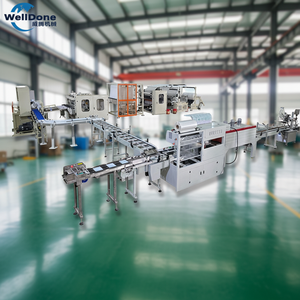
Welldone Turnkey Toilet Roll Making Machine Solution
Complete tissue paper factory setup line with automated slitting, rewinding, and log sawing.
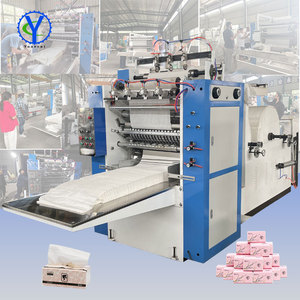
Small Business PLC Control Facial Tissue Production Line
Compact interfolding facial tissue converting line with integrated PLC touch interface.
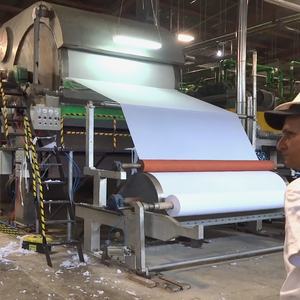
Jumbo Roll Toilet Tissue Napkin Paper Making Machine
Versatile machinery handling virgin wooden pulp and recycled paper stock efficiently.
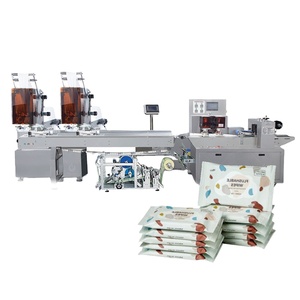
Full Auto Facial Wet Wipes Production Line
High-speed wet towel manufacturing, folding, liquid dosing, and packaging system.
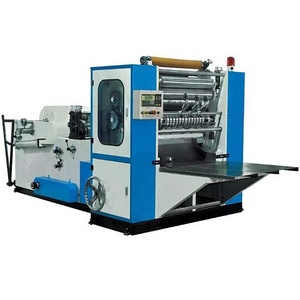
6/8 Lanes V-Fold Facial Tissue Folding Machine
CE-certified multi-lane V-fold towel and tissue converter with automatic counting.
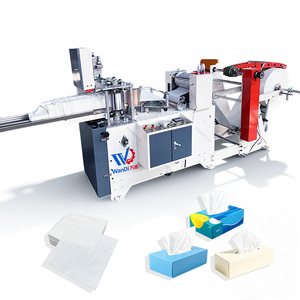
Napkin Tissue Paper Packaging & Cutting Machine
Integrated cutting and packing station designed for high-capacity napkin production lines.
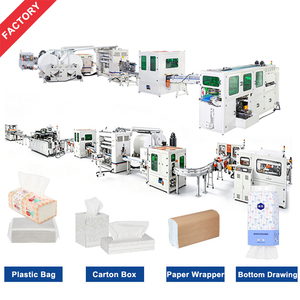
Automatic High Speed Interfold Facial Tissue Machine
CE-certified high-capacity V-fold interfolder with dynamic tension control.
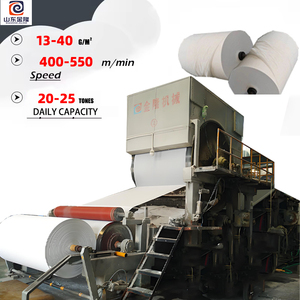
Fully Automatic Recycling Tissue Production Line
Sustainable eco-line converting waste paper pulp into premium household tissue rolls.
Engineering Overview: B2B Sourcing of China Wholesale Facial Tissue Cutting Machines
In modern tissue converting operations, the cutting stage acts as the crucial link between continuous folding and downstream primary/secondary packaging. Selecting a machinery partner from industrial hubs in Henan, China requires an in-depth understanding of mechanical blade kinematics, servo synchronization, knife cooling, and trim extraction mechanics. As high-speed interfolding machine outputs breach 200 meters per minute, legacy cutting mechanisms cause paper deformation, edge burning, and significant material scrap.
Technical Insight: Precision facial tissue cutting relies on maintaining absolute blade edge concentricity and continuous CBN wheel grinding during high-speed operation. Modern Chinese OEM factories utilize dual-arm orbital log saws and servo-driven band saws to maintain cutting tolerances under ±0.5 mm at speeds exceeding 150 cuts per minute.
Core Cutting Technologies Compared: Log Saw Cutters vs. High-Speed Band Saws
When evaluating China wholesale facial tissue cutting machine factories, buyers must select between two primary architectural variants based on their production line layout and output targets:
| Performance Metric | Orbital Log Saw Cutting Machine | Continuous Band Saw Cutting Machine | Rotary Cut-Off Unit |
|---|---|---|---|
| Maximum Speed | 120 – 180 cuts/min (per lane) | 60 – 100 cuts/min | Up to 220 cuts/min |
| Cutting Edge Precision | Ultra-high (±0.3 mm clean edge) | High (±0.8 mm) | Moderate (±1.0 mm) |
| Ideal Application | High-capacity multi-lane V/N/Z fold tissue | Small-to-medium converting plants | POCKET tissue / soft-pack rewinding lines |
| Blade Maintenance | Automatic CBN disc self-sharpening | Manual / Semi-auto tensioning band | Fixed shear blade replacement cycles |
| Initial Capital Outlay | Moderate to High (Long-term ROI) | Low (Entry-level workshop) | Moderate |
Mechanical Anatomy of Seasia Precision Facial Tissue Cutting Machinery
Seasia Tissue Equipment Co., Ltd. builds facial tissue paper cutting machinery on heavy-duty, stress-relieved cast-iron bases to absorb micro-vibrations generated during multi-channel cutting cycles. Key sub-systems include:
- Servo-Driven Feed Channels: Independent servo motors drive top and bottom timing belts, ensuring the facial tissue log enters the cutting station without stack compression or sheet offset.
- Automatic Orbital Blade Head: Circular alloy steel blades (diameter 610mm to 1000mm) rotate on a dual-eccentric gear planetary disc, delivering a smooth shear cut across tissue stacks up to 150mm thick.
- Pneumatic Clamping Blocks: Modular nylon or custom-machined PU clamps hold the tissue bundle securely adjacent to the blade path, preventing loose edge fraying.
- Integrated Trim Extraction System: High-vacuum suction ducts rapidly evacuate head and tail trim scrap, preventing dust buildup inside the drive mechanism and cutting enclosure.
Why Partner with Seasia Tissue Equipment Co., Ltd.?
Based in the High-tech Zone of Zhengzhou, Henan, China, Seasia Tissue Equipment Co., Ltd. stands as a premier manufacturer and direct exporter of complete tissue paper converting lines, pulp molding systems, and supporting industrial machinery. By controlling every stage of engineering—from raw steel fabrication to electrical control programing—Seasia provides custom converting solutions tailored precisely to local paper stock metrics and market preferences.
Full In-House Manufacturing & Testing
Unlike trading intermediaries, Seasia manufactures machine structures, shafts, and embossing units in-house. Every single line undergoes a comprehensive test run with actual tissue paper before container loading.
- Factory operational video provided prior to final payment
- Verified ISO 9001 and CE compliance certificates
- TÜV Rheinland audited manufacturing facilities
Turnkey Line Layout & Customized Engineering
Every workshop footprint is unique. Seasia's engineering department provides free 2D/3D plant layout design to optimize material flow, raw jumbo roll handling, and operator safety zones.
- Voltage and frequency customization (e.g., 220V/380V/415V/440V)
- Custom steel-to-rubber or steel-to-steel embossing patterns
- Modular integration with automated overwrapping machinery
Future Sourcing & Technology Trends in Tissue Machinery Procurement
As global demand for hygienic paper products grows across emerging markets in Southeast Asia, Africa, Eastern Europe, and Latin America, tissue converters are upgrading legacy equipment to meet stricter quality and environmental standards. Sourcing teams analyzing Chinese wholesale factories should consider four major technological shifts:
1. Transition to Full Servo Motor Architecture
Traditional mechanical line shaft machines rely on chain drives and gearboxes, which suffer from mechanical wear, high noise levels, and complex maintenance schedules. Next-generation facial tissue cutting machines utilize multi-axis servo drive technology (e.g., Siemens or Mitsubishi PLC platforms). Servo drives enable dynamic velocity adjustments during the blade stroke, reducing mechanical impact while doubling knife edge longevity.
2. Smart IoT Diagnostics & Industry 4.0 Connectivity
Overseas factory owners are increasingly requiring remote diagnostic capabilities. Seasia's modern PLC panels incorporate Ethernet gateways, allowing factory technicians in China to assist with system calibration, troubleshoot sensor faults, and push software updates remotely, minimizing machine downtime.
3. Sustainable Non-Wood & Recycled Fiber Processing
With virgin wood pulp prices fluctuating globally, tissue converters are shifting toward alternative fibers such as bamboo pulp, sugarcane bagasse, and de-inked recycled paper. These fibers feature different tensile strengths and surface friction profiles. Sourcing machines built with tension-controlled unwind stands and specialized cutting blade bevel angles is essential to prevent web breaks when running non-standard parent rolls.
4. End-of-Line Automation & Compact Packaging Integration
Labor cost inflation is driving demand for fully automated tissue processing lines where interfolding, cutting, soft-pack bundling, and case packing operate synchronously without manual intervention. Choosing cutting machinery with standardized transfer conveyors allows seamless retrofit integration into automatic packaging lines.
Frequently Asked Questions (FAQ) for Global Buyers
Answers to common engineering, shipping, and commercial inquiries when importing tissue cutting equipment from China.
What is the difference between a band saw machine and an orbital log saw cutter for facial tissue?
A band saw machine uses a continuous flexible steel blade loop and is typically suited for manual or low-to-medium speed operations (1-4 lanes). An orbital log saw uses a large circular blade mounted on an orbital rotating arm, capable of cutting multiple high-speed lanes simultaneously with extreme edge clean-cut quality and automatic blade sharpening.
How long do circular blades last on a high-speed facial tissue log saw?
High-grade alloy steel circular blades (such as Cr12Mo1V1 or tungsten carbide tipped options) typically last between 1 to 2 million cuts when paired with continuous online CBN grinding. Regular micro-sharpening extends total blade life while preventing edge fraying on tissue logs.
Can Seasia build cutting machines for custom electrical standards and non-standard fold sizes?
Yes. All machines are manufactured to match the destination country's electrical grid (e.g., 380V 3-phase 50Hz, 220V 3-phase 60Hz, or 415V 50Hz). Folding dimensions (such as V-fold 200mm×200mm or N-fold 210mm×210mm) and cut-off lengths are fully configurable prior to production drawing sign-off.
What is the standard manufacturing lead time and export shipping arrangement?
Standard lead time for standalone facial tissue cutting machines or small lines is 20 to 30 days. Complete custom turnkey lines require 35 to 45 days. Machines are packed in export-standard moisture-proof film and anchored inside heavy wooden crates or full containers (FCL) to prevent ocean transport damage.
Does Seasia provide overseas installation, commissioning, and training services?
Yes. Seasia provides two flexible commissioning pathways: (1) Dispatching experienced mechanical/electrical engineers to your facility for on-site layout, assembly, and staff training; or (2) Providing complete video-guided commissioning support with step-by-step wiring diagrams and dedicated online engineer channels.
Transform Your Tissue Converting Plant Today
Contact Seasia Tissue Equipment engineers to receive detailed technical specifications, custom factory layout drawings, and direct factory wholesale quotations within 24 hours.