Featured Facial Tissue & Converting Machinery Solutions
Engineered for high-efficiency converting, precision vacuum folding, and automated box cartoning.
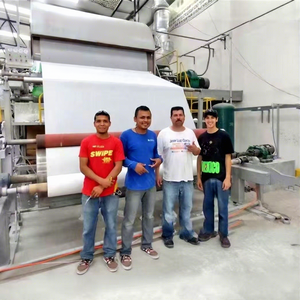
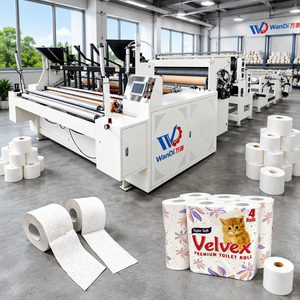
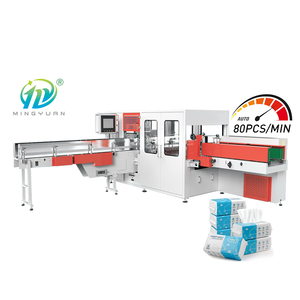
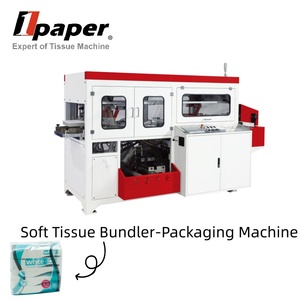
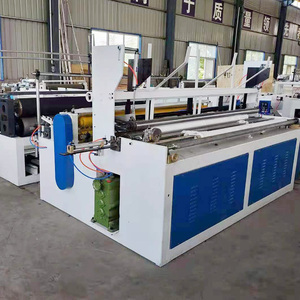
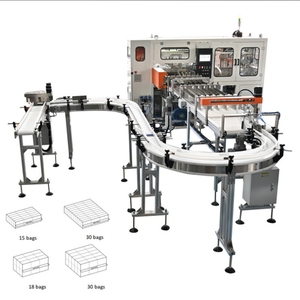
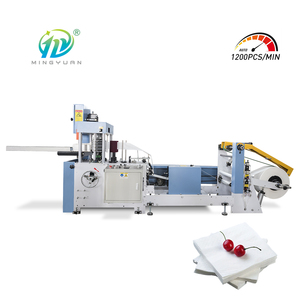
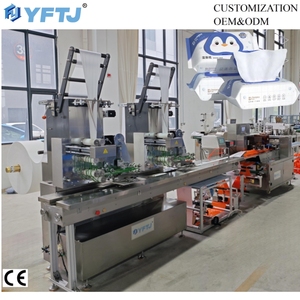
Industrial Overview: The Mechanics & Sourcing Dynamics of Box Facial Tissue Machines
The global demand for personal hygiene and premium tissue products has driven rapid technological advancements in the tissue converting machinery industry. As international tissue converters, commercial distributors, and fast-moving consumer goods (FMCG) brand owners evaluate capital equipment investments, sourcing high-efficiency, fully automatic box facial tissue machines from top-tier Chinese manufacturers has become a proven strategy for maximizing return on investment (ROI) while maintaining stringent product quality standards.
A modern Box Facial Tissue Machine operates at the intersection of mechanical precision, pneumatic vacuum extraction, pneumatic tension feedback control, and advanced servo-driven synchronization. Transforming jumbo parent paper rolls into perfectly folded, precisely slit, counted, and box-encased facial tissues requires seamless interaction between multiple engineering sub-systems. This white paper serves as an authoritative technical reference for factory owners, operations directors, and procurement heads seeking to understand machine architecture, mechanical trends, supplier auditing protocols, and total cost of ownership (TCO) benchmarks.
Technical Architecture of Fully Automatic Box Facial Tissue Lines
Understanding the engineering components that differentiate commercial-grade Chinese machinery from standard equipment.
Parent Roll Unwinding & Tension Control
Industrial converting lines feature independent pneumatic parent roll loading stands equipped with continuous variable-speed flat belts. High-precision magnetic powder brakes or multi-axis servo motor feedback systems adjust unwind tension in real-time, preventing paper web breaks across virgin wood pulp, bamboo pulp, or recycled tissue reels.
Embossing & Point-to-Point Calendering
Customizable steel-to-steel or steel-to-rubber embossing rollers introduce decorative micro-patterns, edge-sealing borders, or functional ply-bonding. Calendering units ensure uniform sheet thickness, enhanced tactile softness, and optimal volumetric bulk before folding, guaranteeing premium shelf-appeal for boxed tissue products.
Vacuum Vacuum Interfolding (V-Fold / Interleaved)
Utilizing high-capacity Roots vacuum pumps, the folding cylinder creates alternating suction differentials to interlock tissue sheets into a continuous V-fold sequence. This guarantees smooth, single-sheet dispensing from the consumer box without multi-sheet dragging or web tearing.
High-Speed Log Sawing & Edge Trimming
Continuous rotary log saws or orbit band-saws cut the interfolded tissue logs into standard box-length dimensions (e.g., 100mm to 210mm). Equipped with automatic grinding stone units, optical blade alignment, and trim collectors, the cut faces remain exceptionally clean and square.
Automated Box Cartoning & Hot-Melt Sealing
The integrated cartoning unit picks flat carton blanks, opens them via vacuum cups, pushes the precise tissue stack into the box, applies Nordson-compatible hot-melt glue to the end flaps, and seals the carton under firm compression belts—all at speeds exceeding 100 boxes per minute.
PLC Architecture & Servo Synchronization
Utilizing industrial PLC platforms (such as Siemens S7-1500 or Delta) coupled with multi-axis motion controllers via EtherCAT, every step from unwinding to boxing is synchronized down to millisecond intervals, drastically reducing manual operator interventions.
Seasia Tissue Equipment Co., Ltd.
Direct Manufacturer & Global Supply Chain Partner for Paper Converting Lines
Located in Zhengzhou City, Henan Province, China, Seasia Tissue Equipment Co., Ltd. is a leading manufacturer specializing in the engineering, customization, and export of tissue paper machinery, pulp molding egg tray equipment, and disposable paper product machinery. With over a decade of dedicated research and manufacturing expertise, Seasia delivers complete, turnkey converting solutions to B2B buyers across Asia, Africa, Europe, North America, and South America.
Unlike trading intermediaries, Seasia maintains full control over machine design, CNC precision machining, electrical panel wiring, software programming, and quality assurance. Every piece of equipment undergoes rigorous factory testing using actual customer-supplied paper stock prior to export dispatch.
- ✓ CE & ISO Compliance: Certified European quality standards and ISO9001 management systems.
- ✓ TÜV Rheinland Audited: Third-party verified manufacturing facilities and technical competence.
- ✓ Custom Engineering: Voltage, folding width, embossing patterns, and line speeds tailored to local market requirements.
- ✓ Turnkey Global Support: Factory layout CAD design, overseas installation commissioning, and operator training.
Why Global Buyers Source Box Facial Tissue Machines from Seasia
Sourcing tissue processing equipment internationally requires complete confidence in supplier credentials, machinery structural stability, and long-term spare parts availability.
Technical Benchmarks: Manual vs. Semi-Auto vs. Fully Automatic Box Facial Tissue Lines
Evaluating production output, labor requirements, and mechanical parameters to optimize capital expenditure.
| Performance Metrics | Entry-Level / Manual Line | Semi-Automatic Line | High-Speed Fully Automatic Line |
|---|---|---|---|
| Operating Speed (Sheets/Min) | 400 – 600 sheets/min | 800 – 1,000 sheets/min | 1,200 – 2,500+ sheets/min |
| Available Converting Lanes | 2 to 3 Lanes | 4 to 6 Lanes | 6 to 10+ Lanes |
| Jumbo Roll Width Compatibility | 420mm – 630mm | 840mm – 1260mm | 1,260mm – 2100mm+ |
| Cartoning & Boxing Unit | Manual Box Packing | Semi-Auto Box Infeed & Sealing | Fully Integrated Servo Box Cartoner |
| Box Sealing Method | Pre-Glued Boxes or Manual Tape | Cold Glue / Hot-Melt Manual Push | Nordson-Type Hot-Melt Spray Unit |
| Required Workshop Labor | 4 – 6 Operators | 2 – 3 Operators | 1 – 2 Supervisory Technicians |
| Tension Control System | Manual Mechanical Brake | Pneumatic Brake + Dancer Arm | Closed-Loop Servo Tension Sensor |
| Overall Equipment Efficiency (OEE) | 75% – 82% | 85% – 90% | 93% – 97.5% |
Future Sourcing Trends in Box Facial Tissue Machine Manufacturing
Strategic insights for B2B procurement managers planning machinery upgrades for the next decade.
1. Alternative Fiber & Sustainable Pulp Compatibility
Global environmental regulations and single-use plastic bans are shifting raw material dynamics toward bamboo pulp, unbleached sugarcane bagasse, and high-percentage recycled fibers. Next-generation Chinese box facial tissue machines are equipped with modified vacuum suction ports, anti-static ionization bars, and high-torque unwind drives to handle variable fiber tensile strengths and higher dust levels associated with non-wood fibers without web breakage or machine clogging.
2. Energy-Efficient Servo Drives & Industry 4.0 IoT
Traditional tissue converting machines relied heavily on central line-shaft drives and energy-intensive pneumatic systems. Modern equipment integrates direct-drive synchronous servo motors on each converting axis. This reduces power consumption by up to 25% while enabling real-time IoT diagnostic tracking, predictive maintenance alerts, remote software debugging via VPN gateways, and precise OEE monitoring on cloud dashboards.
3. High-Speed Plastic-Free Packaging Integration
Consumer preferences are driving brands away from plastic soft-packs toward 100% recyclable paperboard boxes. Consequently, demand is surging for converting lines that feature direct, high-speed connection between interfolding units and automated cartoners. Modern systems automatically adjust to varying carton board weights (250gsm to 400gsm), flap geometries, and tear-strip openings without extended mechanical downtime.
4. Compact Machinery Footprints & Modular Upgrades
Rising industrial real estate costs in urban markets have forced machinery manufacturers to optimize floor space utilization. Seasia’s latest box facial tissue converting lines feature vertical stack log accumulators, right-angle transfer channels, and inline log saws that reduce total line footprint by up to 30% compared to traditional linear arrangements, allowing higher output per square meter of factory floor.
Total Cost of Ownership (TCO) & Strategic ROI Calculation
A financial framework for evaluating tissue machinery investments beyond initial purchase price.
When evaluating China wholesale box facial tissue machine suppliers, purchase price represents only a portion of the capital lifecycle cost. A comprehensive Total Cost of Ownership model accounts for Capex, Opex, yield waste, and maintenance expense over a 10-year operating horizon.
Capital Expenditure (CapEx)
Includes base machine cost, custom embossing rolls, auxiliary vacuum pumps, shipping freight, customs duties, and initial installation fees.
Operational Costs (OpEx)
Comprises electrical power consumption (kWh per ton converted), compressed air supply, hot-melt adhesive usage, and direct operator labor wages.
Material Yield & Trim Waste
High-precision log sawing and automatic edge tracking keep scrap rates below 0.6%, saving tens of thousands of dollars in raw tissue pulp annually.
💡 Typical ROI Horizon: Premium Chinese fully automatic box facial tissue machines pay for themselves within 12 to 18 months under multi-shift operation.
Step-by-Step B2B Procurement Protocol for Tissue Converters
Mitigating risk when sourcing box facial tissue machines from Chinese suppliers.
Technical Requirement Definition
Define target product parameters: finished sheet size (unfolded/folded), ply count (2-ply, 3-ply, 4-ply), target tissue GSM range, carton box dimensions, desired daily tonnage output, and plant electrical voltage/frequency (e.g., 380V 50Hz / 415V 60Hz).
Engineering & Layout Review
Request CAD factory layout drawings from the supplier. Verify machinery footprints, operator walkway clearance, raw roll storage access, and compressed air line routing. Confirm component brand lists (PLC, pneumatics, sensors).
Factory Audit & Material Testing
Perform a third-party (SGS, TÜV) or direct on-site factory audit in Zhengzhou. Ship sample jumbo rolls to test folding accuracy, embossing sharpness, and box gluing performance prior to shipment authorization.
Frequently Asked Questions (FAQ) for Global Buyers
Expert technical answers addressing common procurement, engineering, and operational inquiries.
Q1: What is the difference between V-fold, N-fold, and Z-fold facial tissue machines?
The fold type defines how sheets pull out of the dispenser box. V-Fold (interleaved) is the global standard for boxed facial tissue, where pulling one sheet lifts the edge of the next sheet out of the box opening. N-fold and Z-fold are more common in hand towel converting where longer unfolded sheet lengths are required. Seasia specializes in high-speed V-fold interfolding systems engineered specifically for boxed and soft-pack facial tissues.
Q2: How do I select the right machine width and lane count (e.g., 2-lane, 4-lane, 6-lane)?
Machine lane count depends directly on your local jumbo roll supply width and target production volume. For example, a 4-lane machine typically processes a jumbo roll width around 840mm, producing 4 continuous streams of folded tissue logs. If your local paper mill supplies 1,260mm parent rolls, a 6-lane machine maximizes web utilization without trimming scrap. Our engineers provide free web-width calculations based on your available raw materials.
Q3: Can a single box facial tissue machine produce both boxed and soft-pack tissue?
Yes. The core interfolding and log saw cutting modules are identical for both product types. By installing a bypass transfer unit after the log saw, cut tissue stacks can be directed either to an automatic box cartoning machine or to a soft-pack film wrapping machine. This dual-line flexibility allows manufacturers to serve both premium boxed tissue markets and budget-friendly soft-pack markets.
Q4: What electrical power and air compressor specifications are required?
A standard 6-lane fully automatic box facial tissue line requires a 380V/3Phase/50Hz (or custom 415V/460V 60Hz) electrical supply with approximately 22kW to 45kW installed power, depending on vacuum pump size. The pneumatic system requires an industrial screw air compressor capable of delivering 0.6 – 0.8 MPa pressure with an air flow rate of 1.2 to 2.0 m³/min, equipped with a refrigerated air dryer and oil-water filters.
Q5: What embossing options are available for boxed facial tissue?
We offer steel-to-rubber, steel-to-steel, and steel-to-wool roll embossing configurations. Options include full-surface micro-embossing (for extra bulk and softness), border/edge embossing (to keep multi-ply sheets together without glue), and custom logo embossing designed with your company brand emblem.
Q6: How is machine installation and operator training handled overseas?
Seasia provides two installation pathways: (1) On-site deployment of experienced mechanical and electrical commissioning engineers to set up the line, integrate utilities, and train local staff; or (2) Remote video-guided installation supported by high-definition CAD wiring schematics, step-by-step video manuals, and live engineer assistance via video call. All machines are pre-wired and color-coded prior to dismantling and packing.
Q7: How does the automated cartoning machine seal the tissue boxes?
Our automatic cartoner utilizes an integrated hot-melt glue system (compatible with Nordson components). As flat box blanks are formed, precise photoelectric sensors trigger hot-melt glue nozzles to apply glue beads on the side flaps. Compression belts hold the flaps closed for 1.5 seconds, delivering a rigid, perfectly sealed box without tape marks or sloppy glue smears.
Q8: What is the lead time for custom manufacturing and export shipment?
Standard box facial tissue machines require 30 to 45 working days for precision manufacturing, electrical assembly, and 8-hour test runs. Custom lines requiring specialized embossing rollers, unique box flap cartoning tools, or non-standard electrical voltages are delivered within 50 to 60 days from deposit receipt and CAD drawing approval.
Q9: What wear parts should be stocked in factory inventory?
Essential recommended spare parts include circular log saw blades, grinding stones, vacuum suction cups, timing belts, heating elements for cartoning seals, and air cylinder seal kits. Seasia supplies a comprehensive 1-year spare parts package free of charge with every complete production line order.
Q10: Why choose Seasia over other wholesale suppliers in China?
Seasia Equipment Co., Ltd. combines heavy-duty structural frame manufacturing (18mm-25mm solid steel wall plates) with world-class electrical automation (Siemens, Schneider, SMC). We offer direct factory pricing, ISO/CE compliance, TÜV audited facilities, and lifetime engineering support, ensuring long-term operational reliability and minimal machine downtime.
Ready to Build or Upgrade Your Box Facial Tissue Factory?
Get in touch with our engineering team today for custom machine specifications, factory layout drawings, and direct factory pricing quotes.