Engineered Machinery Portfolio
High-Performance Converting & Pulp Molding Lines
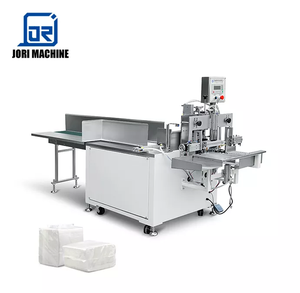
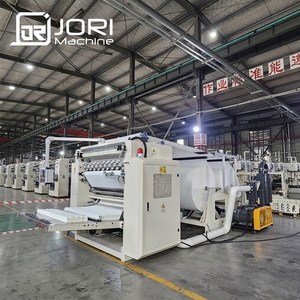
Explore our export-grade paper processing equipment manufactured under CE and ISO quality control standards, ready for immediate delivery to Udon Thani and global sites.
98.5%
Fiber Recovery Efficiency
1,000-6,000
Trays / Hour Output Range
380V/50Hz
Thailand Grid Standard Compliant
100%
Zero Water Discharge Loop
1. Industrial Ecosystem & Economic Drivers for Egg Tray Manufacturing in Udon Thani
Udon Thani serves as the primary commercial, logistics, and agricultural nexus of Upper Northeastern Thailand (Isan). Positioned strategically along Highway 2 (Mittraphap Road) and seamlessly linked to the Lao People's Democratic Republic via the Nong Khai border gateway, Udon Thani experiences an extraordinary convergence of intensive poultry production, regional fresh market trading, and massive municipal waste paper availability.
In local poultry hubs across Udon Thani—spanning districts such as Mueang Udon Thani, Kumphawapi, Kut Chap, and Nong Han—commercial layer hen farms generate a relentless daily demand for standard 30-cell pulp egg trays (300mm x 300mm), 10-cell retail cartons, and 12-cell lidded egg boxes. Traditional plastic trays are rapidly being phased out due to ESG mandates, higher unit costs, and non-biodegradability. Consequently, setting up a waste paper recycling egg tray machine factory in Udon Thani provides investors with an immediate local market advantage, drastically cutting regional freight overheads compared to importing packaging from Central Thailand or Bangkok.
Strategic Freight Advantage: Udon Thani’s close proximity to Vientiane (just 55 km from the border) enables local egg tray plant operators to capture lucrative export contracts supplying commercial poultry integrated operations across Laos, utilizing the Lao-China Railway freight corridors for wider Indochina distribution.
Raw Material Abundance in Isan
A pulp molding factory in Udon Thani benefits from a steady, low-cost supply of post-consumer waste paper. Local collection networks harvest Old Corrugated Containers (OCC), discarded newspaper (ONP), kraft paper offcuts from packaging hubs, and discarded office paper from urban markets like Talad Phosi and wholesale complexes. Converting these locally sourced waste paper streams into high-strength, shock-absorbent protective packaging turns environmental waste into high-margin industrial products.
2. Complete Technical Architecture: Pulper to Formed Packaging
Modern egg tray production line engineering requires seamless integration across four key automated phases: Hydraulic Pulping, Precision Vacuum Forming, Continuous Thermal Drying, and Hot-Press Finishing. Below is the technical process breakdown tailored for tropical operational environments such as Thailand.
A. High-Consistency Hydraulic Pulping System
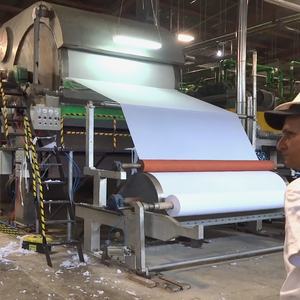
Waste paper fed into our open-type hydrapulper undergoes high-shear mechanical agitation, breaking paper sheets down into individual cellulose fibers. The slurry passes through a vibrating screen classifier and high-density cleaner to eliminate non-fibrous contaminants (staples, plastic tapes, dirt). Water is continuously recirculated within a closed-loop system, ensuring zero effluent discharge and minimal municipal water consumption—a crucial factor for industrial compliance in Udon Thani industrial zones.
B. Vacuum Pulp Forming & Transfer Unit
Our pulp molding machines employ either Reciprocating (1x3, 1x4 molds for small-to-medium workshops) or Rotary (3x4, 4x4, 4x8, 5x12 mold arrangements for large-scale factories) mechanical structures. Stainless steel or CNC-machined aluminum molds covered with 50-mesh stainless steel filter wire mesh submerge into the slurry tank. Vacuum pumps pull moisture through the screen, forming a uniform fiber wall thick enough to cushion 60g–70g commercial eggs.
C. Tailored Drying Systems for Isan's Microclimate
Selecting the optimal drying method dictates both capital expenditure and operational fuel economics in Udon Thani:
- Natural Sun Drying (Brick Racks): Highly economical for entry-level plants (1,000–1,500 pcs/h) utilizing Udon Thani’s extended dry season (November to April) with abundant solar radiation.
- Brick Kiln Tunnel Dryer: Built on-site using local refractory bricks. Fueled by natural gas, LPG, or agricultural biomass (rice husks/wood waste readily available from regional Isan agricultural processors).
- Multi-Layer Metal Drying Line: Fully automated, compact continuous metal chamber featuring high-density rock wool thermal insulation. Designed for 3,000–6,000 pcs/h industrial lines where floor space footprint and thermal efficiency are critical.
Factory Configuration & Technical Specifications Matrix
| Model Code | Hourly Output (Pcs/H) | Molding Structure | Total Power (kW) | Waste Paper Cons. (kg/h) | Recommended Drying Line |
|---|---|---|---|---|---|
| ST-1000 | 1,000 - 1,500 | Reciprocating 1x3 | 32 - 45 kW | 85 - 120 kg | Sun Drying / Single Brick Line |
| ST-2000 | 2,000 - 2,500 | Rotary 3x4 | 55 - 75 kW | 170 - 210 kg | Brick Tunnel / Single Metal Dryer |
| ST-3000 | 3,000 - 4,000 | Rotary 4x4 | 85 - 110 kW | 250 - 320 kg | Multi-Layer Metal Dryer |
| ST-5000 | 5,000 - 6,000 | Rotary 4x8 / 5x12 | 135 - 180 kW | 420 - 500 kg | Automated Multi-Layer Thermal Line |
3. Financial Feasibility & Cost-Benefit Analysis for Udon Thani Investors
To assist factory owners, agricultural cooperatives, and investors in Udon Thani with capital allocation, our engineering financial team has assembled an operational ROI calculation based on localized Thai Baht (THB) economics for a medium-scale ST-2500 (2,500 pcs/h) egg tray plant:
- Raw Material Input: ~200 kg of waste OCC/ONP per hour @ ~3.5–4.5 THB/kg local procurement cost = ~800 THB/hour.
- Power Consumption: Average 60 kWh operational power @ PEA (Provincial Electricity Authority Thailand) industrial tariff rates (~4.2 THB/kWh) = ~252 THB/hour.
- Labor Requirements: 4 workers per shift (Pulping, Forming, Packing, Quality Assurance) @ Thai minimum wage standard (~354 THB/day/worker).
- Wholesale Product Valuation: Standard 30-cell pulp egg trays wholesale in Upper Isan for 1.4–1.8 THB per piece depending on weight density and water resistance specs.
- Gross Profit Margin: 2,500 trays x 1.5 THB = 3,750 THB gross revenue/hour. Subtracting raw materials, power, fuel, and labor yields a net margin exceeding 45–52%.
Investment Payback Timeline: Under standard two-shift operations (16 hours/day), factory owners in Udon Thani typically achieve full equipment investment amortisation within 7 to 10 months of plant commissioning.
4. Seasia Equipment Manufacturing Strengths & Engineering Authority
Seasia Tissue Equipment Co., Ltd. (operating from our main industrial workshop in Zhengzhou, Henan) brings over a decade of continuous research, heavy manufacturing expertise, and global export success to the paper converting and pulp molding sectors. When sourcing an egg tray production line for Udon Thani, working directly with a primary original equipment manufacturer (OEM) guarantees distinct engineering advantages:
CE & ISO Certified Production
Every structural frame, drive shaft, gear reducer, and electric control cabinet is built to ISO 9001 and European CE quality standards, with TÜV Rheinland factory verification for complete international buyer safety.
Custom Electrical & Voltage Matching
All motors (Siemens/ABB), PLC touchscreens (Delta/Schneider), and frequency inverters are pre-configured to match Thailand's 380V, 50Hz 3-phase power grid prior to factory acceptance testing.
Pre-Shipment Wet Test Protocol
We do not ship dry components. Every egg tray machine undergoes actual pulp slurry testing in our factory prior to container packing. Clients receive HD video verification of mold release, vacuum speed, and tray rigidity.
Turnkey Overseas Field Commissioning
Our senior mechanical and electrical engineers provide on-site foundation layout planning, pipeline hookup guidance, operator training, and lifetime spare parts replacement support directly in Thailand.
Investor Procurement Guide
Frequently Asked Questions by Udon Thani Factory Owners
Clear, direct answers regarding customs, logistical routes, electrical requirements, and machine customization for setting up a pulp molding plant in Thailand.
How is equipment delivered to my factory site in Udon Thani, Thailand?
Equipment is securely loaded into 40ft HQ shipping containers at our factory. Ocean freight ships directly to Laem Chabang Port (Chonburi) or Bangkok Port. From there, flatbed trailers transport the container via Highway 2 directly to your designated industrial park or rural workshop location in Udon Thani. We provide full Form E documentation to lower or eliminate import tariffs under the ASEAN-China Free Trade Agreement.
Can one machine produce different packaging types besides 30-cell egg trays?
Yes, absolutely. By replacing the quick-change molding dies, the same hydraulic pulping and forming system can manufacture 6-cell, 10-cell, and 12-cell lidded egg cartons, protective apple and mango fruit trays, disposable cup carriers for local beverage vendors, and industrial electronic packaging buffers.
What are the land and building space requirements for a 2,000–3,000 pcs/h plant?
A 2,000 to 3,000 pcs/h line equipped with an automatic multi-layer metal drying line requires a workshop building footprint of approximately 45 meters in length by 12 meters in width (around 540–600 square meters), with a minimum ceiling height of 4.5 meters. If you opt for outdoor brick kiln drying or sun drying, the indoor machine building footprint is significantly smaller, though outdoor drying yard space is needed.
How do we handle water recycling and chemical additives?
Our pulp molding production lines utilize a 100% closed-loop water recirculation system. Water removed during vacuum forming is drained into underground return pits and pumped back into the hydrapulper. Small amounts of sizing agents (such as rosin or AKD) and liquid waterproofing agents can be added directly into the pulp mixing pool to produce moisture-resistant trays suitable for refrigerated egg storage.
What warranty and spare parts support do you supply in Thailand?
We provide a comprehensive 12-month structural and mechanical warranty on all core components, including the main drive unit, slurry pumps, and vacuum systems. Wearing parts (such as stainless mesh screens, transfer valves, rubber seals, and solenoid valves) are shipped with the initial machine order. Emergency replacement parts can be dispatched via express air freight directly to Udon Thani within 3 to 5 business days.
How does the local voltage in Udon Thani affect motor selection?
Industrial electricity across Thailand operates at 380 Volts, 50 Hertz, 3-Phase AC power. During production in our Zhengzhou plant, we install heavy-duty copper-wound electric motors specifically rated for 380V/50Hz. All control panel breakers, thermal relays, and frequency drives are selected to withstand local climate ambient temperatures up to 45°C.
Start Your Waste Paper Recycling Project in Udon Thani Today
Contact our engineering consultancy team to receive customized plant layout designs, complete equipment price lists, and a localized ROI feasibility assessment for your business in Isan.