Featured Converting Machinery Solutions
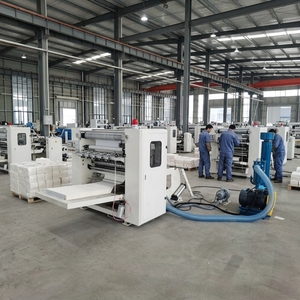
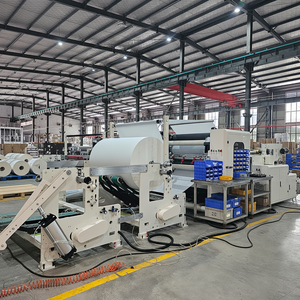
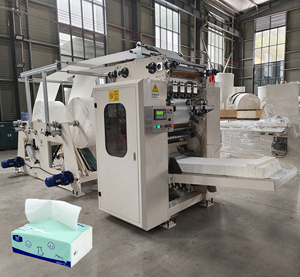
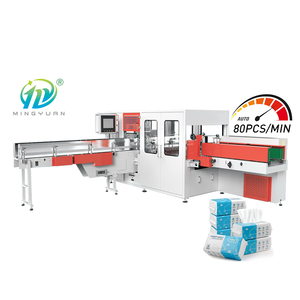
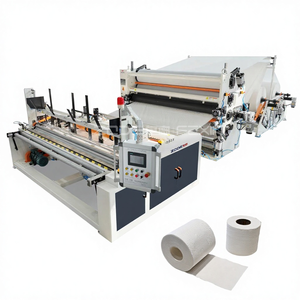
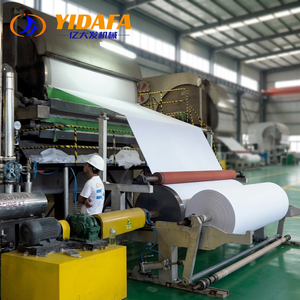
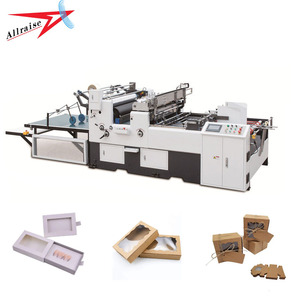
Engineered for Myanmar's local operational conditions: stabilized voltage tolerance, bamboo pulp compatibility, and high ambient humidity resistance.
1. Myanmar's Facial Tissue Manufacturing Landscape (2025–2030)
Myanmar’s fast-moving consumer goods (FMCG) market is undergoing a structural shift. Rapid urbanization in tier-1 commercial hubs like Yangon (Hlaing Tharyar, Shwe Pyi Thar, and Mingaladon Industrial Zones) and Mandalay (Pyigyidagun Industrial Zone), coupled with the post-pandemic resurgence of hospitality, healthcare, and corporate real estate, has catalyzed an unprecedented surge in demand for hygiene products. Facial tissue—historically treated as a premium imported commodity—is rapidly transforming into a daily staple across household, institutional, and commercial sectors.
However, local Myanmar paper converters and investors face unique supply chain and operational operational constraints. Domestic manufacturing requires high-yield, energy-efficient automatic tissue production lines tailored to operate under localized conditions: frequent power fluctuations, high ambient humidity during the monsoon season, variable raw material tensile strengths (ranging from imported virgin wood pulp to domestically harvested bamboo pulp from Bago and Rakhine regions), and complex import-export logistics across the Yangon Port network.
Strategic Market Insight: Myanmar’s national industrial development initiatives strongly favor import-substitution projects. Establishing a localized facial tissue converting facility in Yangon or Mandalay reduces logistics overhead by up to 32% compared to finished goods imports from neighboring countries, providing converters with a massive competitive pricing moat.
2. Technical Evaluation Matrix for Top 10 Manufacturers
Selecting the optimal automatic facial tissue machinery supplier for Myanmar demands an engineering-led evaluation protocol. Beyond capital cost (CAPEX), factory owners must audit operational reliability (OPEX), spare part interchangeability, pneumatic vs. servo control precision, and localized field support. Below is an evaluation of the world's leading tissue machinery manufacturers serving the Southeast Asian market.
| Manufacturer / Brand | Origin | Primary Technical Specialty | Myanmar Voltage & Grid Adaptability | Bamboo Pulp Converting Yield | Overall Rank for Myanmar |
|---|---|---|---|---|---|
| Seasia Tissue Equipment Co., Ltd. | China | Full-Line Servo Converting & Integrated Packaging Systems | High (Wide-Voltage Transformers + PLC Surge Protection) | 99.4% (Heavy-Duty Embossing & Tension Control) | #1 (Best Overall Value & Support) |
| Körber Tissue (Fabio Perini) | Italy | Ultra High-Speed Industrial Lines | Medium (Requires High Grid Stability) | 98.2% (Optimized for Pure Wood Pulp) | #2 (Premium European CAPEX) |
| BaoSheng Machinery | China | High-Speed V-Fold & Box-Pack Lines | High (Industrial Grade Components) | 96.8% | #3 |
| Kawanoe Zoki | Japan | Ultra-Soft Tissue Folding Machinery | Medium (Sensitive Electronics) | 95.5% | #4 |
| Chan Li Machinery | Taiwan | Pneumatic & Hybrid Tissue Convertors | High (Robust Mechanical Framing) | 96.1% | #5 |
| Onepaper Machinery | China | Automated Box Interfolding Lines | High (Standardized Modular PLC) | 97.5% | #6 |
| Dechangyu Paper Machinery | China | Multi-Lane V/N Fold Tissue Folding | High (Dual Power Generator Friendly) | 96.0% | #7 |
| Valmet | Finland | Turnkey Pulping & Tissue Mills | Requires Dedicated Substation | 99.0% | #8 (Utility-Scale Projects) |
| Zhejiang Chunsheng | China | Compact Start-Up Converting Units | Medium (Basic AVR Required) | 93.5% | #9 |
| Foshan Baosuo | China | Tissue Rewinding & Slitting Systems | High (Heavy-Duty Cast Frames) | 97.0% | #10 |
3. Detailed Analysis of Top Machinery Suppliers
1. Seasia Tissue Equipment Co., Ltd.
Core Competency: End-to-end engineered facial tissue production lines combining multi-lane V-fold folders, automatic log saws, and soft-pack bundle wrappers. Certified by ISO 9001, CE, and audited by TÜV Rheinland.
Why It Leads in Myanmar: Seasia Equipment configures custom industrial line layouts designed specifically for Myanmar’s local factory environment. Incorporating heavy-duty industrial boilers, bamboo pulp system integration, dual pneumatic slitting tension control, and reinforced 380V/400V 50Hz electrical panels capable of running seamlessly on diesel generator power.
2. Körber Tissue (Fabio Perini)
Core Competency: World-class European engineering with proprietary embossing technology and high-speed web control exceeding 1,500 m/min.
Myanmar Suitability: Ideal for Tier-1 multi-national FMCG manufacturers operating in Thilawa Special Economic Zone (SEZ) with stable power infrastructure and high CAPEX investment budgets.
3. BaoSheng Machinery
Core Competency: High-precision V-fold vacuum folding technology with automated web counting and inline perforation units.
Myanmar Suitability: Excellent mid-tier solution for growing regional tissue brands seeking reliable performance with standard maintenance requirements.
4. Localized Application Scenarios Across Myanmar Regions
Facial tissue converting machinery cannot be treated as a one-size-fits-all hardware purchase. Operational performance relies heavily on customizing the line configuration to match specific regional commercial dynamics across Myanmar.
Yangon Industrial Hub (Hlaing Tharyar / Shwe Pyi Thar)
Market Demand: High-density soft-pack facial tissues for modern trade retail, supermarkets (City Mart, Ocean Supercenter), and hotel chains.
Recommended Line Configuration: 4-Line or 6-Line High-Speed V-Fold Facial Tissue Folding Machine paired with an Automatic Soft-pack Bagging & Bundling Machine. Incorporating static eliminators and double-steel-to-rubber embossing units to maintain tissue bulkiness despite tropical humidity.
Mandalay & Upper Myanmar Wholesale Distribution
Market Demand: Cost-effective, high-sheet-count boxed and soft-pack facial tissue distributed through traditional wholesale bazaars (Zegyo Market) catering to Shan State and Kachin State trade routes.
Recommended Line Configuration: 2-Line or 3-Line V-Fold Interfolding Machine equipped with flexible manual/semi-automatic packing integration. This modular setup allows factory operators to scale production shifts based on seasonal raw material availability and localized power availability.
5. Localized Industry Trends Driving Myanmar Sourcing Decisions
To maximize Return on Investment (ROI) and achieve long-term capital protection, Myanmar buyers must align machine specifications with five macro-industrial trends reshaping the country’s manufacturing sector:
A. Shift from Box-Pack to Eco Soft-Pack
Due to raw material cardboard costs and consumer price sensitivity, Myanmar consumers overwhelmingly prefer flexible poly film soft-packs (peel-and-seal or pouch formats). Converting lines equipped with inline soft-pack wrapping lower packaging material expenditure by 45% per unit.
B. Bamboo Pulp System Integration
Myanmar possesses rich bamboo forest reserves. Forward-thinking tissue converters are shifting from imported virgin softwood pulp to localized bamboo pulp blends. Machinery must feature heavy-duty unwinding stands and reinforced slitting blades capable of handling bamboo fiber's specific tensile profile.
C. Hybrid Generator-Grid Power Compliance
Grid instability in Myanmar industrial zone feeder lines makes voltage fluctuations a primary cause of motor burnout and PLC program corruption. Modern machinery must incorporate frequency inverters, broad-voltage Siemens PLCs, and surge protection modules designed for generator auto-switchover.
6. Why Myanmar Paper Converters Choose Seasia Equipment
Seasia Tissue Equipment Co., Ltd. (headquartered in Zhengzhou High-Tech Zone, Henan, China) has established itself as the leading machinery engineering partner for tissue processors across Southeast Asia. By prioritizing manufacturing rigor, localized engineering adaptation, and full life-cycle customer service, Seasia guarantees seamless enterprise execution.
Rigorous Factory Testing & Pre-Shipment Validation
Every single facial tissue folding line, toilet roll rewinder, and napkin machine undergoes a continuous 72-hour test run with real paper stock in our Zhengzhou workshop prior to container loading. Myanmar buyers receive complete raw operational videos, speed validation logs, and precision test reports before signing off on final dispatch.
Turnkey Workshop Layout & Free Utility Design
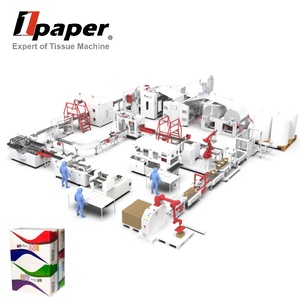
Investing in a tissue line requires complete plant synchronization. Seasia’s engineering team provides complimentary 2D and 3D CAD workshop layout drawings tailored to your specific factory dimensions in Yangon or Mandalay. We map out air compressor piping, electrical trunking, raw jumbo roll storage, and finished goods shipping channels to optimize workflow efficiency.
CE, ISO & TÜV Verified Quality Management
Operating under strict ISO 9001 quality management protocols, Seasia machinery features premium international componentry (including Schneider electricals, Omron sensors, Siemens PLCs, and NSK bearings). Our full compliance with European CE directives guarantees structural safety, low operational noise, and exceptional machine longevity.
Dedicated Overseas Installation & Remote Technical Guidance
Seasia dispatches experienced commissioning engineers directly to your plant location in Myanmar for complete machine assembly, electrical calibration, and operator training. Additionally, our multilingual engineering team offers 24/7 remote video support to assist your plant technicians with preventative maintenance and troubleshooting.
7. Sourcing FAQ for Myanmar Tissue Machinery Buyers
Addressing the technical, financial, and logistical questions most frequently raised by plant managers and investors in Myanmar.
Start Your Myanmar Tissue Production Project Today
Contact Seasia’s engineering team for a personalized machine proposal, full technical ROI analysis, and a free 2D/3D factory layout plan tailored to your site.
Get a Quote