Featured Industrial Tissue Machinery Showcase
Explore our certified lineup of heavy-duty toilet roll rewinding machines, automatic facial tissue production lines, napkin folding units, and multi-functional paper converting machinery customized for Thai tissue manufacturers and regional importers.
Thailand Tissue Machinery Industry Whitepaper & Local Dynamics
Thailand’s paper converting and sanitary tissue manufacturing sector is undergoing an unprecedented structural transition. Driven by the rapid expansion of the Eastern Economic Corridor (EEC), booming domestic tourism, and strict regional sustainability frameworks across Southeast Asia, paper converters in Bangkok, Chonburi, Rayong, and Chiang Mai require high-speed, highly reliable tissue rewinding machines that minimize fiber waste, withstand high tropical humidity, and deliver consistent roll density.
As a direct OEM manufacturer and global exporter, Seasia Tissue Equipment Co., Ltd. bridges the engineering gap for Thai paper converting plants. By combining robust machinery structures, Siemens/Delta PLC frequency control, precision air-expansion shaft unwinding, and tropicalized electrical components (IP65 protection against high ambient humidity), our machinery offers an exceptional operational lifecycle while drastically reducing maintenance overhead.
Technical Engineering: How Our Tissue Rewinding Lines Work
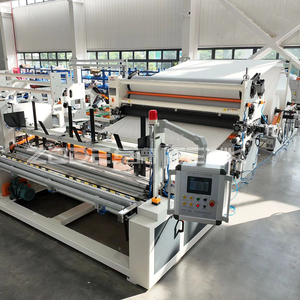
Understanding the mechanics of an automated toilet paper rewinding and slitting line is critical for plant managers evaluating capital expenditure (CAPEX). A standard 1575mm or 1880mm rewinding system operates through synchronized modular units, transforming massive parent rolls into tightly wound, perforated, embossed, and cut consumer logs.
Pneumatic Parent Roll Unwinding
Equipped with dual or triple jumbo roll stands featuring independent pneumatic flat-belt tension control. This allows seamless handling of parent rolls up to 1500mm diameter and 13–30 gsm tissue paper without web tears.
Embossing & Perforation Units
Customizable steel-to-rubber or steel-to-steel embossing rollers create Point-to-Point or Nesting patterns, boosting bulkiness by up to 25%. Helical upper perforating blades ensure crisp, clean sheet tear distances.
Automatic Log Saw & Tail Sealing
Integrates automatic tail trimming, glue spraying, and core loading. The high-speed orbital log saw cuts rolled logs into individual toilet paper rolls or hand towels at speeds exceeding 100 cuts/minute.
Technical Matrix: 1575 vs. 1880 Rewinding Production Lines
| Specification / Feature | Model 1575 Automatic Rewinder | Model 1880 High-Speed Rewinder | Industrial JRT Rewinder (Custom) |
|---|---|---|---|
| Max Parent Roll Width | 1,750 mm (Optimal for 1575mm paper) | 2,150 mm (Optimal for 1880mm paper) | 2,800 mm+ (Customized) |
| Finished Roll Diameter | Φ 60 - 150 mm (Adjustable) | Φ 60 - 180 mm (Adjustable) | Φ 150 - 300 mm (Jumbo Roll Tissue) |
| Perforation Pitch | 4 Blades: 90 - 160 mm | 4 Blades / Helical: 90 - 180 mm | Custom Industrial Pitch Settings |
| Operating Speed | 140 - 180 meters / minute | 180 - 230 meters / minute | 150 - 200 meters / minute |
| PLC & Drive System | Delta PLC + Frequency Inverter | Siemens PLC + Full Servo Motors | Siemens HMI Touchscreen System |
| Power Requirement | 7.5 kW - 11 kW (3-Phase 380V) | 15 kW - 22 kW (3-Phase 380V) | 18.5 kW - 30 kW (3-Phase 380V) |
Localized Application Scenarios in Thailand
Deploying the correct paper converting machine configuration depends heavily on your targeted end-user market in Thailand. Below are three primary operational scenarios where Seasia equipment delivers distinct competitive advantages:
1. HORECA & Tourism Supply Chains
Location Focus: Bangkok Metropolitan, Phuket, Pattaya, Koh Samui, Chiang Mai.
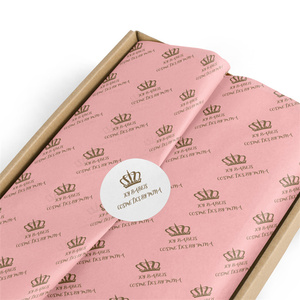
Product Focus: Premium 2-ply and 3-ply embossed toilet rolls, soft-pack V-fold facial tissue, and custom-printed restaurant napkins.
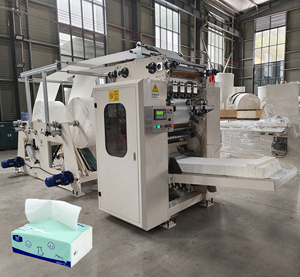
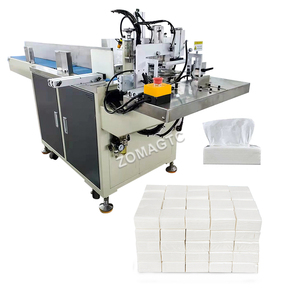
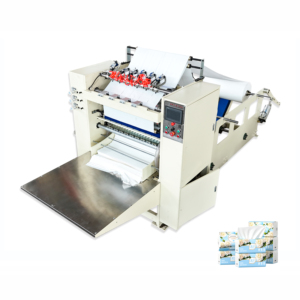
Machine Advantage: Hotel resort chains demand high-whiteness, super-soft tissue with distinctive point-to-point embossing logos. Our Automatic 2 Line & 3 Line V Fold Facial Tissue Machines feature precise flexographic color printing units that allow Thai converters to supply branded napkins directly to luxury hotel groups and QSR franchises.
2. Industrial Parks & EEC Manufacturing Zones
Location Focus: Chonburi (Amata City), Rayong (Map Ta Phut), Chachoengsao, Pathum Thani.
Product Focus: High-footage Jumbo Roll Tissue (JRT), hand paper towels, industrial wipe rolls.
Machine Advantage: Manufacturing facilities and commercial buildings require high-density, coreless or large-core JRT rolls to reduce dispenser refill frequency. Our heavy-duty 1880 Rewinding Lines handle thick 28-30 gsm recycled kraft or mixed pulp sheets, delivering dense, tightly rolled logs with precise perforation for commercial contract suppliers.
3. Eco-Friendly Agricultural & Packaging Conversion
Location Focus: Nakhon Ratchasima, Ratchaburi, Central Plains Agribusiness hubs.
Product Focus: Moulded fiber egg trays, egg cartons, fruit packaging trays, paper cups.
Machine Advantage: Leveraging Thailand’s abundant waste paper stream, integrated poultry farms and eco-packaging producers utilize our Automatic Pulp Molding Egg Tray Lines. Equipped with multi-layer metal drying tunnels, these systems convert recycled corrugated cartons into export-grade 30-hole egg trays at rates from 2,000 to 6,000 pieces per hour.
Thailand Market Trends Driving Conversion Automation
Strategic investments in paper machinery must align with macro-economic trends shaping Thailand's manufacturing ecosystem:
1. Shift Toward Eco-Labeling & Eucalyptus Fiber Utilization
Thailand is one of the world's leading growers of farm-cultivated eucalyptus trees. Local mills (such as Double A and SCG Packaging) produce vast quantities of short-fiber Bleached Hardwood Kraft Pulp (BHKP). Short fiber provides incredible surface smoothness but lower tensile strength compared to imported long-fiber softwood pulp. Our rewinding machines feature variable-frequency web tension control specifically calibrated to process 100% Thai eucalyptus pulp without web breaking at high speeds.
2. Green Industry & EEC Privilege Incentives
Under Thailand’s "BCG" (Bio-Circular-Green) economic model, factories investing in energy-efficient machinery enjoy tax incentives from the Board of Investment (BOI). Seasia’s latest generation 1880 rewinding lines utilize frequency-controlled main motors, saving up to 30% electrical energy compared to traditional mechanical gear setups, qualifying your plant for energy-efficiency certifications.
3. Automation Overcoming Rising Local Labor Costs
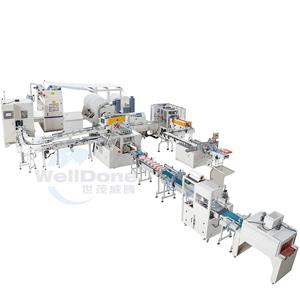
With Thailand’s minimum daily wage adjustments across industrial provinces, tissue converting plant owners can no longer rely on labor-intensive manual cutting and bagging. Upgrading to a fully automatic line—incorporating an Automatic Log Saw Cutter and Single-Roll Flow Wrapping Machine—allows a factory to produce 3-5 tons of finished product per shift with only 2 operator supervisors.
Why Choose Seasia Tissue Equipment?
Selecting a machinery supplier requires more than checking price tags; it demands an engineering partner committed to pre-delivery testing, structural integrity, and long-term technical service.
Factory-Direct Manufacturing
We operate an advanced 12,000+ m² production facility in Zhengzhou, Henan. Every machine frame is built using laser-cut steel plates, stress-relieved weldments, and precision CNC-machined rollers to ensure zero vibration during high-speed rewinding.
Test-Run with Your Paper Stock
Before sea freight dispatch, we test-run your order in our workshop using parent roll samples matching your local paper GSM and fiber specs. We send complete 4K video documentation and performance metrics for your engineering approval prior to loading.
Full Plant Layout & Electrical Design
Our CAD design team provides customized 2D and 3D plant layout drawings free of charge. We calculate your compressed air requirements, electrical cable sizing, foundation loading, and raw material storage workflow to optimize floor space.
Frequently Asked Questions (FAQ) for Thai Buyers
Detailed technical responses addressing voltage compliance, logistics, customs clearing, and operational parameters for importing tissue converting lines into Thailand.
Ready to Upgrade or Build Your Tissue Plant in Thailand?
Contact our senior engineering team today. Get a customized ROI evaluation, free workshop layout CAD drawing, and direct factory pricing tailored to your production goals.
Get a Quote