Industrial Paper Napkin & Tissue Production Lines
Engineered for high efficiency, operational durability, and precision embossing—configured for international export and regional deployment in Pakse and Southeast Asia.
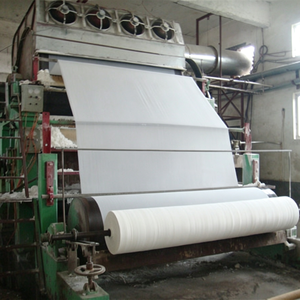
Tissue Paper Making Machine, Waste Paper Recycling Production Line
Complete jumbo roll mill system converting office waste paper and virgin pulp into toilet tissue and facial tissue parent rolls.
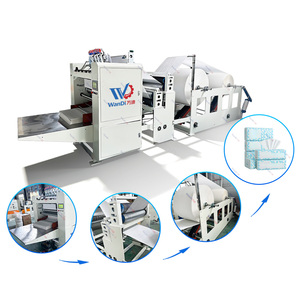
Factory Supplier Automatic V Fold Facial Tissue Paper Making Machine
High-speed vacuum folding line with precision slitting and automatic counting for pop-up facial tissue packs.
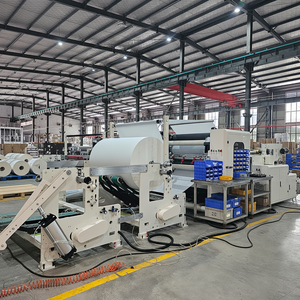
Fully Automatic Toilet Tissue Paper Roll Production Line
Integrated 1880/1575 rewinder with automatic core loader, embossing unit, log saw cutter, and bundler.
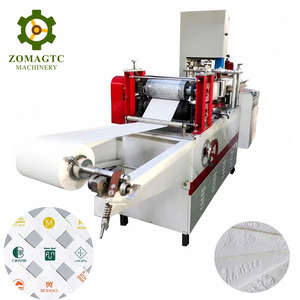
Automatic Serviette Tissue Folding Two Color Printing Embossing Napkin Machine
Specialized 1/4 and 1/6 fold table napkin machine featuring double flexographic color printing for branded hospitality napkins.
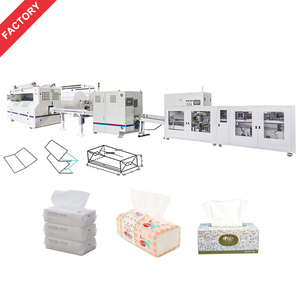
Automatic 7 Lane Facial Tissue Machine With Carton Box Packing Line
Industrial multi-lane converting station delivering continuous folding, log slitting, and rigid box cartoning.
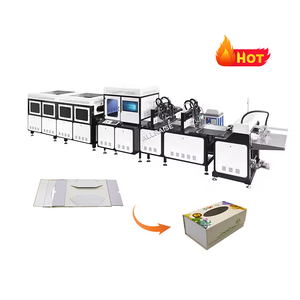
Automatic Facial Tissue Gift Box Making Machine & Foldable Box Line
Precision cardboard folding and rigid box forming system designed for premium tissue gift box presentation.
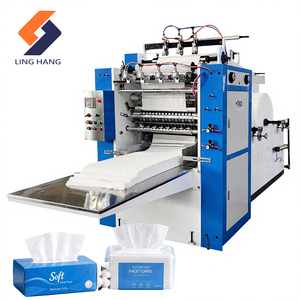
Small Fully Automatic Facial Tissue Line (Embossing, Cutting, Folding, DRC)
Compact footprint line optimized for non-woven DRC and airlaid tissue converting with low power consumption.
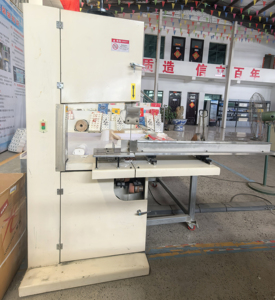
Semi-Automatic Toilet Paper Roll Band Saw Cutting Machine
Versatile log slitter with automatic blade sharpening for precise paper roll trim control and high yield.
Paper Napkin Machine Manufacturing & The Pakse Supply Chain Landscape
Pakse, the economic heart of Champasak Province in Southern Laos, has emerged as a key strategic logistics hub along the Mekong River corridor. Located near the borders of Thailand and Cambodia, Pakse serves as the commercial center for the entire southern region of Laos. Historically, commercial hygiene paper products—specifically 1/4 fold table napkins, restaurant serviettes, facial tissues, and rolled bath tissue—were imported into Pakse from manufacturing centers in Thailand (via Chong Mek) or Vietnam. However, evolving cross-border trade tariffs, currency exchange volatility, and rising freight costs have reshaped the industrial landscape, triggering a rapid shift toward in-country tissue converting and local paper napkin manufacturing.
For entrepreneurs, institutional paper suppliers, and packaging factories operating in Southern Laos, acquiring factory-direct paper napkin machinery represents a high-margin import substitution opportunity. The macroeconomic tailwinds driving this transition include the expansion of Champasak's hospitality sector (fueled by eco-tourism across the 4,000 Islands / Si Phan Don and the UNESCO World Heritage Wat Phou complex), the expansion of the Pakse-Japan Special Economic Zone (PJSEZ), and Laos' competitive industrial electricity tariffs powered by domestic hydroelectricity generation.
Importing finished napkins into Pakse means paying for shipping "air and volume" across borders. By importing concentrated tissue jumbo rolls (parent rolls) from regional primary mills and performing slitting, embossing, flexographic logo printing, and 1/4 or 1/6 folding locally using specialized machinery, converted product margins increase by 30% to 45%. Furthermore, local paper napkin factories can provide custom-printed, branded napkins to hotels and cafes in Pakse with lead times of days rather than weeks.
Technical Architecture of High-Efficiency Napkin Making Equipment
Industrial napkin making machinery operates by unwinding parent paper rolls, passing the web through single or double embossing cylinders, applying flexographic water-based ink for logo printing (optional), slitting the web to specified square dimensions, and executing precision mechanical folding. The mechanical stability of the machine directly governs product quality, edge alignment, and waste ratios.
| Mechanical Subsystem | Engineering Specification | Operational Advantage in Pakse Workshop |
|---|---|---|
| Unwind Stand & Tension Control | Pneumatic parent roll loading; automatic web tension sensor | Prevents tissue web tear when handling variable-grade parent rolls. |
| Embossing Unit | Steel-to-Border Rubber or Steel-to-Steel micro-embossing | Enhances tissue bulkiness, softness, and liquid absorbency for food service. |
| Flexographic Printing Unit | 1 to 2 color water-based Anilox roller ink transfer | Allows high-speed logo printing for hotel, resort, and restaurant branding. |
| Folding Assembly | Rotary knife mechanical cutting with 1/4 or 1/6 fold plates | Guarantees crisp geometric folds up to 500–800 napkins per minute. |
| Electronic Control System | Delta/Siemens PLC with touchscreen HMI & frequency inverter | Simplified operator interface with digital counter and automatic stack separation. |
When evaluating napkin machinery factories to supply the Pakse market, mechanical durability under tropical climate conditions is paramount. Humidity in Southern Laos can affect paper web tension and ink drying speed. Premium equipment integrates chrome-plated cylinders, heavy-duty cast-iron wall plates to eliminate vibration, and ceramic Anilox rollers to resist corrosion in high-humidity operating environments.
Localized Application Scenarios across Champasak & Mekong Trade Hubs
Deploying a paper napkin converting factory serving the Pakse market requires tailoring machine configurations to specific regional consumer and commercial user segments. Below are the primary application scenarios driving machinery demand in Southern Laos:
1. Pakse Eco-Tourism & Hospitality Supply
Hotels and eco-resorts along the Mekong River and Bolaven Plateau require customized, branded 1/4 fold table napkins with 2-color flexographic logo printing. Local production allows low minimum order quantities (MOQs) for boutique resorts.
2. Cross-Border Wholesale to Attapeu & Sekong
Pakse acts as the central warehouse depot for Southern Laos. Converting factories in Pakse supply bulk, unprinted 1/6 fold dispenser napkins and folded facial tissue to wholesalers in Salavan, Sekong, and Attapeu provinces.
3. Pakse SEZ Industrial Packaging
Manufacturing units inside the Champasak Special Economic Zone require industrial wipes, DRC non-woven tissues, and boxed facial tissue lines tailored for institutional and export-oriented cleanroom operations.
Paper Product Market Trends in Pakse & Southern Laos
Understanding localized consumption shifts ensures that initial machinery investments remain profitable over a 10-to-15-year operational lifecycle. Key trends shaping the Southern Lao paper converting industry include:
-
Shift from Single-Ply to Embossed Double-Ply Napkins: As dining standards rise in urban Pakse, food service establishments are replacing thin 1-ply tissue with bulk-embossed 2-ply napkins to improve absorbency and end-user perception.
-
Surge in Eco-Friendly Unbleached & Bamboo Pulp Converting: Hospitality buyers in the Bolaven eco-tourism corridor increasingly favor unbleached kraft or bamboo pulp napkins. Modern napkin machinery must handle varying fiber lengths without tearing during high-speed folding.
-
Automation to Counter Skilled Labor Shortages: While manual labor is accessible, precision folding and packing require automation. Full-line integration—combining napkin folding directly with automatic bagging or film wrapping—reduces manual contact and ensures compliance with sanitary regulations.
Why Factory-Direct Supply from Seasia Tissue Machinery Powers Success in Pakse
Seasia Tissue Equipment Co., Ltd. (headquartered in Zhengzhou, Henan, China) is a premier direct manufacturer of tissue paper converting machinery, pulp molding egg tray systems, paper cup forming equipment, and industrial auxiliary boilers. For buyers in Pakse and across Southeast Asia, working directly with our engineering factory eliminates intermediary markups and guarantees total technical transparency.
CE & ISO Certified Quality
Every paper napkin and toilet tissue line is manufactured under strict ISO 9001 quality management protocols and holds full European CE certification for operational safety.
TÜV Verified Manufacturer
Our facility is independently audited by TÜV Rheinland. Overseas buyers can inspect workshop operations, CNC machining centers, and live assembly lines with complete confidence.
Factory Test-Run with Real Paper
Before container loading, every customized napkin machine undergoes a rigorous test run with actual paper rolls in our factory. Video proof and speed tests are submitted to the customer prior to shipment balance payment.
Frequently Asked Questions for Sourcing Paper Napkin Machines in Pakse
Ready to Establish or Expand Your Paper Converting Line in Pakse?
Contact our senior engineering team today for a tailored machine proposal, factory floor layout design, and direct export quotation matching your specific raw material and output targets.