High-Efficiency Paper Converting & Packaging Lines
Factory-direct paper tissue converting, wet wipe processing, and automated packaging equipment engineered to international CE/ISO standards for immediate deployment in South Korea.

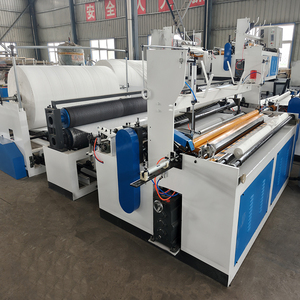
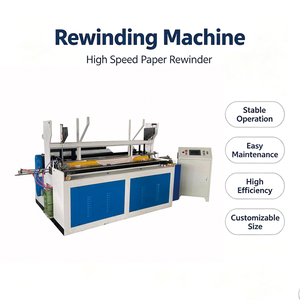
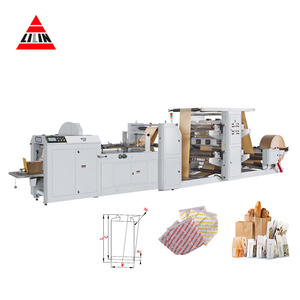
Why Incheon Manufacturers Source Packaging Machinery From Us
Combining precision Chinese machinery manufacturing with rapid maritime logistics directly into Incheon Port to support Korea's personal care, cosmetics, and medical wipe industries.
Incheon Direct Supply Chain
Seamless maritime routing from Qingdao/Shanghai ports direct to Incheon Port (ICN) within 48 to 72 hours. Reduced ocean freight costs, fast customs clearance via KAFTA tariffs, and direct delivery to Namdong and IFEZ industrial complexes.
K-FDA Cleanroom Standards
Equipped with SUS316L stainless steel contact liquid pipelines, peristaltic dosing pumps, UV sterilization tunnels, and enclosed acrylic safety guards engineered for Korean cosmetics and medical-grade wet wipe compliance.
High-Speed Servo Control
Multi-axis Mitsubishi or Siemens PLC systems powering servo-driven film feeding, precise liquid volumetric dosing (±0.5g), cross-sealing, and automated high-speed plastic lid application up to 120 packs per minute.
Comprehensive Technical Industry Whitepaper: Wet Wipe Converting & Packaging Automation for Incheon’s Industrial & Cosmetics Hub
As the primary maritime gateway to Greater Seoul and home to the Incheon Free Economic Zone (IFEZ)—including Songdo Bio-Cluster, Cheongna International City, and the sprawling Namdong Industrial Complex—Incheon has positioned itself as South Korea's premier manufacturing center for personal care, hygiene products, and high-end cosmetics. Among fast-moving consumer goods (FMCG), wet wipes (ranging from personal facial cleansing wipes and baby wipes to medical disinfectant wipes and household industrial towels) represent one of the fastest-growing categories in South Korea.
To maintain market competitiveness, South Korean wet wipe brands and OEM/ODM contract packaging facilities in Incheon require automated, highly dependable packaging machinery that delivers continuous high-speed performance, absolute liquid dosing accuracy, zero-leakage sealing integrity, and strict adherence to hygienic standards. As a premier China wholesale wet wipe packaging machine supplier and wholesaler serving Incheon, Seasia Tissue Equipment Co., Ltd. provides factory-direct converting, liquid dosing, and flow-wrapping automation designed specifically for the rigorous requirements of the Korean market.
1. Specialized Localized Application Scenarios in Incheon & Greater Seoul
Incheon’s diverse industrial topography demands versatile wet wipe converting and packaging machinery tailored to distinct product categories. Our customized equipment addresses four primary local market applications:
- K-Beauty & Cosmetic Cleansing Wipes (Songdo & Namdong Clusters): Premium facial cleansing sheets, micellar water makeup removal wipes, and exfoliating pads require pristine packaging aesthetics, tear-notch precision, and specialized laminate foil barriers (e.g., PET/AL/PE) that prevent volatile fragrance and lotion evaporation. Our machines integrate precise volumetric liquid dosing (adjusting from 2.5× to 4.0× liquid-to-cloth ratios) with multi-lane four-side sealing to guarantee airtight integrity.
- Medical & Bio-Pharmaceutical Sanitizing Wipes (Songdo Bio City): Hospital-grade alcohol prep pads, surface disinfectant wipes, and cleanroom sanitizing towels demand 100% sterile processing environments. Our wet wipe packaging machinery features full stainless steel SUS316L liquid supply pipes, automatic online UV germicidal irradiation lamps, and sealed cleanroom-ready frames compliant with South Korea's strict cosmetic and medical device manufacturing rules.
- Multi-Pack Baby & Household Wipes (IFEZ Distribution & E-Commerce Hubs): Ranging from 30-count to 120-count bulk packs for major Korean retail networks and online channels (such as Coupang and Naver Shopping), our automated horizontal flow-wrapping production lines fold nonwoven fabrics (Z-fold, C-fold, or continuous interfolding), dose lotion, flow-wrap into pillow bags, punch die-cut openings, and deploy high-speed robotic lid placement with hot-melt adhesive applicators.
- Single-Sheet Sachet Wipes for Aviation & Hospitality (Incheon International Airport Hub): Serving Incheon Airport’s massive international airline catering, hospitality, and food service supply chain, our high-output single-piece wet wipe packaging machines deliver speeds up to 250 sachets per minute with automated pouch counting, batch grouping, and carton loading options.
2. Technical Machinery Matrix & Production Performance Comparison
To assist Incheon factory managers and procurement directors in selecting the ideal equipment configuration, the following matrix outlines the operational specifications of our primary wet wipe packaging machinery lines:
| Machinery Model Type | Target Output / Speed | Substrate Compatibility | Dosing Accuracy | Power Specs (Korea Standard) |
|---|---|---|---|---|
| WWP-100S Single Sachet Line | 120 – 250 packs/min | Spunlace nonwoven, Airlaid paper | ±0.2g / sachet | 380V / 220V, 60Hz, 3-Phase |
| WWP-12L Multi-Pack (30-120 count) | 40 – 85 packs/min (logs up to 1200 sheets) | Viscose/Polyester, Bamboo, Flushable pulp | ±0.5g / pack | 380V, 60Hz, 3-Phase (Servo Motor) |
| WWP-CAN Canister Wet Wipe Line | 30 – 60 rolls/min | Perforated roll spunlace / pulp | Liquid immersion injection | 380V, 60Hz, 3-Phase |
| WWP-ROBOT Auto Lid Applicator | Up to 100 lids/min | Rigid PE / PP plastic lids | ±0.5mm placement position | 220V / 380V, 60Hz, Pneumatic + Servo |
3. Strategic Market Trends Driving Incheon’s Wet Wipe Manufacturing Sector
Operating as a global export gateway, South Korea's wet wipe market is undergoing rapid technological and environmental shifts. When sourcing wet wipe machinery from China, Incheon manufacturers prioritize equipment that aligns with three overarching industry trends:
- Transition to 100% Biodegradable & Flushable Substrates: Driven by South Korea's stringent eco-labeling policies and consumer demand for plastic-free packaging, nonwoven material processing has shifted toward bamboo fiber, 100% cotton, and flushable wood-pulp substrates. These eco-materials possess different tensile strength profiles compared to synthetic polyester blends. Our converting machinery utilizes active tension control servo drives to prevent web-breakage during high-speed folding and slitting.
- Smart Factory Automation & Real-Time Quality Vision Systems: To minimize labor overhead in South Korea, modern wet wipe packaging lines must operate with minimal manual intervention. Our advanced packaging machines integrate CCD vision camera inspection systems that instantly detect misaligned liquid dosing, improper edge-sealing, missing tear notches, or unsealed plastic lids, automatically rejecting defective packs downstream without stopping the main line.
- Customized Flexographic Printing & Flexible Bag Sizing: With rapid SKU rotation in the K-beauty sector, packaging machines must allow fast mechanical changeovers between pouch dimensions (e.g., changing from a 10-count pocket pack to an 80-count baby wipe pack within 25 minutes). Quick-change forming boxes, motorized pouch width adjustments, and digital HMI recipe storage are engineered natively into our control systems.
4. End-to-End Mechanical Engineering & Operational Workflow
Understanding the exact mechanical process of our high-speed wet wipe production and packaging lines provides clarity on how raw nonwoven jumbo rolls and liquid formulation are converted into market-ready retail packages:
Step A: Raw Material Unwinding & Longitudinal Folding
The jumbo spunlace nonwoven roll is mounted on an pneumatic expansion shaft with automatic magnetic powder brake tension control. The sheet is continuously slit into multi-lane strips and fed into precision stainless steel folding boards to create longitudinal folds (Z-fold, C-fold, W-fold, or custom interfolded patterns).
Step B: Precision Lotion Injection & Transverse Cutting
As folded nonwoven ribbons travel through the wetting channel, an automated peristaltic metering pump injects precise liquid formulation (distilled water, active cosmetic ingredients, preservatives, or alcohol mixtures). Stainless steel SUS316L nozzles ensure uniform lotion absorption across all plies. A rotary servo cutter then performs accurate cross-cutting to set individual sheet lengths.
Step C: Stacking, Counting, & Pillow-Pack Flow Wrapping
Cut wet wipes are automatically stacked by a high-speed mechanical finger system with photo-electric counting sensors. Stacks are transferred via conveyor into the horizontal flow-wrapping unit. Wrapping film (BOPP/CPP, PET/PE, or Aluminum Foil) is unwound, shaped around the wipe stack, continuous heat-sealed along the longitudinal bottom seam, and cut/sealed transversely by rotary end-sealing jaws.
Step D: Die-Cutting, Labeling, & Robotic Lid Attachment
For multi-pack wipes requiring rigid plastic closures, the packaging film passes through an online rotary punch unit to create the dispenser hole before sticker seal application. Downstream, an intelligent vision-guided robot arm picks plastic lids from a hopper, applies hot-melt adhesive around the lid rim via a Nordson-compatible gluing unit, and presses the lid securely onto the moving wet wipe package.
5. Enterprise Strengths of Seasia Tissue Equipment Co., Ltd.
As an established Chinese machinery manufacturer located in Henan Province, Seasia Tissue Equipment Co., Ltd. brings over a decade of specialized machinery manufacturing and international export experience. Overseas buyers in South Korea benefit directly from our comprehensive operational advantages:
- In-House R&D and Machine Assembly: We manufacture core mechanical components in-house, ensuring robust structural framing, precision gear alignment, and high-quality electrical assembly.
- 100% Pre-Shipment Factory Paper Testing: Every machine ordered by our Incheon clients undergoes a rigorous continuous 24-hour factory trial run using the customer's actual nonwoven material, packaging film, and lotion formulation prior to container loading. Test run videos and technical data logs are provided for full transparency.
- CE, ISO & TÜV Verified Quality Certification: Our manufacturing plant and converting lines hold complete ISO 9001 quality management compliance, along with official CE certificates for safety standards.
- Full Korean Electrical Adaptation: All electrical panels, motors, relays, and PLCs are wired and configured to South Korea's standard industrial grid (380V/220V 60Hz) with Korean or English language HMI touchscreen controls.
- Lifetime Technical Support & Rapid Spare Parts Dispatch: Thanks to the short geographical distance between East China ports and Incheon Port, critical spare parts, custom embossing rollers, and replacement heating elements can be dispatched via air freight or express sea shipment to arrive in Incheon within 48 to 72 hours.
Frequently Asked Questions by Incheon Buyers
Answers to common logistical, electrical, and technical procurement questions raised by South Korean factory owners and importers.