Featured China Wholesale Converting Equipment
Factory-direct paper processing lines engineered with Siemens PLC automation, ISO/CE certifications, and local 415V/50Hz power compatibility for Malaysia.
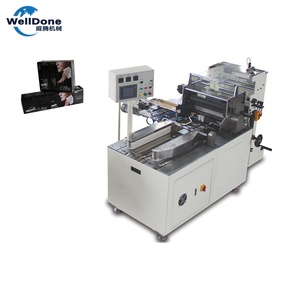
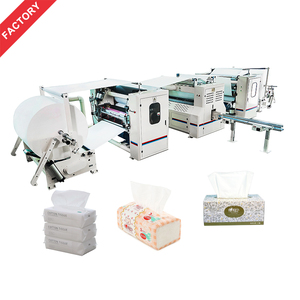
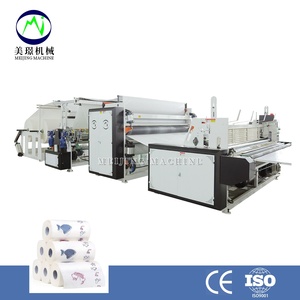
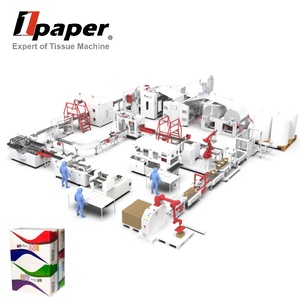
Executive Industry Brief: China-to-Malaysia Tissue Converting Machinery Corridor
The Malaysian market for tissue paper products—ranging from commercial toilet tissue rolls and hotel table napkins to soft-pack facial tissues—is undergoing rapid expansion. Driven by expanding hospitality sectors in Kuala Lumpur and Penang, alongside burgeoning industrial manufacturing hubs in Selangor and Johor, local converting plants face an imperative to modernize production capabilities. Sourcing industrial-grade tissue converting equipment directly from established OEM factories in China, such as Seasia Tissue Equipment Co., Ltd. (Zhengzhou, Henan), presents Malaysian enterprise buyers with a strategic CapEx advantage of 35% to 45% compared to European alternatives, without compromising operational efficiency or structural build quality.
To successfully navigate the acquisition of high-speed tissue converting machinery, plant directors and procurement managers must evaluate several technical parameters, including jumbo roll web width adaptability (1575mm vs. 1880mm vs. 2800mm), pneumatic unspooling tension controls, steel-to-rubber embossing cylinder configurations, and automatic log saw cycling speeds. Moreover, machinery deployed in Malaysian factories must be engineered specifically for local environmental conditions—such as high ambient humidity—and strictly adhere to Malaysia’s 415V/50Hz 3-phase industrial power grid standards and JKKP/DOSH safety regulations.
In-Depth Technical Architecture & Converting Categories
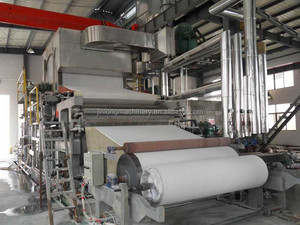
Tissue paper converting transforms bulk jumbo parent rolls produced by paper mills into packaged consumer products. Selecting the correct machinery configuration depends directly on product density, plies (1-ply, 2-ply, 3-ply, or 4-ply), tensile strength, and target retail or commercial channels in Malaysia.
1. Automatic Toilet Tissue Rewinding & Perforating Lines
Modern rewinding machines utilize Siemens PLC logic control combined with variable frequency drive (VFD) technology. Raw jumbo rolls are lifted pneumatically onto unspooling stands. The paper web passes through embossing units (steel-to-rubber or steel-to-steel micro-embossing for enhanced softness and bulk), perforation blades calibrated to precise sheet lengths, and synchronous rewinding mandrels that produce tight, uniform paper logs. Integrated tail-gluing, trimming, and sealing units ensure seamless handoff to automatic high-speed log saw cutters.
2. V-Fold & N-Fold Interfolding Facial Tissue Lines
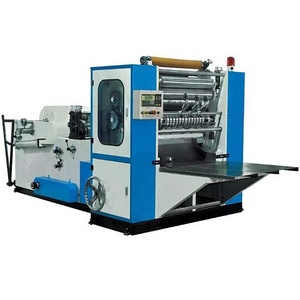
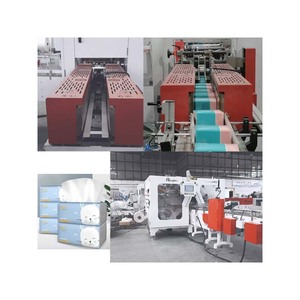
Multi-lane facial tissue interfolding equipment utilizes vacuum suction technology to pull alternating webs of paper, creating continuous interlocked sheets. High-capacity 6-lane and 8-lane models process parent rolls up to 2100mm in width, operating at mechanical speeds exceeding 800 to 1000 sheets per lane per minute. Automatic electronic counting systems separate tissue stacks into precise quantities prior to automated poly-wrapping or carton boxing.
3. High-Speed Embossed Napkin Machines with Digital/Flexo Printing
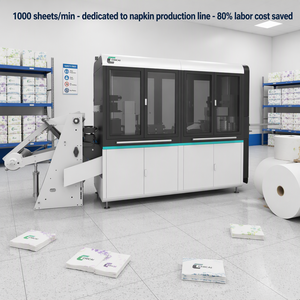
Table napkin folding machinery caters to Malaysia's extensive HORECA market. Machines support 1/4 fold, 1/6 fold, and 1/8 dispenser fold geometry. Advanced units integrate short-run digital ink-jet modules or flexographic printing stations capable of applying eco-friendly water-based inks for custom restaurant branding without requiring expensive plate setups.
| Converting Machine Type | Jumbo Roll Width | Production Speed | Control System | Primary Malaysian Market |
|---|---|---|---|---|
| 1880 High-Speed Toilet Rewinder | 1800mm – 2200mm | 180 – 230 meters/min | Siemens PLC & Touch Screen | Supermarket Retail & FMCG Brands |
| 1575 Semi-Auto Toilet Rewinder | 1350mm – 1750mm | 120 – 160 meters/min | Delta PLC / VFD Control | SME Startups & Local Suppliers |
| 6-8 Lane V-Fold Facial Line | 1200mm – 1800mm | 800 – 1000 sheets/min/lane | Pneumatic Vacuum Suction | Boxed & Soft-Pack Retail Facial Tissue |
| 1/4 & 1/6 Fold Napkin Machine | 230mm – 400mm | 600 – 1000 pcs/min | Inverter Speed Control | HORECA, Hotels, Catering & Fast Food |
| Digital Short-Run Napkin Printer | 200mm – 330mm | 400 – 800 pcs/min | Zero-Plate Inkjet Engine | Customized Event & Brand Napkins |
Localized Application Scenarios in the Malaysian Market
To maximize Return on Investment (ROI), machinery configurations must align with specific geographic, industrial, and demographic requirements across East and West Malaysia.
Scenario A: HORECA & Hospitality Supply (Kuala Lumpur, Penang & Melaka)
Hotels, resorts, and food service establishments in urban tourism hubs require high volumes of custom-embossed and color-printed napkins. Utilizing Zero Plate Cost Digital Napkin Converters allows local Malaysian distributors to offer micro-run custom printed napkins for luxury weddings, boutique cafes, and corporate events with quick turnaround times.
Scenario B: Commercial & Industrial Washroom Converting (Selangor & Johor)
Industrial parks in Shah Alam, Klang, and Pasir Gudang require heavy-duty Jumbo Roll Tissue (JRT) and hand paper towels. Converters operating Siemens Control Glue Lamination Towel Machines deliver 2-ply high-absorbency commercial towels with superior wet strength suited for factory washrooms, hospitals, and airport facilities.
Scenario C: Non-Wood & Eco-Friendly Fiber Converting (Sabah & Sarawak)
With East Malaysia emphasizing sustainable forestry and agricultural waste utilization, converting bamboo pulp, palm fiber residues, and recycled paper is expanding. Low-noise, high-tensile-strength handkerchief and facial tissue machines are optimized to process 100% bamboo virgin pulp without tearing along perforation lines.
Scenario D: Halal Hygiene-Compliant Packaging Lines (Nationwide)
Malaysian sanitary tissue production requires compliance with strict hygiene protocols. Machinery equipped with fully enclosed stainless-steel guards, food-grade lamination adhesives, and automatic UV sanitization units ensures finished paper products satisfy local Halal audit standards and cleanroom packaging guidelines.
Key Industry Trends Driving Machinery Upgrades in Malaysia (2025–2030)
1. Shift Toward High-Grammage Bamboo & Sustainable Pulps: Environmental ESG policies in ASEAN are incentivizing local converters to reduce reliance on imported virgin wood pulp. Malaysian factories are increasingly adopting unbleached bamboo pulp and recycled fiber grades. Machinery must feature ultra-sensitive electronic web tension control to handle varying fiber tensile profiles without breaking at high speeds.
2. Adoption of Full Automation & Single-Operator Production Lines: Rising local labor costs in Malaysia’s manufacturing sector have accelerated demand for fully automated converting-to-packing pipelines. Connecting automatic log saw cutters directly to high-speed bundle wrappers eliminates manual handling, boosting plant throughput while maintaining hygienic standards.
3. On-Demand Customization & Micro-Branding: E-commerce platforms and private label tissue brands in Malaysia require short production runs. Traditional mechanical printing plates present high setup costs; hence, digital inkjet-integrated napkin and handkerchief converting units are gaining significant traction among SME paper mills.
Why Partner with Seasia Tissue Equipment Co., Ltd.
Headquartered in the High-Tech Industrial Zone of Zhengzhou, Henan, China, Seasia Tissue Equipment Co., Ltd. is a leading manufacturer of complete paper converting and pulp molding production lines. With over a decade of dedicated engineering expertise, we provide direct OEM factory advantages to Malaysian paper manufacturers:
- Factory-Direct Engineering: Eliminates trading markups, ensuring access to top-tier components including Siemens PLCs, Schneider electronics, and NSK bearings at true manufacturer prices.
- Rigorous Pre-Shipment Dry-Run Testing: Every machine undergoes testing using real jumbo rolls prior to container loading, with live video inspection feeds provided to clients.
- International Certification Compliance: All equipment holds verified CE and ISO quality management certifications, fully compliant with TÜV supplier standards.
- Custom Electrical & Mechanical Layouts: Full engineering customization for 415V/50Hz 3-phase power supply, specialized embossing cylinder designs, and custom plant floor layout blueprints free of charge.
- Comprehensive Overseas Installation & Service: Verified track record of overseas line installations (including cases in Mali, Poland, India, and Thailand) backed by remote video guidance and on-site engineer dispatch.
Frequently Asked Questions (FAQ) for Malaysian Machinery Buyers
✔ Q1: What are the customs duty rate, SST, and Form E benefits when importing tissue converting machinery from China to Malaysia?
Under the China-ASEAN Free Trade Agreement (ACFTA), importers in Malaysia can claim zero-duty tariff preference by submitting a valid Form E Certificate of Origin issued in China. Capital manufacturing machinery is generally exempt from import duties, while local Sales and Service Tax (SST) of 10% applies unless your manufacturing business possesses an official MIDA/Customs SST exemption certificate.
✔ Q2: Can Seasia configure electrical panels specifically for Malaysian industrial electrical standards?
Yes. Standard industrial power in Malaysia operates at 415V, 3-Phase, 50Hz. Before production begins at our Zhengzhou facility, electrical motors, heating elements, frequency inverters, and PLCs are wired and tested specifically to 415V/50Hz specifications, preventing phase imbalance or transformer overheating issues in your plant.
✔ Q3: How are shipping, port delivery, and customs clearance handled at Port Klang or Penang Port?
Machinery is packaged in export-standard moisture-proof film and reinforced wooden crates or loaded into 20ft/40ft ocean containers (FCL). We offer FOB Qingdao/Shanghai terms as well as CIF Port Klang or Penang Port. Our team coordinates shipping documentation—including bill of lading, commercial invoice, packing list, and Form E—to ensure smooth clearance through Malaysian Customs.
✔ Q4: What is the average manufacturing lead time and installation schedule?
Standard standalone machines (such as napkin folders or 1575 toilet rewinders) require 20 to 30 days for manufacturing and factory testing. Complex 8-lane interfolding facial tissue production lines require 35 to 45 days. Transit time by ocean freight from China ports to Port Klang is approximately 10 to 14 days. On-site commissioning and operator training usually take 3 to 7 days.
✔ Q5: How does Seasia supply spare parts and technical support to plants in East and West Malaysia?
We supply a comprehensive two-year wearing spare parts kit (including perforation blades, timing belts, pneumatic valves, and heating tubes) alongside machinery shipments. Critical electronic components are sourced from globally available brands like Siemens and Schneider. Technical support is available 24/7 via remote video assistance, with engineers available for dispatch to Malaysia when required.
Start Your Tissue Converting Project in Malaysia
Connect directly with senior engineers at Seasia Tissue Equipment Co., Ltd. to receive customized technical proposals, factory floor layout drawings, and competitive direct factory pricing.