Siem Reap Commercial Paper Market: Why In-House Kitchen Towel Converting is the Next High-Margin Opportunity
Siem Reap, the primary tourism gateway of Cambodia and home to the world-renowned Angkor Archaeological Park, hosts a massive, rapidly expanding hospitality ecosystem. With hundreds of luxury boutique hotels, international resort chains, fine dining establishments, and high-density food service hubs operating year-round, the daily consumption of disposable paper hygiene products—specifically kitchen paper towels, 2-ply embossed napkins, and heavy-duty hand wipes—has surged exponentially.
Historically, a significant percentage of Siem Reap’s commercial paper products were imported as finished roll goods from neighboring markets such as Thailand and Vietnam. However, local paper distributors and hotel supply wholesalers face mounting challenges due to volatile freight tariffs, import duties, moisture damage during long transit times, and razor-thin reseller margins. Establishing a localized paper converting workshop or expanding an existing tissue processing plant in Cambodia using advanced China Kitchen Paper Towel Machines allows regional manufacturers to cut supply chain costs by up to 35% while capturing premium local market share.
Technical Architecture of Modern Kitchen Paper Towel Machinery
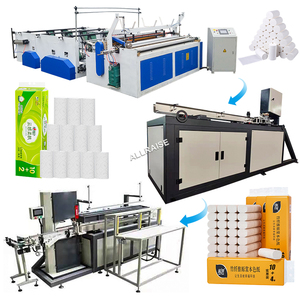
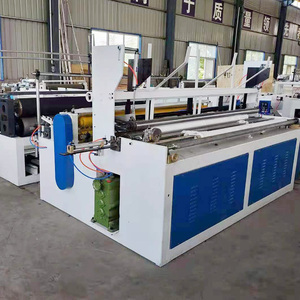
A high-performance kitchen paper towel converting line is engineered to transform large-diameter paper parent rolls into consumer-ready or commercial-grade perforation rolls. Unlike standard toilet tissue rewinding equipment, a specialized Kitchen Paper Towel Machine requires advanced mechanical modules designed to handle higher basis weights (typically 18 gsm to 25 gsm per ply) and deliver wet-strength absorbency.
1. Heavy-Duty Unwinding & Pneumatic Loading Unit
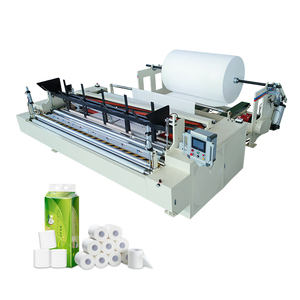
The manufacturing process begins at the jumbo roll stand. China's leading machinery builders utilize dual independent unwinding stands fitted with flat belt drive systems and magnetic powder brakes. This guarantees constant web tension control even when running large 1,575mm or 1,880mm parent rolls at speeds exceeding 200 meters per minute.
2. Point-to-Point Glue Lamination & Embossing Systems
Absorbency and tactile strength define quality kitchen paper towels. Modern converting lines incorporate precision point-to-point (nested) or steel-to-rubber embossing rollers coupled with automated glue application units (Anilox rollers). By micro-gluing the embossed peaks of two tissue plies together, the machine creates air pockets that enhance liquid holding capacity—a critical requirement for Siem Reap's commercial restaurant kitchens and hotel housekeepings.
3. High-Precision Perforation & Log Rewinding
The perforation unit utilizes helical alloy steel blades to ensure clean tear lines. PLC-controlled servo drive motors allow operators to adjust perforation pitch (sheet length) digitally on the touch-screen interface without mechanical gear changes. The rewinder automatically inserts paper cores, winds to the target roll diameter, cuts the web, and applies tail-gluing seamlessly.
4. Automatic Log Saw Cutting & Flow Wrapping
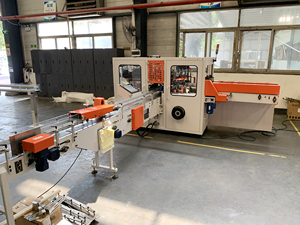
Once rewound into long paper "logs," the rolls pass into a high-speed orbital log saw cutter. Dual-blade rotary systems deliver square, burr-free cuts at high cycle rates. The individual rolls then move directly into automatic film wrapping lines, sealing the product against Siem Reap's high ambient humidity.
Engineering Specification Matrix: Selecting the Right Line for Siem Reap
To assist factory managers and procurement teams in selecting the ideal equipment configuration, our engineering team has summarized the core parameters of our export series below:
| Machinery Model | Parent Roll Width | Design Speed | Key Embossing Technology | Recommended Siem Reap Application |
|---|---|---|---|---|
| 1575 Semi-Auto Rewinder | ≤ 1750 mm | 120–150 m/min | Steel-to-Rubber Single Embossing | Start-up workshops, small wholesale suppliers |
| 1880 Fully-Auto Kitchen Line | ≤ 2150 mm | 180–230 m/min | Point-to-Point Glue Lamination | Medium-to-large distributors & hotel suppliers |
| 2800 High-Speed Industrial Line | ≤ 2800 mm | 250+ m/min | Nested Micro-Embossing + Color Print | Enterprise-scale tissue converting factories |
Localized Engineering Adaptations for Cambodian Manufacturing Conditions
Operating industrial converting machinery in Southeast Asia requires specific hardware adaptations to combat tropical environment challenges:
- Electrical Grid Compatibility: Standard Cambodian industrial power supply runs on 380V/3-Phase/50Hz. All control panels are integrated with Schneider, Siemens, or Delta VFDs and PLCs engineered to handle ±10% voltage fluctuations common in regional industrial zones.
- Anti-Corrosion & Humidity Protection: Due to Siem Reap's humid climate, critical mechanical components—including log cutter shafts, embossing cylinders, and drive gears—undergo nickel plating or hard chrome heat treatment to prevent oxidation.
- Tropicalized Cooling Systems: Main electrical cabinets are fitted with industrial micro-air conditioners to prevent PLC overheating and extend drive component lifespans during peak hot season operation.
Why Work with Seasia Tissue Equipment Co., Ltd.?
As a premier direct manufacturer located in Henan, China, Seasia Tissue Equipment Co., Ltd. (ISO Quality Management Certified & CE Certified) has spent over a decade supplying fully tested, reliable tissue paper converting, egg tray pulp molding, and paper packaging machinery to international buyers across Asia, Africa, Europe, and the Americas.
We do not merely assemble machines; we deliver complete turnkey industrial solutions. Every single machine undergoes rigorous live-paper test runs in our Zhengzhou workshop prior to container loading, with real-time video validation provided to our clients. Furthermore, we provide localized factory layout drawings, electrical schematics, raw material sourcing support, and step-by-step remote or on-site commissioning.