Industrial Hot Water Boiler Engineering & Decarbonization in Kyoto Prefecture
In the historical and industrial heart of Japan's Kansai region, Kyoto Prefecture presents a unique operational landscape for thermal energy systems. Known globally as the birthplace of the landmark Kyoto Protocol, the region enforces stringent local environmental bylaws alongside Japan’s national Air Pollution Control Act and Energy Conservation Act. For plant managers, textile mill engineers, food processing operations, pulp packaging facilities, and commercial district heating operators across Kyoto City, Fushimi Ward, Minami Ward, and Uji City, procuring a CE certified industrial hot water boiler is no longer just about heat generation—it is an exercise in strict emissions control, energy yield optimization, and long-term operating cost reduction.
As an international OEM manufacturer and specialized exporter, Seasia Equipment Co., Ltd. supplies heavy-duty industrial boilers, pressure vessels, and integrated processing lines built to rigorous European (CE Pressure Equipment Directive 2014/68/EU) and ISO 9001 standards. Our industrial hot water boilers feature advanced three-pass wet-back thermodynamic architecture, condensing flue gas heat recovery systems, and microcomputer PID intelligent combustion controls. Engineered to operate seamlessly on Japanese industrial gas (City Gas 13A), Liquefied Petroleum Gas (LPG), low-sulfur oil, and eco-friendly biomass, our systems achieve steady thermal efficiencies exceeding 98.5%.
Three-Pass Wet-Back Design
Maximizes radiant and convective heat transfer surface areas, eliminating back combustion chamber thermal damage and minimizing thermal stress during heavy load fluctuation.
Ultra-Low NOx Combustion
Equipped with European flue gas recirculation (FGR) burners to reduce nitrogen oxide emissions below 30 mg/Nm³, fully compliant with Kyoto municipal environmental limits.
Condensing Waste Heat Recovery
Integrated ND-steel or finned stainless steel economizers capture latent heat from flue gases, lowering exhaust temperatures down to 65°C and boosting total thermal yield by 6–8%.
Localized Application Scenarios Across Kyoto's Industrial Sectors
Industrial thermal requirements in Kyoto vary significantly depending on the local cluster. Our industrial hot water boilers and combined steam equipment are configured around specific local duty cycles:
1. Traditional Textile & Yuzen Dyeing Works (Nishijin & Kamigyo Wards)
Kyoto's legendary kimono and silk textile industry requires constant, temperature-precise hot water loops (85°C to 95°C) for fabric washing, scouring, and steam-setting processes. Fluctuations in water pressure or temperature can cause dye unevenness. Our pressure hot water boilers provide continuous, non-pulsating hot water flows with ±1°C digital precision.
Fushimi is world-renowned for its pristine underground water and centuries-old sake breweries. Industrial heating in food and beverage plants demands clean thermal loops, zero risk of fuel contamination, and rapid steam generation for vat sterilization and bottle washing. Our gas-fired stainless-coil hot water boilers ensure sanitary heating without mineral degradation.
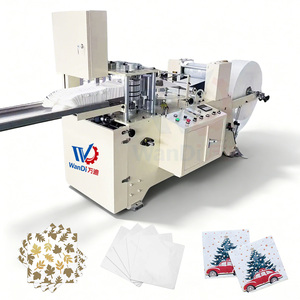
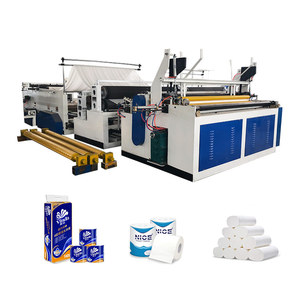
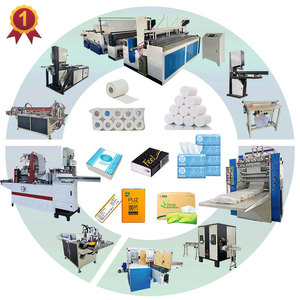
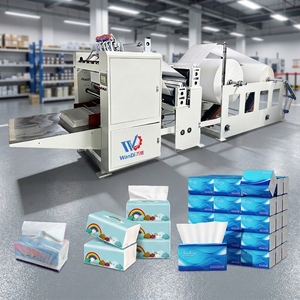
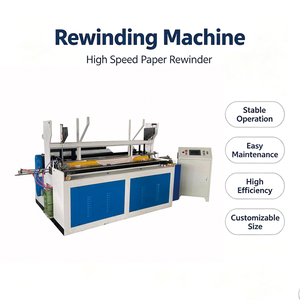
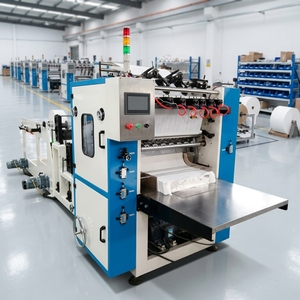
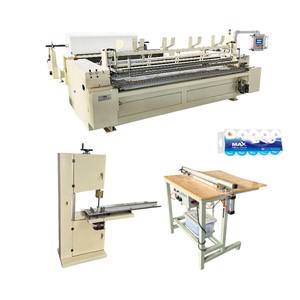
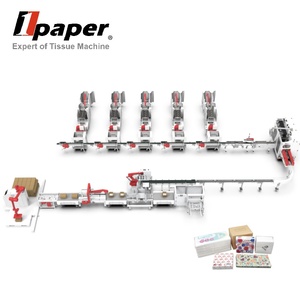
Paper tissue converting lines, egg tray molding systems, and corrugated box packaging factories demand large-scale process hot water and steam for pulp drying, log saw lubrication heating, and cylinder heating. Integrating our high-capacity hot water boilers into paper converting infrastructure drastically reduces drying cylinder warm-up times.
Kyoto’s luxury hotel sector, hot spring (onsen) resorts, and regional hospitals rely on uninterrupted central hot water supply for space heating, domestic sanitary water, and balneotherapy. Compact atmospheric hot water boilers provide silent operation, multi-redundancy backup burners, and modular footprint for tight indoor boiler rooms.
Industrial Hot Water Boiler Performance Matrix
Selecting the appropriate boiler type requires evaluating working pressure, fuel type, thermal output (kcal/h or kW), and localized footprint constraints. Below is a comparative breakdown of our core CE-certified industrial boiler series exported to the Japanese market:
Boiler Model Series
Rated Thermal Capacity
Design Working Pressure
Fuel Compatibility
Thermal Efficiency
Primary Industrial Application
WNS-HW Gas Hot Water Boiler
0.7 MW – 14.0 MW (60–120×10⁴ kcal/h)
0.7 MPa / 1.0 MPa / 1.25 MPa
City Gas 13A, Natural Gas, LPG
98.2% – 99.1%
District heating, Textile dyeing, Hospitality loops
CWNS Atmospheric Hot Water Boiler
0.35 MW – 2.8 MW (30–240×10⁴ kcal/h)
Atmospheric (0 MPa Gauge)
Natural Gas, Diesel, Light Oil
95.5% – 96.8%
Commercial hot water, Onsen thermal backup, Hospitals
SZL Biomass Hot Water Boiler
1.4 MW – 10.5 MW (120–900×10⁴ kcal/h)
1.0 MPa / 1.6 MPa
Wood pellets, Sawdust, Bagasse, Shells
88.0% – 91.5%
Eco-industrial parks, Woodworking, Rural process heating
LHS Vertical Steam / Water Generator
0.1 t/h – 1.0 t/h (100–1000 kg/h)
0.7 MPa / 1.0 MPa
City Gas, Electricity, Light Diesel
96.0% – 98.0%
Small paper tissue workshops, Sterilization, Laundries
Local Market Trends & Decarbonization Regulations in Kyoto
Kyoto City has established ambitious carbon neutrality goals aiming for a 40% reduction in greenhouse gas emissions by 2030 compared to 2013 levels, accelerating toward zero net carbon by 2050. This regulatory posture heavily impacts commercial and industrial thermal procurement:
Electrification & Gas-Dual Fuel Transitions: Industrial plants across Kansai are actively replacing legacy coal and heavy oil (Fuel Oil C) boilers with high-efficiency City Gas 13A or dual-fuel systems capable of firing hydrogen-blended gas. Our burner manifolds are pre-engineered for rapid retrofitting to future green gas mixtures.
Strict Municipal NOx Caps: Under Kyoto City’s Ordinance on Environmental Protection, mid-to-large scale industrial combustion devices installed within non-industrial zoning must adhere to ultra-low nitrogen oxide thresholds. Seasia boilers integrate staged air combustion and optional selective catalytic reduction (SCR) interfaces to keep exhaust emissions well below regional limits.
Smart IoT Telemetry & Automatic Blowdown: Labour shortages in Japanese manufacturing emphasize automated, maintenance-free operations. Our boilers feature Siemens PLC touch-screen interfaces, automated continuous blowdown valves (TDS control), and remote telemetry modules allowing real-time monitoring via tablet or desktop.
Enterprise Strength & Engineering Capabilities: Why Partner with Seasia
Seasia Tissue Equipment Co., Ltd. (operating out of Henan’s high-tech manufacturing zone) maintains over a decade of international manufacturing expertise across paper converting machinery, pulp molding systems, and heavy industrial thermal equipment. Our state-of-the-art facility spans over 10,000 square meters, equipped with automatic submerged arc welding machines, CNC plasma cutters, non-destructive X-ray flaw detection chambers, and hydrostatic pressure testing rigs.
We understand that Japanese B2B buyers mandate absolute precision, documentation integrity, and reliable post-sales engineering support. Every boiler unit exported to Kyoto undergoes a rigorous 100% factory test-run before container loading. We provide complete CE technical files, pressure vessel inspection certificates, CAD foundation layout drawings, electrical schematics adapted to Japan's 200V / 220V 3-Phase 50Hz/60Hz grid, and step-by-step operating manuals in English and Japanese.
Certified Weld Quality
100% Non-destructive X-ray testing (RT) and hydraulic pressure testing at 1.5 times the design working pressure ensures zero leak paths over decades of continuous use.
Custom Electrical Integration
Control panels fitted with Schneider/Siemens electrical components configured specifically for 200V 50Hz (Eastern Japan) or 200V 60Hz (Kansai / Kyoto regional power supply).
Global Logistics & Door Delivery
Seamless freight handling directly to Port of Kobe or Port of Osaka, with complete customs clearance documentation and on-site or remote video installation guidance.
Frequently Asked Questions by Buyers in Kyoto & Kansai Region
How does CE Certification map to Japanese Industrial Safety Regulations (JIS & Boiler Safety Ordinance)?
Our boilers are manufactured in full compliance with the European CE Pressure Equipment Directive (PED 2014/68/EU), which enforces strict material traceability, pressure safety valve sizing, and structural integrity standards equal to or exceeding many national codes. For installation in Japan, we supply complete calculation sheets, material mill test certificates (MTC), and non-destructive test reports required for local municipal fire department and prefectural labor bureau notifications.
Can these boilers operate on Kyoto’s standard municipal City Gas supply?
Yes. We configure our gas burner trains (typically Baltur, Riello, or Weishaupt units) specifically tuned for City Gas 13A (natural gas, high calorific value around 45 MJ/Nm³) used throughout the Osaka-Kyoto metropolitan network, as well as LPG back-up options.
How does water quality in the Yodo / Kamo River basins affect boiler maintenance?
While Kansai river basin water is relatively soft compared to continental Europe, raw water still contains dissolved silica, oxygen, and trace minerals that cause scaling and internal pitting corrosion over time. We supply integrated automatic sodium-ion water softeners, chemical dosing pots, and thermal deaeration units to protect boiler tubes and maintain peak heat transfer rates.
What is the typical shipping lead time and sea freight route to Kyoto?
Manufacturing standard models typically takes 20 to 30 working days. Shipments are routed via Qingdao or Shanghai port directly to Osaka Port or Kobe Port (transit time approx. 4–7 days). From the port, equipment is transported via flatbed truck to your facility in Kyoto Prefecture.
Can these hot water boilers be integrated into existing paper converting lines or pulp dryers?
Absolutely. Our thermal engineering team provides custom piping and instrumentation diagrams (P&ID) to interface boiler steam or pressurized hot water output directly with paper machine drying cylinders, tissue embossing rolls, or egg tray pulp molding drying tunnels.
What installation and after-sales support is provided for Japanese operators?
Prior to shipping, every boiler is test-run in our workshop, and a complete high-definition video of electrical, burner ignition, and safety valve operation is recorded for your review. We provide 24/7 video guidance, detailed English/Japanese installation blueprints, and can dispatch engineers for on-site commissioning upon request.
Ready to Upgrade Your Thermal System in Kyoto?
Contact our senior thermal application engineers today for a free technical consultation, custom boiler sizing calculation, or complete production line layout proposal.