In the rapidly expanding paper converting industry, establishing a reliable, high-efficiency production line requires machinery engineered for precision, continuous operational stability, and minimal web friction. Seasia Tissue Equipment Co., Ltd. (based in Zhengzhou, Henan, China) has established itself as an authoritative global manufacturer and direct wholesaler of commercial paper napkin folding machines, facial tissue converting lines, pulp molding egg tray equipment, and high-speed packaging machinery.
Industrial Insight: The Critical Value of Factory-Direct Machine Sourcing
Selecting a certified tissue machinery manufacturer over third-party trading intermediaries ensures customized voltage integration, custom embossing pattern roller engraving (steel-to-rubber or steel-to-steel), precise pneumatic shaft tension balancing, and lifetime access to OEM replacement parts. Every machine engineered at our Zhengzhou manufacturing plant undergoes rigorous continuous run-testing using real parent paper rolls prior to container loading.
Explore our primary range of industrial paper napkin folding machines, multi-lane interfold facial tissue lines, and fully automated box packing systems designed for commercial converters and wholesalers.
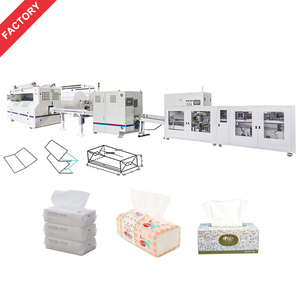
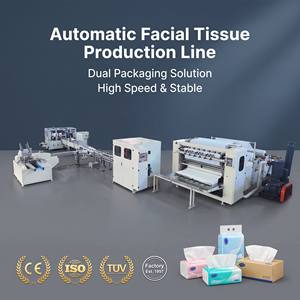
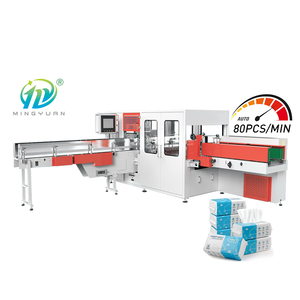
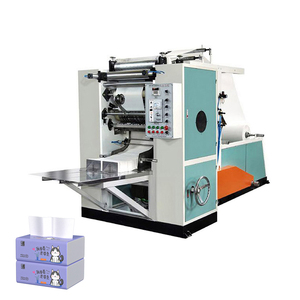
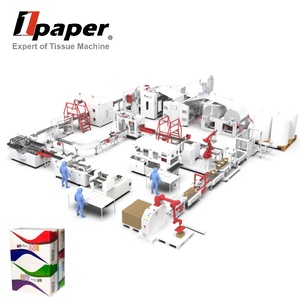
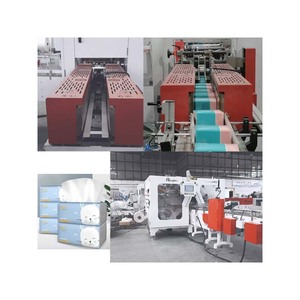
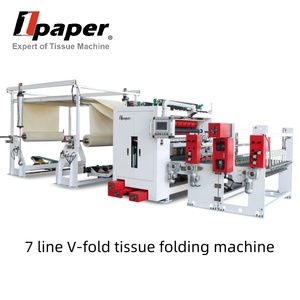
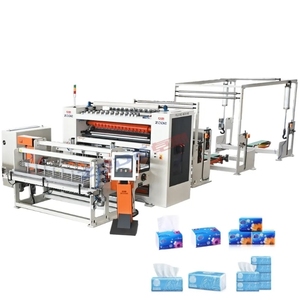
High-speed napkin tissue paper making machines transform raw parent paper jumbo rolls into perfectly cut, embossed, folded, and counted table napkins or facial tissue sheets. Understanding the underlying mechanical architecture helps buyers select the correct configuration.
Pneumatic Parent Roll Unwinding & Tension Control
Equipped with pneumatic jumbo roll loading arms and flat belt tensioners, ensuring continuous web tension regardless of paper roll diameter changes. This prevents web breakage on lightweight 13–20 GSM tissue stock.
Precision Embossing Roller Assembly
Utilizing hardened steel-to-rubber or micro-embossing steel-to-steel rollers. Deep perimeter embossing bonds multiple tissue plies together without chemical adhesives, giving napkins superior bulk, hand-feel, and edge stability.
Flexographic Color Printing Integration
Anilox roller ink distribution units enable 1-color or 2-color high-definition branding directly onto table napkins prior to folding. Fast-drying non-toxic water-based inks comply with food-contact safety standards.
Technical Specification Benchmarks Across Machine Types
| Machine Category | Standard Folding Types | Linear Speed / Production Capacity | Parent Roll Width | Control System Architecture |
|---|---|---|---|---|
| 1/4 Fold Table Napkin Machine | 1/4 Square Fold, 1/8 Cocktail Fold | 500 – 800 sheets/min / lane | 180 mm – 400 mm | Frequency Inverter + Electronic Counter |
| 1/6 Embossed Napkin Folder | 1/6 Rectangle / Dispenser Fold | 600 – 1000 sheets/min | 230 mm – 330 mm | PLC Touch Screen + Servo Feeding |
| Multi-Lane Interfold Facial Tissue | V-Fold (Interfold), Z-Fold, N-Fold | 600 – 1200 sheets/min / line | 420 mm – 2100 mm (2–10 lanes) | Full Servo Sync + Vacuum Suction Blower |
| High-Speed Box Packing Line | Automatic Carton Forming & Sealing | 60 – 100 boxes/min | Custom Box Sizes | Optical Sensor Tracking + Hot Melt Glue |
As sustainability mandates intensify and labor costs rise across North America, Europe, the Middle East, and Southeast Asia, paper napkin and tissue paper converting lines are evolving rapidly.
1. Transition to Eco-Friendly Raw Materials (Bamboo & Recycled Fibers)
Commercial buyers are increasingly shifting from 100% virgin wood pulp to non-wood fibers like organic bamboo pulp and recycled kraft tissue. Modern paper napkin folding machine factories are redesigning folding jaws and tension rollers to handle non-wood fibers, which typically exhibit variable tensile strength and shorter fiber lengths, without reducing line speeds.
2. Servo-Driven Automation & Smart Industry 4.0 Integration
Traditional mechanical gear transmission systems are being replaced by multi-axis servo motor drive architectures. Individual servo motors independently control unwinding, embossing, folding, cutting, and stacking modules. Integrated PLC touchscreens allow remote diagnostic troubleshooting, automated batch counting, and rapid changeover between folding sizes within minutes.
3. End-to-End Inline Turnkey Converting Lines
Standalone napkin folding units are fast giving way to complete automated lines. Modern tissue buyers demand uninterrupted lines that connect interfolding machines directly to band saw or log saw cutters, followed by automatic flow-wrapping or box cartoning machines. This eliminates manual stacking, lowers labor overhead by up to 70%, and ensures pristine hygienic quality.
4. Energy Efficiency & Low Maintenance Operability
With global energy tariffs rising, machine manufacturers are optimizing vacuum suction blowers and installing energy-efficient IE3/IE4 motors. Magnetic powder brakes and automatic centralized lubrication systems reduce frictional heat, lower kilowatt-hour power consumption per ton of paper converted, and extend mechanical service intervals.
Investing in tissue paper manufacturing equipment requires rigorous technical verification to ensure total cost of ownership (TCO) efficiency and smooth long-term operations.
Key Factors When Auditing a Paper Machinery Factory
- Machine Frame Weight & Vibration Dampening: High-speed napkin folding machines operating above 700 sheets per minute require heavy-duty wallboard frames (minimum 18mm–25mm steel plate thickness). Lightweight frames vibrate excessively at speed, causing misaligned folds and premature bearing failure.
- Electrical Component Standardization: Ensure control panels utilize globally available electrical brands such as Schneider, Siemens, Omron, or Delta. Standardized PLCs and relays simplify local replacement and reduce operational downtime.
- Raw Material Flexibility (GSM Range): Verify that the machine's tension control system can handle your targeted paper weight—typically 13–18 GSM for multi-ply soft facial tissue, or 18–28 GSM for single-ply catering napkins.
- Custom Die Engraving Capabilities: Custom branding on napkins requires specialized laser engraving for embossing rollers. Confirm that your supplier provides custom proofing for company logos, restaurant branding, or geometric background patterns.
- Comprehensive Plant Layout & Utility Planning: Beyond the machine itself, direct engineering support must include electrical load schematics, compressed air volumetric requirement charts (CFM/PSI), and floor plan layout optimization.
Clear engineering and commercial answers to common inquiries raised during paper napkin folding machine sourcing and international procurement.
1. What is the key structural difference between 1/4 fold, 1/6 fold, and 1/8 fold napkin machines?
2. Can the paper napkin folding machine handle local industrial voltage and frequency?
3. How do you prevent web tearing when running thin or recycled paper stock?
4. Do you offer overseas installation, commissioning, and staff operational training?
5. What maintenance is required to maintain maximum machine operational lifespan?
6. What is the typical lead time from contract signing to factory shipment?
7. How do I request a formal proforma invoice and workshop layout drawing?
Seasia Tissue Equipment Co., Ltd. operates state-of-the-art CNC machining centers, dynamic balance calibration workshops, and strict quality control protocols to guarantee long-term machine reliability.
Precision Manufacturing & Assembly
Every critical component—including folding rollers, helical drive gears, cutter shafts, and embossing cylinders—is machined in-house using computer-controlled CNC lathes. Key shafts undergo dynamic balancing at high RPMs to prevent harmonic vibration when operating at peak line speeds.
Assembly is executed by certified industrial technicians. Electrical wiring follows strict CE safety color coding, with all terminal blocks clearly labeled for straightforward troubleshooting during international operations.
Export Packaging & Global Logistics
International shipping subjects machinery to ocean moisture, salt spray, and container movement. We apply anti-rust protective wax to all raw steel surfaces, vacuum-seal major mechanical sections in barrier foil bags, and secure machines inside heavy-duty, heat-treated fumigation-free wooden cases.
Containers are anchored using heavy steel tie-downs directly to container floor rings, ensuring equipment arrives in factory-perfect condition ready for immediate anchoring and startup.
Ready to Upgrade Your Tissue Converting Production Line?
Contact our senior mechanical application engineers today. Get expert machine recommendations, dynamic yield calculations, and a free custom factory layout schematic tailored to your production space.