
Factory-Direct Machinery
Featured Tissue Converting & Packaging Systems
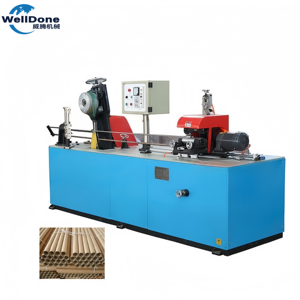
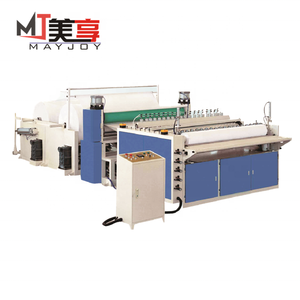
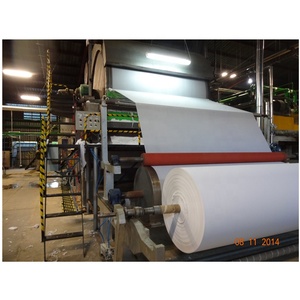
Precision-engineered napkin folding machines, automatic toilet paper rewinding lines, facial tissue interfolders, and supporting paper processing systems factory-tested for global export.
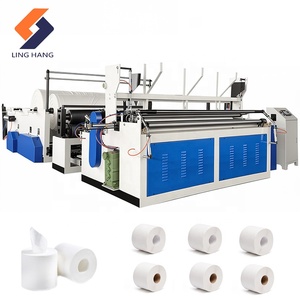
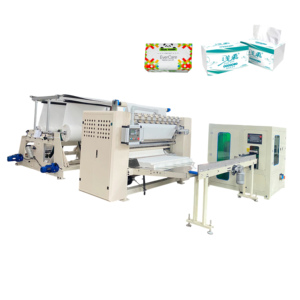
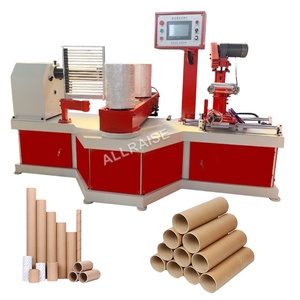
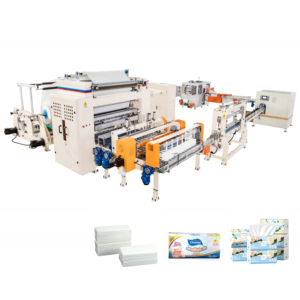
Manufacturer Direct Authority
Seasia Tissue Equipment Co., Ltd. — Engineering Excellence & Certified Manufacturing
Headquartered in Zhengzhou High-Tech Industrial Zone, Henan, China, Seasia Tissue Equipment Co., Ltd. stands as a world-class OEM/ODM manufacturer specializing in high-speed napkin production machinery, toilet roll rewinding lines, facial tissue interfolders, pulp molding egg tray equipment, and industrial steam boilers.
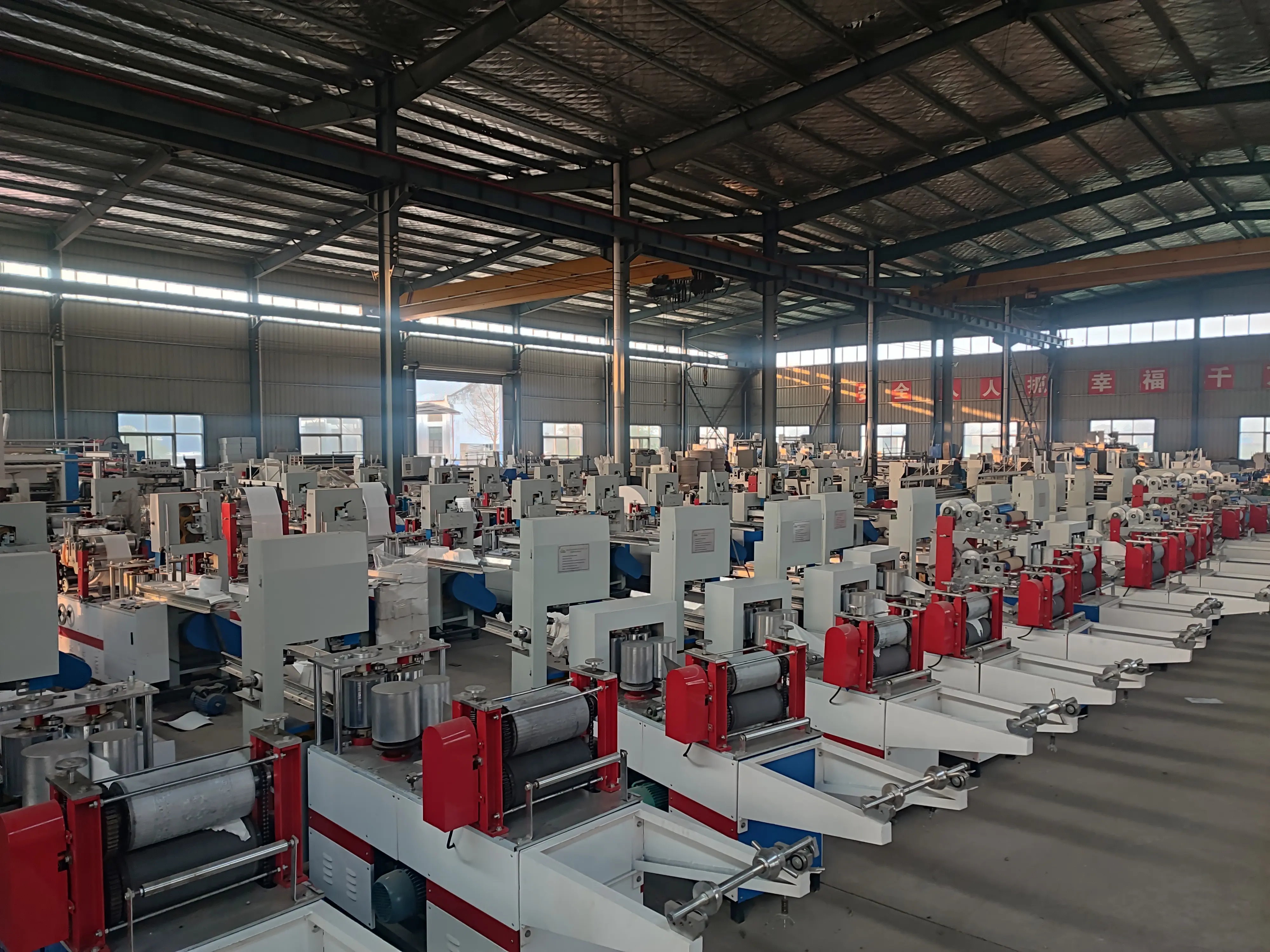
Unlike regional trading intermediaries, Seasia maintains a dedicated 12,000 m² heavy-machinery manufacturing workshop equipped with multi-axis CNC machining centers, precision steel-to-steel embossing cylinder grinding suites, and automated electronic assembly bays. Every production line undergoes rigorous trial runs with actual virgin and recycled parent rolls before containerization.
- TÜV Rheinland Audited & Verified Facility: Full transparency across production workflows, supply chain traceability, and mechanical safety protocols.
- CE & ISO 9001:2015 Compliance: Certified compliance for low-voltage electrical systems, mechanical guarding, emergency stop interlocks, and quality control systems.
- Pre-Shipment Trial Run Guarantee: 100% of napkin machines and interfolders are tested with real paper stock; high-definition video evidence and physical samples are supplied prior to dispatch.
- Turnkey Engineering Layouts: Free 3D/CAD plant layout designs tailored to client workshop dimensions, local electrical grid standards (220V–480V, 50/60Hz), and pneumatic infrastructure.
15+
Years Industry Experience
85+
Export Countries & Regions
100%
Factory Paper Test Run
2,400+
Global Line Deployments
Strategic Procurement Insight
Global Procurement Trends in Napkin & Tissue Machinery (2025–2030)
As commercial food service, hospitality (HoReCa), and healthcare hygiene markets expand globally, B2B procurement directors must align capital expenditure with evolving consumer preferences and technological paradigms.
1. Transition to Full Servo Motion Control
Legacy mechanical cam-driven napkin machines are rapidly being replaced by full-servo electronic axis control. Servo-driven units eliminate gearbox backlash, drastically reduce mechanical vibration, allow digital adjustments of print registration and folding parameters via HMI touchscreens, and minimize paper tearing at linear speeds exceeding 600 meters per minute.
2. High-GSM & Eco-Fiber Compatibility
Global environmental mandates are driving a shift toward unbleached kraft paper, 100% bamboo pulp, sugarcane bagasse, and recycled agricultural waste fibers. Next-generation napkin machines must feature dynamic magnetic powder tension systems and non-marking rubber draw rollers capable of converting raw stock ranging from light 13 gsm virgin tissue up to heavy 30 gsm multi-ply eco-substrates without fiber stress.
3. End-to-End Automated Packaging Integration
Labor overheads and contamination risks in cleanroom hygiene production make standalone napkin folders obsolete. Modern procurement strategies favor fully integrated lines where folding machines link seamlessly via synchronized conveyor belts to automatic single-head or multi-pack flow wrappers, box cartooning units, and robotic palletizers.
Industrial Engineering White Paper
Napkin Machine Engineering & Technology Deep Dive
An authoritative technical breakdown of mechanical kinematics, embossing thermodynamics, vacuum folding physics, and flexographic printing unit integration.
A. Vacuum Air-Suction vs. Mechanical Rotary Folding Kinematics
In table napkin manufacturing, achieving precise square folding (1/4 fold, 1/6 fold, 1/8 fold, or N-fold) without edge deformation requires superior kinematic control. Traditional mechanical claw-folding mechanisms rely on mechanical fingers gripping the paper web, which limits speed to 1,200–1,500 sheets/min and frequently causes corner tears on lightweight 1-ply stock.
Seasia’s high-speed napkin production machines utilize vacuum air-suction folding cylinders. A high-pressure Roots vacuum blower generates continuous negative air pressure through micro-drilled apertures along the folding roller perimeter. This holds the paper web firmly against the cylinder surface without physical pinch pressure, enabling speeds up to 3,200 sheets/min with 99.8% geometric fold accuracy.
B. Steel-to-Steel vs. Steel-to-Rubber Embossing Thermodynamics
Embossing serves both structural and aesthetic functions: it binds plies together without adhesive (ply bonding) and enhances bulk softness and liquid absorbency. Seasia provides custom embossing cylinder engineering:
- Steel-to-Rubber Rollers: Ideal for standard restaurant napkins requiring soft texture, high bulk volume, and cost-effective tooling customization.
- Steel-to-Steel Micro-Embossing: CNC-carved hardened steel rollers designed for high-density ply locking, intricate logo watermarks, and ultra-crisp pattern definition that remains crisp even under humid ambient conditions.
Kinematic & Performance Specification Comparison Matrix
| Machine Architecture Category | Mechanical Cam Driven Lines | Semi-Servo Modular Systems | Full-Servo High-Speed Lines |
|---|---|---|---|
| Folding Capacity (Sheets/Min) | 800 – 1,500 sheets/min | 1,800 – 2,500 sheets/min | 3,000 – 4,200 sheets/min |
| Drive Transmission | Gearbox & Universal Chain Joints | Hybrid Servo & Synchronous Belts | Independent Direct-Drive Servos (Siemens/Delta) |
| Web Tension Control | Manual Mechanical Brake Adjustment | Pneumatic Friction Brake with Sensor | Closed-Loop Ultrasonic Tension Feedback System |
| Color Flexo Printing Unit | Optional 1-Color Mechanical Anilox | 1–2 Color Rubber Roller / Ceramic Anilox | 1–4 Color High-Precision Chambered Doctor Blade |
| Overall Equipment Effectiveness (OEE) | 68% – 75% | 82% – 88% | 92% – 96% |
Procurement & Financial Engineering
Technical Buyer's Blueprint & Total Cost of Ownership (TCO) ROI Matrix
Capital expenditure (CAPEX) on tissue machinery must be evaluated against operational expenditure (OPEX), raw material yields, waste reduction, and total output capabilities.
1. Parent Jumbo Roll Width Matching Formula
To avoid severe trimming waste (which can degrade gross profit by 4% to 9%), machine slitting widths must strictly mirror the standard jumbo roll widths provided by local pulp mills. For example, deploying a 1880mm rewinder or folding line allows flexible combination slitting of 6 to 8 standard toilet log lanes or 6 parallel napkin lanes, optimizing raw material yield to >98.5%.
2. Electrical & Pneumatic Utility Allocation
A complete napkin converting and automatic packaging line requires pre-engineered utility planning. Standard power specifications range from 7.5 kW for basic napkin folders up to 45 kW for full servo lines with vacuum pumps and flexographic dryers. Pneumatic requirements mandate 0.6–0.8 MPa compressed air at 0.8–1.2 m³/min discharge rate to drive web guides and tail-sealing injectors.
3. Return on Investment (ROI) Modeling
By upgrading from a manual semi-automatic folding setup to Seasia’s fully automatic napkin production line with inline wrapping, factory labor requirement drops from 5 operators down to 1 supervisory technician. Average payback period ranges between 6.5 to 11 months based on regional electrical rates and paper stock margin spreads.
Operational Reliability
Industrial Troubleshooting & Preventative Maintenance Framework
Engineering solutions for common tissue converting defects, helping plant managers maximize uptime and eliminate scrap.
Issue 1: Paper Edge Tearing & Web Breakage at Unwind Stand
Root Cause: Uneven parent roll moisture distribution, improper air shaft expansion pressure, or aggressive mechanical brake calibration.
Engineering Solution: Calibrate the pneumatic tension brake to maintain linear web tension proportional to roll diameter decay. Ensure air shaft pressure is locked at 0.6 MPa and inspect magnetic powder clutch torque profiles via HMI.
Issue 2: Folding Misalignment & Skewed Napkin Angles
Root Cause: Static electricity accumulation along draw rollers or worn suction aperture gaskets on the vacuum folding cylinder.
Engineering Solution: Install active ion-bar anti-static bars along paper guiding paths. Replace vacuum cylinder graphite seals and clean internal suction channels using dry compressed air to clear accumulated paper dust.
Issue 3: Flexographic Ink Smudging & Ghosting
Root Cause: Excess ink viscosity, improper doctor blade contact pressure, or insufficient thermal drying distance before folding.
Engineering Solution: Maintain water-based flexo ink viscosity between 18–22 seconds (Zahn Cup #3). Adjust doctor blade chamber pneumatic load and activate infrared (IR) hot-air drying tubes immediately following color impression cylinders.
Issue 4: Loose Ply Bonding & Embossing Pattern Fading
Root Cause: Insufficient hydraulic cylinder pressing load or wear on rubber impression roller surface.
Engineering Solution: Increase hydraulic pressure on embossing shaft bearing blocks (recommended 2.5–4.0 MPa). Inspect rubber roller surface hardness (Shore A 85–90 standard); re-grind or replace rubber sleeve if surface grooving exceeds 0.2mm.
Procurement Guidance
Frequently Asked Questions (FAQ) for Global Buyers
Detailed technical answers to common questions regarding machine customization, shipping logistics, voltage compatibility, and after-sales support.
1. What is the key technical difference between 1/4 fold, 1/6 fold, and 1/8 fold napkin production machines?
The fraction designation refers to the final folded napkin geometry relative to the unfolded sheet size. A 1/4 fold machine creates a square napkin (folded twice at 90-degree angles), commonly used in casual dining and fast-food chains. A 1/6 fold or 1/8 fold machine incorporates additional longitudinal folds to produce rectangular, narrow napkins ideal for silverware wrappings or tall dispenser dispensers. Seasia builds versatile napkin machines with modular folding boards that can be configured or swapped to accommodate multiple folding styles on a single chassis.
2. Can Seasia napkin machines and toilet paper lines be customized for our country's electrical grid and voltage?
Yes, absolutely. All electrical panels, main drive motors, PLC controllers, and heating elements are wired according to your destination country's exact voltage, frequency, and phase specifications (e.g., 220V 3-Phase 60Hz for South America, 380V 3-Phase 50Hz for Europe/Asia, 415V for Australia/UK, or 460V for North America). Electrical components utilize internationally recognized brands such as Schneider, Siemens, Delta, and Omron for effortless local replacement.
3. How do I decide between model 1575 and model 1880 toilet paper rewinding machines?
The model designation represents the maximum usable width (in millimeters) of the parent jumbo roll. Model 1575 accepts parent rolls up to 1,750 mm wide (producing 15 standard toilet paper logs per cycle), making it ideal for startup tissue converting workshops. Model 1880 accepts jumbo rolls up to 2,150 mm wide (producing 18 logs per cycle), yielding over 25% higher daily tonnage. Selection depends primarily on the jumbo roll width supplied by your regional paper mills and your target daily metric output.
4. What after-sales support and installation services are provided for overseas buyers?
Seasia provides complete global installation support. We offer dispatch of qualified electrical and mechanical commissioning engineers directly to your plant site for machine assembly, electrical hookup, line calibration, and local operator training. Alternatively, for remote regions, we supply step-by-step CAD installation blueprints, detailed multi-angle assembly video manuals, and real-time remote engineering assistance via video conference.
5. Can the napkin machine print custom corporate logos or multi-color patterns?
Yes. Seasia napkin machines can be equipped with inline flexographic printing units ranging from 1-color up to 4-color configurations. Utilizing ceramic anilox rollers and micro-adjustable print registration dials, our machines deliver precise ink transfer with fast-drying water-based inks suitable for food-contact hygiene standards. Custom logo steel embossing rollers can also be engraved to imprint raised brand watermarks simultaneously.
6. What is the typical production lead time and container loading process?
Standard manufacturing lead time is 20 to 35 calendar days following engineering design approval and deposit receipt. Prior to loading, all unpainted machine surfaces are coated with anti-rust protective oil, wrapped in moisture-proof vacuum plastic film, and secured inside sturdy steel-skid wooden crates. Machines are anchored inside 20ft or 40ft HQ ocean containers using heavy-duty steel wire ropes to prevent movement during transit.
7. Is it possible to visit the factory for pre-purchase inspection and live trials?
We welcome international buyers to visit our workshop in Zhengzhou City, Henan Province, China. You can inspect raw materials, observe CNC machining operations, and evaluate live running tests of fully assembled napkin folding lines and toilet paper machines using real parent roll stock. We provide airport pickup, hotel arrangements, and full technical documentation upon arrival.
8. How does Seasia ensure long-term spare parts availability?
We maintain a standardized spare parts inventory for all core wearing items (including circular slitting blades, band saw belts, timing belts, vacuum seals, solenoid valves, and heating elements). Each machine comes shipped with an complimentary starter tool kit and critical spare parts package. Additional replacement parts are dispatched via DHL/FedEx express air freight within 24 to 48 hours of order request.
Ready to Upgrade Your Tissue & Napkin Manufacturing Capacity?
Contact our senior engineering team today to receive custom machinery specifications, factory-direct price quotations, and free 3D workshop layout drawings.