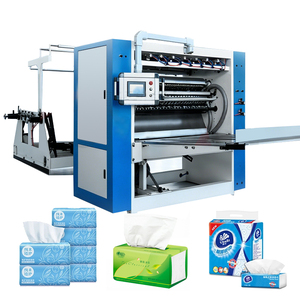
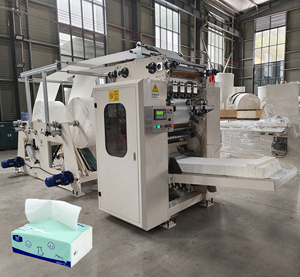
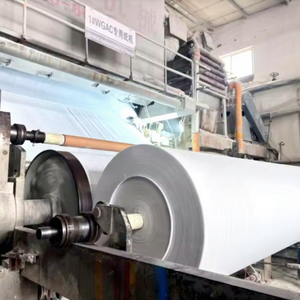
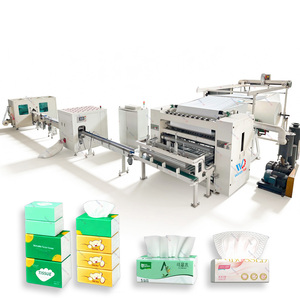
1. Enterprise Manufacturing Advantages & Rigorous Quality Standards
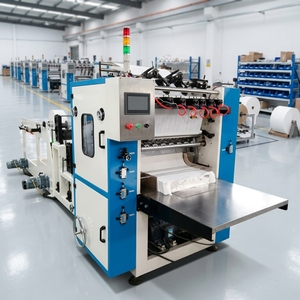
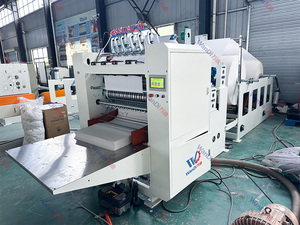
As a premiere China facial tissue production machine manufacturer and exporter, our facility combines heavy-duty industrial engineering with modern PLC automation. Unlike standard machine assembly workshops, our manufacturing process adheres to strict ISO9001 quality management protocols and CE safety standards. Every piece of tissue converting machinery undergo structural stress analysis, high-speed dynamic balancing of folding rollers, and pre-shipment Factory Acceptance Testing (FAT) using actual buyer jumbo roll specifications.
Our converting systems integrate state-of-the-art componentry from world-renowned suppliers, including Siemens PLC microprocessors, Delta vector inverters, Schneider electrics, and high-performance vacuum pumps. This robust build ensures zero-vibration operation at speeds exceeding 2,000 sheets per minute, delivering exact folding precision, minimal paper dust generation, and extended operational lifespans with minimal wear.
Multi-Servo Synchronization
Independent servo motors drive jumbo roll unwinders, embossing rollers, folding cylinders, and slitting knives, guaranteeing accurate tension control without paper tearing.
CE & ISO Certified Engineering
Built according to strict international safety standards, featuring enclosed safety guards, emergency stop interlocks, and CE-verified electrical cabinets.
Turnkey Factory Layout Design
We provide full plant engineering support, including 2D/3D workshop floor plans, compressed air layout, power distribution schematics, and raw material optimization.
2. Technical Sourcing & Selection Guide for B2B Buyers
Investing in a commercial facial tissue converting line requires evaluating critical operational metrics to ensure your equipment matches local market demand, raw material supply, and production volume targets. Sourcing directors must evaluate four essential criteria when comparing Chinese machinery suppliers:
Key Decision Parameters for Sourcing Facial Tissue Converting Machinery:
1. Folding Lane Count & Output Capacity: Machines range from 2-lane entry models (ideal for startup workshops producing ~800-1,000 sheets/min) to 10-lane automated industrial lines (exceeding 2,500 sheets/min). Choosing the right lane configuration directly affects your floor space requirement and operational efficiency.
2. Parent Roll Width Matching: The machine width (e.g., 420mm, 1050mm, 1575mm, 1880mm) must precisely match the standard jumbo rolls supplied by local paper mills to avoid excessive edge-trimming waste.
3. Folding Type Versatility: Evaluate whether your target market prefers V-Fold (Interfolded), N-Fold, or Z-Fold facial tissues. Advanced converting lines support modular folding cylinder swaps to accommodate changing market demands.
4. Embossing Unit Options: Options include Steel-to-Rubber, Steel-to-Steel, or Point-to-Point micro-embossing. Point-to-point systems produce fluffier, higher-absorbency tissues, adding significant retail value.
Technical Specification Comparison Across Standard Lines
| Specification Parameter | 2-Lane V-Fold Line | 5-Lane High Speed Line | 10-Lane Industrial Line |
|---|---|---|---|
| Raw Material (Jumbo Roll Width) | 420 mm - 500 mm | 1050 mm - 1200 mm | 2100 mm - 2200 mm |
| Production Speed (Sheets/Min) | 800 - 1,000 pcs/min | 2,000 - 2,500 pcs/min | 4,000 - 5,000 pcs/min |
| Unwind Stands (Parent Roll Count) | 2 Stands (Pneumatic Loading) | 2-4 Stands (Automatic Splice) | 4-6 Heavy Duty Stands |
| Tension Control System | Magnetic Powder Brake | Full Servo Automatic Tension | Dual-Vector Closed Loop Servo |
| Power Consumption (kW) | 7.5 kW - 11 kW | 18 kW - 25 kW | 45 kW - 65 kW |
| Compatible Tissue GSM Range | 13 - 18 g/m² (2-ply / 3-ply) | 12 - 20 g/m² (2-ply / 3-ply) | 12 - 22 g/m² (Multi-ply) |
3. Next-Generation Technology & Sourcing Trends (2025–2030)
The global tissue paper processing market is experiencing a structural shift toward automation, sustainability, and hybrid web conversion. Overseas buyers sourcing from China should align their machinery specifications with these emerging technological trends:
A. Shift Toward Non-Woven & Cotton Soft Towel Conversion
Modern consumers are rapidly expanding consumption beyond traditional wood-pulp facial tissues into disposable cotton face towels and spunlace non-woven wipe products. Next-generation Chinese facial tissue machines feature dual-use capabilities, allowing factory operators to process both standard virgin paper pulp and spunlace cotton rolls on the same line with minimal mechanical recalibration.
B. Smart Factory Integration & IoT Maintenance
Leading Chinese exporters now equip converting lines with cloud-connected HMI touchscreens, enabling real-time remote diagnostics, automatic web break alerts, dynamic blade wear monitoring, and predictive maintenance schedules. This technology significantly reduces unplanned downtime for international buyers who rely on remote operational guidance.
C. High-Efficiency Energy & Air Savings
Vacuum folding systems traditionally consume high levels of electricity. Modern converting machinery incorporates variable-frequency drive (VFD) roots vacuum pumps and acoustic silencing chambers, reducing overall factory power consumption by up to 25% while maintaining strong suction force across high-speed web runs.
4. Total Cost of Ownership (TCO) & Economic ROI Analysis
When purchasing tissue converting equipment from China, direct FOB machine price represents only one fraction of the total operational investment. Evaluating Total Cost of Ownership (TCO) over a 5-year operational lifecycle yields a clearer picture of profitability:
- Raw Material Utilization: Servo-controlled edge trimming units reduce paper scrap loss from 5% down to under 1.2%, generating tens of thousands of dollars in annual paper pulp savings.
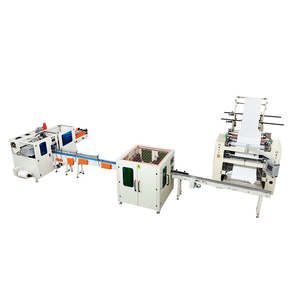
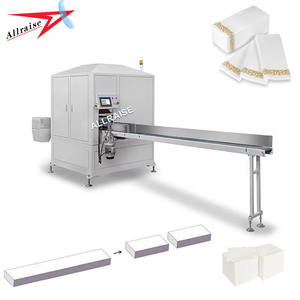
- Labor Automation Efficiency: Connecting an automated V-fold tissue folder directly to an inline log saw cutter and automatic plastic film wrap packaging machine eliminates manual transfer labor, reducing shift headcount from 6 operators down to just 1 supervisor.
- Energy Efficiency Gains: IE3 high-efficiency motors combined with optimized heating elements on embossing rollers minimize hourly kilowatt consumption.