High-Performance OEM/ODM Tissue Machinery Catalog
Precision-engineered converting lines, automated log saws, and rewinding systems factory-tested for export compliance, max OEE, and seamless scalability.
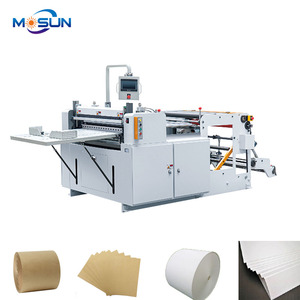
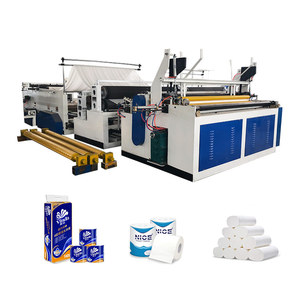
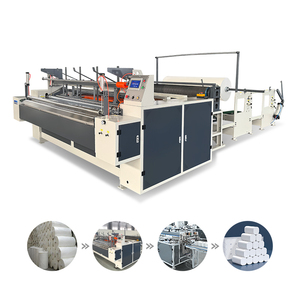
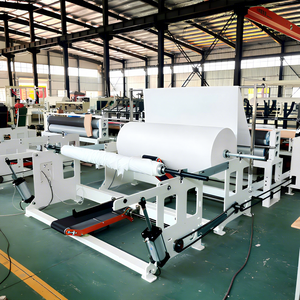
Executive Strategic Industry Report: OEM/ODM Tissue Machine Manufacturing
In the contemporary fast-moving consumer goods (FMCG) packaging and sanitary products industry, the competitive landscape for wholesale paper converters and brand owners has shifted dramatically toward automated modular flexibility and high-efficiency capital conversion. Sourcing OEM (Original Equipment Manufacturer) and ODM (Original Design Manufacturer) tissue processing lines is no longer merely a procurement exercise in machinery acquisition; it is a long-term capital deployment strategy that directly dictates continuous production yield, waste mitigation, electricity consumption, and profit margins per metric ton of processed paper pulp.
As global demand for commercial hygienic paper products, retail toilet rolls, embossed napkins, and multi-ply facial tissues expands across developed and emerging economies alike, tissue converters require manufacturing machinery tailored to precise raw material specifications. Parent rolls vary significantly in basis weight (GSM), tensile strength, fiber composition (virgin wood pulp versus recycled pulp), and moisture content. Generic off-the-shelf equipment often fails to handle these variables gracefully, resulting in frequent web tears, blade jam incidents, core slippage, and unacceptable line downtime.
Key Insight for Strategic Procurement Officers: Custom OEM/ODM machinery integration guarantees that pneumatic tension control systems, perforation cylinder pitch, and steel-to-rubber or steel-to-steel embossing rollers are matched exactly to the physical behavior of your locally sourced jumbo rolls. This structural alignment delivers up to a 14% reduction in raw material trim waste while extending mechanical component operational lifespans.
Technical Architecture of Modern Converting Lines
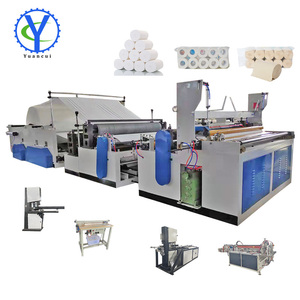
A full-scale automated tissue paper converting plant comprises three core mechanical sub-systems working in complete synchronized harmony via programmable logic controllers (PLC) and multi-axis servo drive technology:
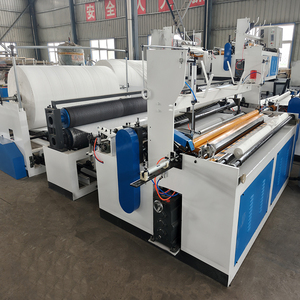
- Jumbo Roll Unwinding & Pneumatic Loading Station: Features synchronized flat-belt unwinders, variable speed frequency control, and automatic web-tension control sensors to prevent web breakage during high-speed acceleration.
- Embossing & Perforation Module: Utilizes laser-engraved steel rollers paired with high-durometer rubber or wool-paper rollers. Advanced pneumatic micro-adjustment allows operators to dial in exact embossing depth for optimal sheet bulk, softness, and absorption performance.
- Rewinding & Core Insertion Sub-Assembly: Employs automatic log loading, high-speed tail-gluing, sealing, and trimming mechanisms. Modern OEM units offer coreless conversion capabilities seamlessly integrated into standard cardboard core setups.
Product Engineering Portfolio & Technical Selection Framework
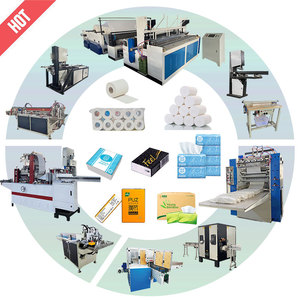
Selecting the optimal equipment configuration requires matching output capacity targets with structural plant constraints and utility availability. Below is an engineering comparison matrix designed for technical directors and plant managers evaluating OEM/ODM processing investments:
| Equipment Category | Target Product Line | Standard Width (mm) | Drive Technology | Max Production Speed | Key OEM Customization Option |
|---|---|---|---|---|---|
| Automatic Toilet Roll Line | Retail/Commercial Bathroom Rolls | 1575 / 1880 / 2800 mm | Multi-Axis Servo / PLC | 180 – 280 m/min | Coreless converting & Double embossing |
| PLC Napkin Folding Machine | 1/4 & 1/6 Fold Table Napkins | 230 – 400 mm (unfolded) | Variable Frequency Motor | 600 – 1000 sheets/min | 1–4 Color flexographic printing units |
| Facial Tissue Folder | V-Fold / Interfolded Soft Packs | 1100 – 2200 mm | Vacuum Suction + Servo | 800 – 1200 draws/min | Automatic packaging & bundling unit |
| Log Saw Cutting Machine | Tissue Logs to Final Roll Length | Log Length up to 2800 mm | Independent Servo Control | 120 – 200 cuts/min | Orbital blade diameter & Auto-grinding |
Detailed Product Machinery Breakdown
Future Procurement & Sourcing Trends (2025–2035)
The global tissue converting landscape is undergoing an unprecedented structural transition driven by rising labor costs, volatile energy prices, strict environmental sustainability mandates, and the explosive growth of e-commerce bulk distribution. Forward-thinking procurement officers must evaluate equipment investments against four major long-term market trends:
1. Shift from Semi-Automatic to Fully Integrated Continuous Lines
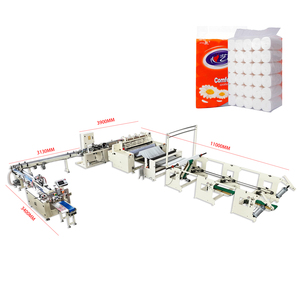
While semi-automatic machines served as low-barrier startup solutions historically, global market economics now heavily favor end-to-end automated lines. Modern plants integrate automatic unwinding, rewinding, log sawing, individual roll wrapping, and master case packing into a single continuous automated stream. This eliminates intermediate manual handling, minimizes contamination risk in hygienic product lines, and drastically reduces labor dependency.
2. Eco-Friendly Fiber Adaptability & Plastic-Free Packaging
As consumer brands pivot toward sustainable raw materials—such as 100% bamboo pulp, sugarcane bagasse, and recycled unbleached kraft fibers—converting machines must be engineered to handle variations in tensile elasticity and dusting characteristics. Furthermore, future-proof machines now offer integrated paper-wrapping attachments, enabling converters to replace traditional plastic poly-film wraps with recyclable paper packaging inline.
3. Energy Efficiency and Carbon Neutrality Metrics
Energy consumption represents a significant percentage of operational expenditure in paper processing facilities. OEM machinery designs now incorporate regenerative servo drives, high-efficiency Variable Frequency Drives (VFDs), and optimized pneumatic circuitry that lower kilowatt-hour requirements per log produced by up to 22%. Sourcing machinery with lower energy footprints provides a direct hedge against rising utility costs.
4. Predictative Maintenance & IoT Connectivity
Industry 4.0 integration has shifted from a luxury feature to a core requirement. Wholesalers and plant managers increasingly specify human-machine interfaces (HMI) equipped with Ethernet/Wi-Fi telemetry module support. Remote diagnostics enable factory technicians in China to troubleshoot PLC logic, calibrate sensor feedback, and push firmware optimizations across continents, virtually eliminating prolonged downtime caused by software faults.
Technological Trajectory: Innovations Driving Yield Optimization
To stay ahead of market competitors, modern tissue machinery manufacturers must consistently innovate across mechanical, electrical, and pneumatic disciplines. Key engineering innovations implemented across our flagship OEM/ODM production machinery include:
- Servo-Driven Log Saw Orbital Blades: Traditional mechanical cam-driven cutters suffer from wear and speed limitations. By implementing multi-axis servo motors dedicated to blade rotation and cross-cut feeding, cut timing can be adjusted dynamically via touchscreen to millisecond precision.
- Pneumatic Constant-Tension Unwinding: Utilizing closed-loop ultrasonic sensors that scan parent roll diameter in real time, automatically adjusting magnetic particle brakes to maintain rock-solid web tension from full jumbo roll down to the core.
- Modular Quick-Change Embossing Units: Engineered with pneumatic quick-release cassette housings, allowing plant engineers to switch embossing cylinder patterns in under 45 minutes—radically increasing versatility for multi-SKU contract manufacturing facilities.
Enterprise Advantage & Strategic OEM/ODM Capabilities
As a leading Chinese tissue paper equipment manufacturer based in Zhengzhou, Henan High-Tech Development Zone, Seasia Tissue Equipment Co., Ltd. stands as an authoritative force in the engineering, customization, and global distribution of paper product converting machinery. Our core strengths empower global buyers with uncompromised operational confidence:
Holding international CE Certifications, ISO Quality Management Verification, and TÜV Rheinland Audited Supplier Status, our machinery exports reach over 40 countries across Southeast Asia, Africa, Europe, the Middle East, and South America. Whether establishing a entry-level small business workshop or expanding a multi-line industrial factory, our dedicated technical team provides end-to-end commissioning support, spare parts dispatch, and lifetime operator training.
Frequently Asked Questions: B2B Technical Procurement
Below are authoritative responses to the most critical technical and logistical questions posed by enterprise buyers prior to issuing purchase orders:
Ready to Accelerate Your Tissue Processing Capability?
Engineers are standing by to review your production targets, evaluate your raw material specifications, and provide a comprehensive turnkey factory proposal with complete CAD layout drawings within 24 hours.
Get Catalog