Recommended Industrial Converting & Packaging Equipment
Factory-direct engineered equipment configured for optimal OEE, high operational stability, and precise thermal film wrapping performance.
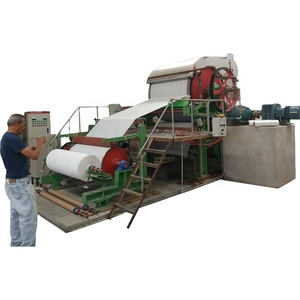
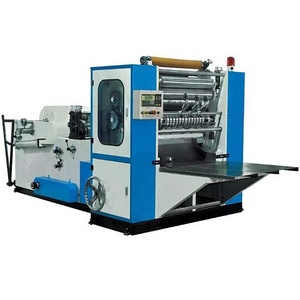
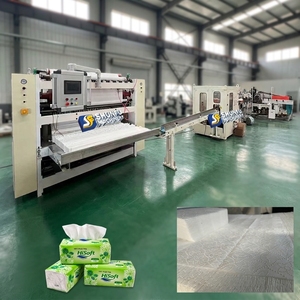
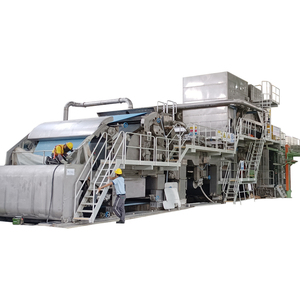
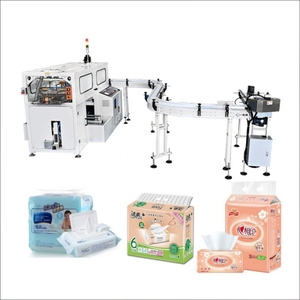
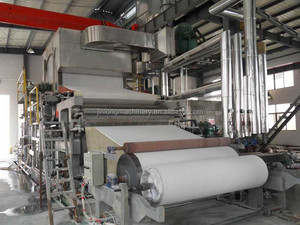
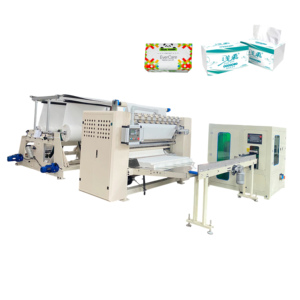
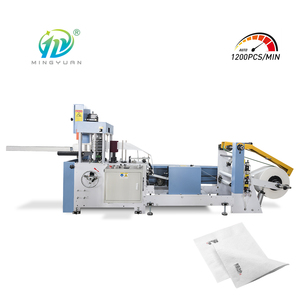
Executive Engineering Overview: OEM/ODM Facial Tissue Packaging Dynamics
In the rapidly expanding global hygiene paper manufacturing industry, the technological boundary between converting and packaging has dissolved. Modern tissue converting plants require integrated, multi-axis servo-driven **facial tissue packing machines** capable of synchronizing seamlessly with high-speed interfolders, log saws, and bundle wrappers. As an established OEM/ODM facial tissue packing machine supplier and wholesaler, Seasia Tissue Equipment Co., Ltd. delivers customized mechanical and automation solutions engineered to optimize Overall Equipment Effectiveness (OEE) while minimizing total film consumption and operational downtime.
Automated facial tissue packaging machinery operates at the critical junction of mechanical tucking, heat sealing, and kinematic film feeding. Achieving wrapping speeds exceeding 100 to 150 packs per minute requires ultra-precise tension control, dynamic registration mark alignment via optical fiber sensors, and multi-zone PID thermal sealing modules. Modern B2B buyers must look beyond fundamental machine cycling speeds and prioritize structural stability, servo motor responsiveness, thermal seal integrity, and mechanical versatility across flexible package formats (soft-pack tissues, box-pack tissues, and bundle overwrapping).
Enterprise Strengths & OEM/ODM Manufacturing Capabilities
Direct factory engineering, rigorous pre-shipment paper testing, and global field installation support.
In-House OEM/ODM Engineering
Custom design capabilities for non-standard tissue dimensions, custom folding geometries (V-fold, N-fold, Z-fold), specialized embossing rollers, and customized mechanical layouts to fit existing workshop footprints.
Rigorous Factory Pre-Testing
Every tissue converting and packing unit undergoes a mandatory test-run using real jumbo rolls and film stock inside our Zhengzhou manufacturing facility before export container loading, backed by comprehensive video validation.
Turnkey Global Field Engineering
Complete overseas installation, commissioning, electrical wiring verification, and operator training services. Proven operational track record across Europe (Poland), Asia (India, Thailand), Africa (Mali, Kenya), and the Americas.
Global Sourcing & Procurement Trends (2025–2030)
B2B buyers and commercial enterprise directors sourcing facial tissue packing machinery are facing significant structural shifts driven by environmental legislation, energy prices, labor shortages, and brand customization demands. Strategic purchasing decisions require anticipating key industry shifts over the next decade:
- Transition to Eco-Friendly & Biodegradable Packaging Materials: Tightening global regulations on single-use plastics are pushing hygiene paper manufacturers to migrate from traditional Polyethylene (PE) films toward ultra-thin poly-films, recyclable Polypropylene (CPP), and biodegradable paper-wrap alternatives. Sourcing managers must specify packing machines equipped with dynamic thermal control loops and adjustable sealing jaws capable of handling lower melt-point eco-materials without burning or tearing.
- Modular Multi-Row Bundle Wrapping Integration: Individual soft-pack facial tissues are increasingly sold in multi-pack bundles (e.g., 4-pack, 8-pack, 10-pack, or 12-pack bundles). Sourcing trends demonstrate a massive shift toward ordering complete integrated converting lines where primary flow-wrappers connect directly to secondary auto-bundling and overwrapping equipment, eliminating manual end-of-line stacking labor entirely.
- Servo Kinematics Replacing Mechanical Cam System Architecture: Traditional mechanical cam-driven packing machines are rapidly becoming obsolete due to high component wear, maintenance overhead, and long format changeover times. Modern wholesale buyers prioritize full-servo motion architecture (utilizing 5-axis to 10-axis servo systems) where changeovers between different stack heights or pocket counts occur via digital recipe selection on an HMI touch panel in minutes.
- Total Cost of Ownership (TCO) & Energy Optimization: Modern procurement frameworks look beyond initial machine purchase price to evaluate kilowatt-hour energy efficiency per 1,000 finished packages, spare parts standardization (such as Siemens PLC, Schneider electronics, and Sick sensors), and preventative maintenance diagnostic capabilities.
Technology Development Trends & Engineering Innovations
Comparative analysis between legacy mechanical cam machinery and next-generation multi-axis servo packaging systems.
| Performance Parameter | Legacy Mechanical Cam Packaging Machine | Next-Gen Multi-Axis Servo OEM/ODM Packing System |
|---|---|---|
| Max Packaging Speed | 50 – 80 packs / min | 120 – 180+ packs / min |
| Drive Mechanism | Main Motor + Complex Mechanical Gear/Cam Links | Independent Multi-Axis Synchronized Servo Motors |
| Format Changeover Time | 2.0 – 4.0 Hours (Manual Mechanical Adjustments) | 10 – 15 Minutes (HMI Digital Recipe Selection) |
| Film Tension Control | Mechanical Brake / Friction Pads (High Tear Risk) | Continuous Servo Unwinding + Dancer Roll Sensor Feedback |
| Film Material Compatibility | Standard PE Films Only (28–40 Micron) | Ultra-Thin PE, CPP, Recyclable Bio-Films & Paper-Films (18–45 Micron) |
| Sealing Temperature Accuracy | ± 5°C (Analog PID Control) | ± 0.5°C (Digital Multi-Zone Smart Thermal Regulation) |
| Maintenance & Mechanical Wear | High (Frequent Greasing, Cam & Chain Wear) | Ultra-Low (Direct-Drive Servos, Sealed Bearings) |
Breakthrough Innovation: Smart Vision Inspection & Ultrasonic Thermal Hybrid Sealing
The latest technological frontier in OEM/ODM facial tissue packaging involves embedding AI-driven machine vision inspection systems directly above the primary tucking and sealing belts. Vision sensors detect package misalignment, misfolded tissue edges, empty packs, or compromised end-seals in real-time, automatically triggering high-speed pneumatic reject mechanisms without stopping the main production line.
Furthermore, hybrid ultrasonic sealing technology is emerging as a game-changer for high-speed facial tissue soft-pack wrapping. By replacing traditional continuous thermal heating bars with ultrasonic transducers, energy is applied strictly during the micro-second compression phase. This eliminates thermal radiation waste, reduces electrical consumption by up to 35%, and prevents film distortion during unexpected machine stops.
Procurement & Technical FAQ for B2B Buyers
Detailed engineering answers to critical operational, commercial, and technical questions asked by global hygiene paper manufacturers.
1. What is the operational difference between single-pack flow wrapping and bundle wrapping in facial tissue lines?
Single-pack flow wrapping is the primary packaging stage where raw tissue stacks (misfolded V-fold, N-fold, or Z-fold sheets) cut by log saws are sealed individually in film pockets with longitudinal and end seals. Bundle wrapping (overwrapping) is the secondary packaging stage where multiple single soft-packs (e.g., 4, 6, 10, or 12 packs) are grouped, stacked, and wrapped inside a master outer PE film or carry-bag. Seasia offers both standalone single flow-wrappers and fully integrated automatic bundling machines connected via smart conveyor buffer systems.
2. How does matching tissue log width (e.g., 1575 mm vs 1880 mm) affect overall plant productivity?
The numerical designation (1575, 1880, 2800 mm) denotes the maximum unwinding roll width of parent jumbo rolls supplied by paper mills. Choosing a machine width that exactly matches local parent roll dimensions eliminates lateral paper trimming waste (which can cause 5%–12% raw material loss). An 1880 mm facial tissue interfolder generates more tissue logs per cutting cycle than a 1575 mm unit, substantially increasing raw output to feed high-speed automatic facial tissue packing machines downstream.
3. Can Seasia facial tissue packing machines process bio-degradable or paper-based film alternatives?
Yes. OEM/ODM facial tissue packing machines manufactured by Seasia can be retrofitted or custom-engineered with precision low-friction belt drives, ultrasonic sealing jaws, and highly responsive multi-zone digital temperature controllers. These engineering modifications allow smooth feeding and secure sealing of bio-PE films, PLA-based compostable films, and heat-sealable paper wrapping materials down to 18–22 microns without film burning or seal rupture.
4. What optical registration mechanism ensures accurate graphic alignment on printed wrapping films?
Our machines utilize high-frequency SICK or Keyence fiber-optic register mark sensors paired directly with the film unwind servo motor controller. When printed film runs through the feeding roller, the sensor detects printed registration marks and dynamically adjusts film feed speed in micro-seconds, ensuring branded logos, product copy, and barcodes are perfectly centered across every soft-pack pocket at speeds exceeding 150 packs/minute.
5. What after-sales field support and factory testing guarantees are provided for international orders?
Every equipment order undergoes rigorous factory testing in Zhengzhou, Henan, China using actual customer paper samples and film rolls prior to packing. Clients receive full HD video validation of machine operational speeds, thermal seal quality, and safety interlocks. Upon delivery, Seasia dispatches senior mechanical and electrical field engineers to install the line, optimize factory layout, wire power connections, and conduct comprehensive local operator training.
6. How does customizable OEM/ODM modular design accommodate different tissue ply counts and sizes?
Tissue stacks vary significantly in compressibility and thickness depending on ply count (1-ply, 2-ply, 3-ply, or 4-ply 100% virgin pulp vs recycled tissue). Seasia customizes the infeed compression belts, side tucking guide plates, and top-down press mechanisms. HMI digital recipe storage allows operators to select preset stack compression force profiles, enabling seamless switching between compact travel packs, standard 100-count soft packs, and thick 200-count commercial packs on a single machine.
7. What preventative maintenance routines are essential for preserving continuous 24/7 wrapping performance?
To maintain peak OEE (>98%), operators should implement daily cleaning of thermal sealing jaws using brass wire brushes to remove poly-film residue, inspect rubber drive belts for friction wear weekly, check pneumatic pressure regulators, and verify optical sensor lenses. Annual maintenance involves inspecting servo motor planetary gearboxes, replacing thermal heating elements, and updating PLC software backups. Seasia supplies complete 2-year wear-and-tear spare parts kits with every exported packing line.
Transform Your Facial Tissue Packaging Line Today
Partner with Seasia Tissue Equipment Co., Ltd. for factory-direct OEM/ODM manufacturing, customized engineering layouts, and high-speed automated tissue converting and packing machinery tailored to your exact market specifications.