Automated Tissue Converting & Packaging Systems
Engineered for high tensile stability, low energy consumption, and high-speed multi-ply converting.
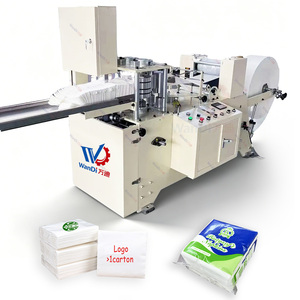
Small Size Full Automatic Napkin Tissue Paper Making Machine
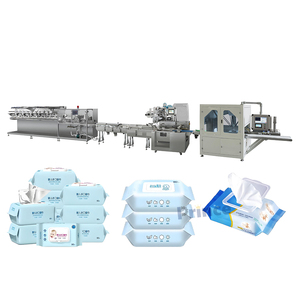
Full Automatic Wet Tissue Wipes Machine for Single & Multi-piece Production
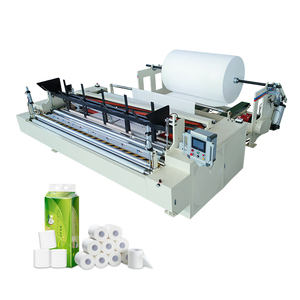
Complete Set Tissue Paper, Napkin & Toilet Paper Roll Production Line
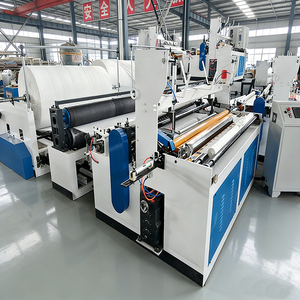
Automatic Soft Tissue Jumbo Roll & Facial Napkin Processing Line
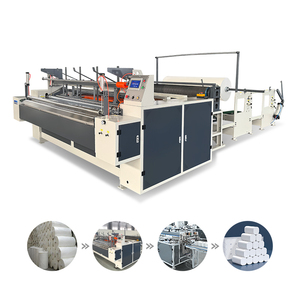
Automatic Toilet Tissue Paper Roll Cutting & Rewinding Machinery
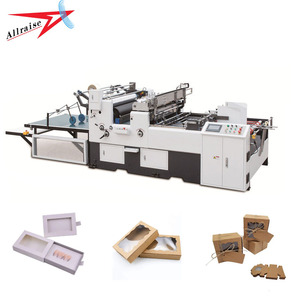
Automatic Gift Tissue Box & Cardboard Film Window Patching Machine
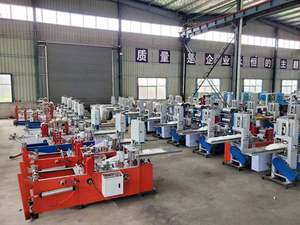
High-Speed Embossed Dinner Napkin Tissue Production Line
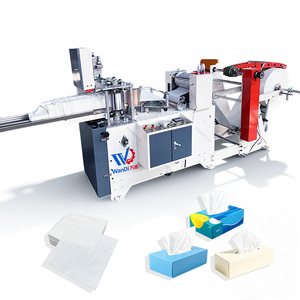
Integrated Napkin Tissue Packaging & Toilet Paper Cutting System
Seasia Tissue Equipment: Engineering Rigor & OEM Manufacturing Authority
Headquartered in Zhengzhou High-Tech Zone, Henan, China, Seasia Tissue Equipment Co., Ltd. is a global leader in custom tissue converting and pulp molding machinery.
Custom Mechanical Engineering
Full OEM flexibility covering customized jumbo roll widths (1575mm, 1880mm, 2800mm), tailored embossing roller geometry, and specific folding options (1/4, 1/6, V-fold, Z-fold, N-fold).
Advanced Motion Control
Integrated Siemens & Mitsubishi PLC architecture with multi-axis servo synchronization, magnetic powder tension brakes, and optical web-edge alignment sensors.
Pre-Shipment Quality Testing
Every single tissue line undergo rigorous real-paper trial runs in our Zhengzhou workshop. Clients receive live video evidence and complete technical parameters prior to export loading.
Technical Architecture of Custom OEM Tissue Production Systems
In the modern paper converting industry, achieving high operational efficiency (OEE) while minimizing web break rates and material scrap requires meticulous mechanical engineering. Custom OEM tissue production machinery must accommodate significant variances in raw paper quality, ranging from 100% virgin wood pulp to recycled pulp blends and alternative agricultural fibers such as bamboo and bagasse pulp.
Key Engineering Insight: Tensile web behavior varies dynamically based on moisture content and basis weight (GSM). High-speed rewinding and folding machinery must utilize pneumatic load-cell web tension systems to maintain constant line speed without inducing micro-tears in delicate 13–20 GSM tissue stock.
1. High-Speed Toilet Roll Rewinding & Perforating Lines
The standard benchmark models in commercial roll tissue converting are the 1575 and 1880 series rewinding units. The numeric designation corresponds to the maximum usable width of the parent jumbo roll in millimeters. Modern OEM production lines integrate four vital operational stages into a continuous automated loop:
- Parent Roll Unwinding Stand: Outfitted with independent flat belt unwinding drives and pneumatic lift mechanisms for parent rolls up to 1500mm diameter.
- Embossing & Lamination Station: Uses steel-to-rubber or steel-to-steel laser-engraved rollers to improve bulk, absorbency, and tactile softness. Optional point-to-point or nested glue lamination units bond 2-ply and 3-ply sheets using water-soluble adhesives.
- High-Precision Perforation Unit: Helical rotating blade shafts interact with stationary anvil knives to produce clean, easily tearable perforation lines at adjustable sheet lengths (90mm–150mm).
- Log Rewinding & Tail Sealing: Servo-driven mandrels wind paper logs around paper cores (or coreless inflatable shafts) to preset diameters before automatically spraying, trimming, and sealing log tails.
2. Embossed & Printed Table Napkin Machinery Architecture
Table napkin production demands precision folding and crisp embossing detail to satisfy institutional (HoReCa) and retail packaging standards. OEM manufacturing allows converters to select specific fold geometries:
| Napkin Type | Typical Unfolded Size | Folding Mechanism | Target Market / Application |
|---|---|---|---|
| 1/4 Square Fold | 230mm × 230mm to 400mm × 400mm | Vacuum suction with mechanical folding blades | Standard food service, fast food chains, household dinner napkins |
| 1/6 Rectangle Fold | 300mm × 320mm / 330mm × 330mm | Rotary combination knife and jaw mechanism | Specialized restaurant table settings, tall dispenser units |
| 1/8 Dispenser Fold | 210mm × 210mm to 300mm × 300mm | Interfolded counter-rotating vacuum drums | High-traffic commercial napkin dispensers, food courts |
| Multi-Color Flexo Printed | Custom tailored per OEM spec | Anilox roller ink transfer with infrared drying | Branded marketing napkins, event catering, custom corporate packaging |
3. Interfolded Facial Tissue & Hand Towel Machinery
Facial tissue machinery employs interfolding technology (V-fold, Z-fold, or N-fold) where single-ply or multi-ply paper webs are continuously cut and interleaved using vacuum suction cylinders. This ensures that pulling one tissue sheet automatically exposes the leader edge of the next sheet inside soft packs or carton boxes. Advanced OEM facial tissue machines feature automatic line counting, web guiding, and direct integration with high-speed band saw or log saw cutting units.
4. Cardboard Box Window Patching & Secondary Packaging
Completing the tissue production chain requires high-precision secondary packaging. Automatic film window patching machines apply clear PE or PET film apertures to die-cut tissue display boxes. These units use high-accuracy servo feeders, hot-melt or cold-glue applicators, and optical registration sensors to process up to 10,000 boxes per hour with zero film displacement.
Future Procurement & Technology Development Trends (2025–2030)
Key technological transformations shaping global tissue manufacturing CAPEX investments and operational strategy.
Full Servo Motor Direct Drives
Transitioning away from line-shafts and mechanical gears toward independent servo drives per axis. This reduces mechanical backlash, allows digital adjustments of perforation length via touchscreen, and cuts electricity usage by up to 25%.
Alternative Fiber Processing Capability
Surging pulp prices drive demand for machines capable of handling non-wood fibers (bamboo, sugarcane bagasse, wheat straw) without frequent sheet snapping, utilizing specialized tension controllers and lint-extraction blowers.
Smart IoT Telemetry & Remote Diagnostics
Modern export equipment incorporates Ethernet/Wi-Fi PLC modules, enabling OEM engineers in China to assist overseas plant operators in real time with fault diagnostics, parameter optimization, and firmware updates.
Turnkey Modular Line Integration
Global procurement managers increasingly favor single-source OEM contracts where jumbo roll rewinding, log sawing, automatic primary wrapping, and outer bundle sealing are linked via synchronization conveyors.
Zero-Waste Edge Trim Recirculation
Next-generation tissue slitters integrate heavy-duty venturi air blowers that immediately transport slit paper edge trims directly to pulping units or compaction balers, maximizing material yield.
Waterless Ultrasonic Embossing & Sealing
Replacing traditional liquid glue bonding in multi-ply napkin and facial tissue lines with ultrasonic bonding horns. This eliminates glue drying times, lowers chemical consumable costs, and reduces maintenance.
Frequently Asked Questions for Global Procurement Directors
Comprehensive answers regarding machine specifications, customs compliance, power configurations, and operational ROI.
How do I choose between a 1575mm and an 1880mm toilet tissue rewinding line?
The choice depends directly on the standard jumbo roll widths produced by your regional paper mills and your target daily capacity:
- 1575mm Model: Accommodates jumbo rolls up to 1575mm (62 inches) width. It is the most cost-effective choice for start-up workshops, smaller factories, or markets where paper mills supply 1.5m parent rolls. Average output is 1.5 to 2.5 tons per 8-hour shift.
- 1880mm Model: Accommodates jumbo rolls up to 1880mm (74 inches) width. It yields more finished toilet paper logs per winding cycle, increasing production volume by 30%–40% with minimal increase in labor. Ideal for scaling commercial converters.
Can Seasia build tissue machinery adapted to local electrical standards (e.g., 220V 3-Phase or 415V 50Hz/60Hz)?
Yes. All OEM machinery orders are customized according to the exact industrial voltage, frequency, and phase setup of your destination factory (e.g., 380V 3-Phase 50Hz for Europe/Asia/Africa, 220V 3-Phase 60Hz or 480V 3-Phase 60Hz for the Americas). Motors, heaters, PLC power supplies, and frequency inverters are configured and tested under your specified electrical load before leaving our plant.
What parameters are required to customize embossing rollers and folding patterns for napkins?
To engineer customized embossing rollers and folding plates, our technical team requires:
- Unfolded napkin dimensions (e.g., 300mm × 300mm) and folded shape (1/4 square, 1/6 rectangle, or 1/8 dispenser).
- Number of paper plies (1-ply, 2-ply, or 3-ply) and paper basis weight range (13 to 22 GSM).
- Vector graphic CAD files for custom embossing logos, border patterns, or brand insignia. Steel-to-rubber or wall-to-wall laser engraving will then be crafted via high-precision CNC machining.
What international export certifications and quality compliance documents are provided?
Seasia Tissue Equipment Co., Ltd. provides full export documentation packages, including:
- CE Compliance Certificates for tissue converting machinery and packaging lines.
- ISO 9001 Quality Management System Certification.
- TÜV Rheinland / SGS Factory Audit & Verification Reports.
- Customs clearance documentation: Bill of Lading, Commercial Invoice, Packing List, Certificate of Origin (Form E, Form F, or CO).
What after-sales installation, operator training, and spare parts support are offered globally?
We provide comprehensive operational support options:
- On-Site Commissioning: Senior mechanical and electrical engineers are dispatched to your factory to supervise line assembly, electrical connection, and operator training.
- Remote Video Guidance: Detailed English manuals, electrical schematics, and step-by-step video instructions allow seamless self-installation for simpler standalone units.
- Spare Parts Availability: Wear-and-tear components (slitting knives, perforation blades, rubber rings, timing belts, heating elements) are stocked for express international air shipping.
How does Seasia ensure machine stability when processing low-GSM or recycled paper?
Weak or inconsistent raw paper stock breaks easily under abrupt acceleration. Our machines incorporate variable-frequency inverter controls (VFDs) paired with magnetic powder tension brakes and air-expanding shafts. This setup guarantees smooth web acceleration, dampens vibration, and maintains uniform tension throughout the converting process.
End-to-End OEM Procurement & Engineering Execution
A transparent six-step partnership model ensuring on-time delivery, precise specifications, and rapid operational ROI.
Technical Consultation
Define product type, target output tons/day, raw paper GSM, roll diameters, and workshop dimensions with our application engineers.
3D Layout & Solution Proposal
Receive customized factory layout drawings, electrical load estimates, pneumatic requirements, and transparent commercial quotes.
Precision Precision Manufacturing
CNC lathe machining of frame structures, dynamic balancing of high-speed rollers, laser engraving of embossing drums, and electrical wiring.
Trial Run & Video Verification
The completed production line undergoes real-paper testing in our Zhengzhou plant. Speed, embossing clarity, and perforation cuts are verified on video.
Export Packaging & Shipping
Moisture-proof film wrapping, anti-corrosion oil coating, and steel-reinforced wooden crate packing inside FCL containers for safe ocean transport.
Commissioning & Lifecycle Support
On-site engineer installation, local operator training, technical manual delivery, and 24/7 technical assistance for the operational life of the line.
Ready to Build Your Custom Tissue Production Facility?
Contact our senior technical engineering team today to receive a detailed proposal, factory layout drawing, and machinery catalog tailored to your market needs.