High-Speed Rewinding Capacity
Perforation Precision Control
Factory Dry-Tested with Real Paper
TÜV Verified Machinery Production
Engineered Tissue Paper Machinery Lines
Explore our top-performing industrial tissue paper manufacturing equipment, automatic rewinding systems, facial tissue folding units, and pulp molding lines tailored for commercial scale production.
Seasia Tissue Equipment Co., Ltd. — Engineering & Manufacturing Rigor
Located in the High-tech Industrial Zone of Zhengzhou, Henan, China, Seasia Tissue Equipment Co., Ltd. operates as an authoritative original equipment manufacturer (OEM) and global supplier specializing in tissue converting, pulp molding, and paper packaging machinery.
TÜV Audited & CE Certified
Our entire converting and paper processing line portfolio holds fully compliant ISO9001 quality management standard credentials and CE certificates for European safety compliance. Verified independently by TÜV Rheinland for mechanical integrity and safety.
Pre-Shipment Trial Testing
Every single rewinder, folding machine, and packaging line undergoes intensive factory dry runs using actual jumbo parent rolls prior to container loading. Buyers receive HD operational test footage confirming speed, tension stability, and embossing depth.
Turnkey Layout Design
We provide complimentary CAD factory floorplan layout design and electrical loading blueprints. Our technical engineering team adapts local voltage (220V/380V/415V/440V) and frequency (50Hz/60Hz) configurations to fit your regional grid requirements seamlessy.
Technical Specifications & Operational Matrix
Comprehensive comparative data across standard China wholesale tissue paper machinery configurations to assist procurement directors in selecting optimal machine sizing.
| Machine Category | Standard Model Width | Production Capacity | Parent Roll Specification | Automation Level | Ideal Application |
|---|---|---|---|---|---|
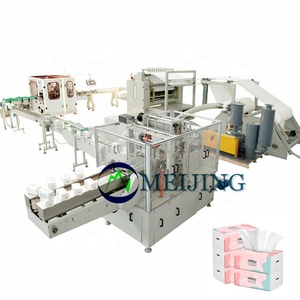
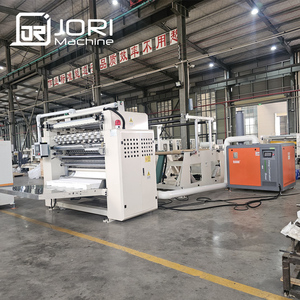
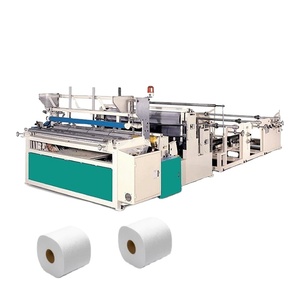
| Toilet Roll Rewinder Line | 1575 / 1880 / 2800 mm | 180 – 260 m/min | Max Dia. Φ1200 - 1500 mm | Full PLC Servo Synchronized | High-volume bath tissue & kitchen towel rolls |
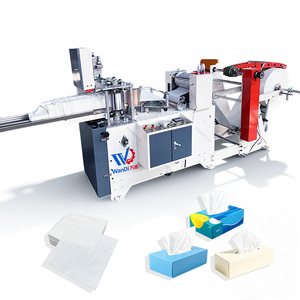
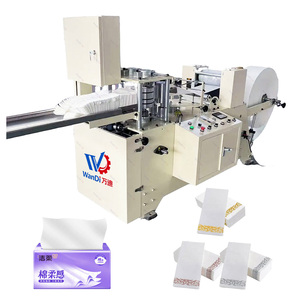
| Table Napkin Machine | 200 – 400 mm unfolded | 600 – 1000 sheets/min | 13 – 28 gsm single/double ply | Automatic folding & counting | Restaurant, HORECA, & retail custom printed napkins |
| Facial Tissue Folder | 2 – 8 lines (V/N Fold) | 800 – 1200 sheets/line/min | 14 – 18 gsm virgin/bamboo pulp | Vacuum folding with band saw cut | Soft-pack & box facial tissue converting |
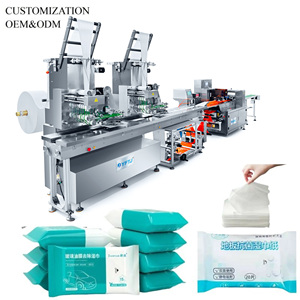
| Baby / Wet Wipe Line | 1200 – 1600 mm raw feed | 3500 – 6000 pcs/min | 35 – 80 gsm Spunlace Non-woven | Automatic liquid dosing & flow-wrap | Personal care, medical, & household disinfectant wipes |
| Pulp Molding Egg Tray | 1x3, 3x4, 4x8 Moulds | 1000 – 6000 pcs/hr | 100% Waste Paper / Corrugated scrap | Pulping + Molding + Dryer Line | Poultry packaging, egg cartons, industrial trays |
Future Global Procurement Trends in Tissue Machinery
An analysis of geopolitical shifting, raw material diversification, energy cost optimization, and automated end-of-line packaging demands driving B2B sourcing decisions worldwide.
1. Shift Toward Non-Wood & Alternative Fibers (Bamboo & Bagasse)
With environmental legislation tightening across Europe, North America, and South America, paper converters are increasingly sourcing tissue machinery capable of processing non-wood raw materials such as unbleached bamboo pulp and sugarcane bagasse. Bamboo fibers possess distinct tensile characteristics and shorter fiber lengths compared to softwood pulp, requiring converted machinery with precision pneumatic unwinders, micro-adjustment embossing rollers, and sensitive web-tension control systems to prevent paper web breakage during high-speed rewinding.
2. Full Line Integration & End-of-Line Automation
Labor shortages and escalating factory wages globally are accelerating the transition from standalone rewinding machines to fully automatic, integrated production lines. Modern procurement contracts require seamless synchronization between the primary tissue log rewinder, automatic log saw cutter, bundle wrapping machine, and robotic palletizers. China wholesale tissue machinery manufacturers are leading this trend by embedding central PLC systems (Siemens/Mitsubishi) with unified Touchscreen HMI control, enabling a single operator team to oversee an entire 10-ton per day facility.
3. Energy Recovery & Low-Carbon Thermal Systems
Drying and thermal embossing represent significant operational energy costs. Modern egg tray pulp molding machinery and industrial tissue lines are integrating recirculating hot-air drying tunnels, frequency-inverter air blowers, and waste heat exchangers. When purchasing pulp molding equipment, international buyers are pairing egg tray lines with energy-efficient industrial steam generators or natural gas multi-layer metal drying tunnels to lower fuel consumption per converted unit by up to 28%.
4. Remote Tele-Diagnostics & Predictive Maintenance
Cross-border machinery buyers demand real-time technical support without waiting for overseas engineer dispatch. Leading Chinese equipment factories now integrate IoT gateway modules into machine electrical control panels. This allows engineers in Zhengzhou to perform online firmware updates, diagnose sensor misalignments, adjust servo drive parameters remotely via secure VPN protocols, and drastically reduce factory downtime for buyers in Africa, South America, and Southeast Asia.
Technological & Engineering Innovation Trends
Key technological breakthroughs transforming tissue roll converting speed, embossing aesthetics, coreless winding efficiency, and non-woven wet wipe processing.
Servo-Driven Helical Log Sawing
Traditional mechanical cam-driven cutters are being replaced by multi-axis servo log saws with continuous circular blade grinding systems. This yields immaculate, fuzz-free roll edges and handles soft tissue logs up to 150 mm in diameter at cutting speeds reaching 200 cuts per minute without structural roll deformation.
Steel-to-Rubber 3D Point-to-Point Embossing
Next-generation tissue machine engineering incorporates laser-engraved steel embossing cylinders matched with high-durometer rubber or steel rollers. Point-to-point and nest-to-point embossing patterns dramatically enhance bulkiness, liquid absorption capacity, and tactile softness while maintaining structural tissue ply bonding without glues.
Pneumatic Coreless Switching Systems
As commercial markets embrace coreless toilet paper rolls to eliminate cardboard core disposal waste, converting machinery now features rapid interchangeability between cored winding spindles and coreless shaft systems. Operators can switch production modes within 15 minutes via HMI touchscreen selection.
Frequently Asked Questions for Machinery Procurement
Detailed answers addressing engineering specs, factory site requirements, shipping logistics, and custom machine builds for overseas importers and paper converting business owners.
Q1: What raw material jumbo parent roll specifications are required for tissue machine converting lines?
Our toilet paper rewinding and napkin making machines are engineered to accept a versatile range of parent rolls. Standard paper basic weights range from 13 gsm to 30 gsm (single ply or double ply). Compatible fiber types include 100% virgin wood pulp, mixed pulp, recycled de-inked paper pulp, and unbleached bamboo pulp. When placing an order with Seasia Tissue Equipment, specify your parent roll outer diameter (typically 1100 mm to 1500 mm) and inner core diameter (usually 3 inches / 76 mm) so our engineers can set up appropriate pneumatic unwind stands.
Q2: How do I decide between model 1575, 1880, and 2800 toilet paper rewinding machine widths?
The model designation represents the maximum width (in millimeters) of the parent roll paper roll web the rewinder can handle:
• Model 1575: Accepts jumbo rolls up to 1750 mm width. Ideal for small-to-medium startup workshops with localized parent roll sourcing.
• Model 1880: Accepts jumbo rolls up to 2150 mm width. This is the global industry sweet-spot model, balancing high daily output (2 to 4 tons per shift) with manageable initial capital investment.
• Model 2800+: Designed for large industrial tissue paper factories operating continuous multi-shift production outputs exceeding 8 to 15 tons per day. Matching machine width directly to your regional paper mill supply prevents costly edge-trim waste.
Q3: What electrical power supply and factory space are required to set up a full converting line?
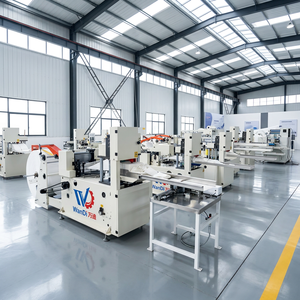
A basic toilet tissue rewinding line (rewinder + band saw cutter + manual sealer) requires approximately 60 to 100 square meters of workshop area with a minimum ceiling height of 3.5 meters for raw roll crane loading. A fully automatic line with log saw and flow-wrap packing machine requires 150 to 300 square meters. Total installed power ranges from 7.5 kW to 22 kW depending on embossing unit motors and vacuum pump blowers. All machines are custom-wired to match your local industrial grid (e.g., 380V 3-Phase 50Hz, 220V 3-Phase 60Hz, or 415V 50Hz).
Q4: Does Seasia Tissue Equipment Co., Ltd. provide on-site overseas installation and operator training?
Yes. We offer comprehensive global commissioning support. Overseas buyers can select between two technical service options:
1. On-Site Technician Dispatch: Senior mechanical and electrical engineers are dispatched to your facility to oversee foundation anchoring, mechanical assembly, electrical wiring, fine-tuning, and operator training.
2. Remote Video Guided Installation: Every machine is pre-marked with color-coded wiring harnesses and modular alignment pins. Coupled with detailed CAD manuals, schematic diagrams, and live video sessions, clients in over 30 countries have successfully commissioned lines independently.
Q5: How does custom logo printing and embossing work on napkin and facial tissue machines?
Our table napkin tissue paper machines can be equipped with 1-color or 2-color flexographic printing units utilizing non-toxic water-based inks. Embossing designs are completely custom-engineered: you can supply vector artwork of your brand logo, hotel crest, or decorative border. Our machining center engraves the hardened steel embossing cylinder using CNC precision milling. We offer steel-to-rubber, steel-to-wool, and steel-to-steel embossing combinations depending on the desired ply embossing sharpness and tissue softness.
Q6: What is the delivery lead time and container packing standard for export orders?
Standard manufacturing lead time for standard standalone machines (such as 1575/1880 rewinders or standard napkin folders) is 15 to 25 calendar days. Custom fully automatic lines or multi-layer pulp molding egg tray systems require 30 to 45 days. Equipment is packed for transoceanic freight using anti-rust moisture-proof oil coating, plastic film wrapping, and heavy-duty wooden crate packaging or reinforced steel tie-downs inside 20ft / 40ft High Cube containers.
Tissue Paper Factory Setup & ROI Planning Guide
Key operational considerations for business entrepreneurs and industrial groups establishing a profitable paper converting or egg tray recycling enterprise.
Step 1: Raw Material Sourcing
Establish reliable supply contracts with local paper mills for tissue jumbo parent rolls or local paper recycling yards for corrugated scrap paper. Secure consistent raw material pricing to calculate stable profit margins per finished tissue roll or egg tray box.
Step 2: Utility & Workshop Prep
Ensure industrial 3-phase electricity is wired to the facility floor. For pulp molding egg tray plants, confirm adequate water supply connections and slurry settling pit construction according to factory foundation civil engineering drawings provided by Seasia.
Step 3: Machinery Selection & ROI
For start-ups, a semi-automatic 1575 toilet roll machine or 1/4 fold napkin line delivers rapid ROI within 6 to 10 months due to minimal initial capital outlay. High-volume regional distributors benefit from automated log saw and packing line integration to maximize daily volume.
Ready to Start or Expand Your Paper Converting Business?
Contact our engineering team today for factory-direct wholesale pricing, complimentary plant layout CAD drawings, technical machine configurations, and formal quotations.
Inquire Now