Featured Tissue Converting Machinery
Explore our high-performance napkin, toilet roll, and facial tissue production lines engineered for maximum efficiency, operational precision, and long-term durability.
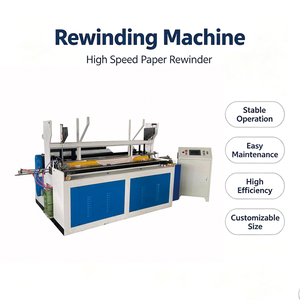
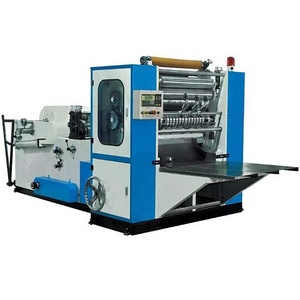
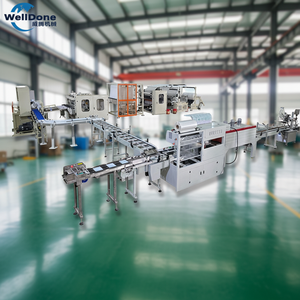
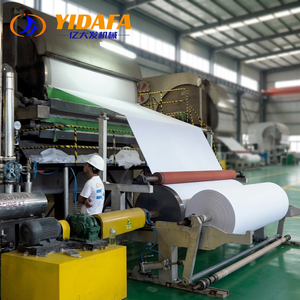
1. Executive Summary: Global Napkin & Tissue Machinery Sourcing Dynamics
The global demand for commercial paper napkins, sanitary tissue paper, and specialty food-service wipes is experiencing unprecedented structural expansion. Driven by heightened hygiene awareness, booming HoReCa (Hotel, Restaurant, and Catering) sectors, and the global regulatory phase-out of single-use non-recyclable plastics, paper napkin manufacturing has transformed into a high-margin, capital-efficient industry. For B2B buyers, sourcing complete napkin production lines from top Chinese manufacturers has shifted from a mere cost-saving tactic to a core strategic advantage.
As leading Chinese machinery builders integrate high-speed servo drives, advanced PLC automation, flexographic multi-color printing, and precision steel-to-rubber embossing, China-manufactured napkin lines now match European operational speeds while offering vastly superior total cost of ownership (TCO) and ROI metrics. Selecting the optimal China napkin production line supplier requires evaluated insight into web width flexibility, mechanical vs. electronic synchronization, vibration damping frames, and pneumatic tension controls.
2. Engineering Architecture of Modern High-Speed Napkin Production Lines
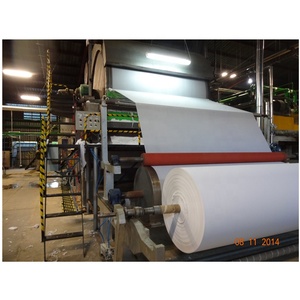
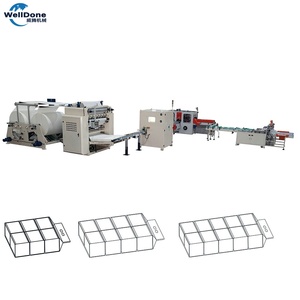
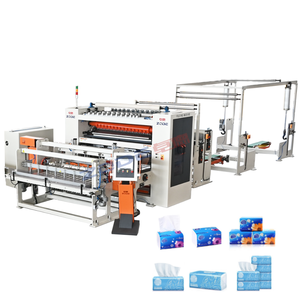
An industrial napkin converting line is an integrated electro-mechanical assembly engineered to process large jumbo parent rolls into cut, folded, printed, embossed, and counted tissue products ready for retail or institutional packaging. Understanding the technical subsystems is crucial for establishing precise machinery procurement specifications.
Unwinding & Tension Control
High-precision pneumatic unwinding stands accept parent rolls up to 1,200mm diameter. Outfitted with automatic web-alignment EPC (Edge Position Control) sensors and magnetic powder brakes, they eliminate web drift and paper breakage during rapid roll speed transitions.
Embossing Units
Features Steel-to-Rubber, Steel-to-Steel, or Point-to-Point laser-engraved rollers. High-hardness alloy rollers create localized density variations that enhance tissue bulk, absorbency, tactile softness, and visual pattern clarity under uniform pneumatic pressure.
Flexographic Printing
Integrated 1 to 4 color flexographic printing heads utilize non-toxic water-based inks and ceramic anilox rollers. Dynamic registration adjustment ensures crisp logo rendering and fast drying for restaurant branding.
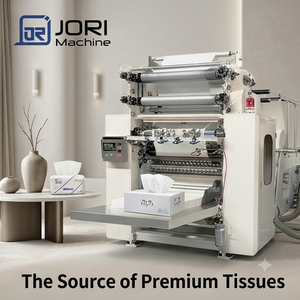
Following embossing and printing, the tissue sheet enters the folding assembly. Chinese napkin machines employ precision vacuum-assisted mechanical folding drums to achieve exact geometric configurations including 1/4 fold (square table napkins), 1/6 fold (dispenser napkins), 1/8 fold (cocktail/dinner napkins), or custom Z-fold formats. Automated electronic counters and pneumatic pushers shift completed stacks into integrated packing conveyor belts without human touch.
Technical Specifications Matrix: Napkin Production Line Configurations
| Machine Category | Standard Web Width | Fold Types | Max Speed (Sheets/Min) | Power Consumption | Best For |
|---|---|---|---|---|---|
| Compact 1/4 Fold Line | 200 mm – 300 mm | 1/4 Square Fold | 600 – 1,000 | 3.5 kW – 5.5 kW | Startup Workshops & Small Orders |
| High-Speed 2-Lane Line | 300 mm – 400 mm | 1/4, 1/6, 1/8 Fold | 1,600 – 2,400 | 7.5 kW – 11 kW | Commercial Converters & HoReCa Suppliers |
| Multi-Lane Servo Line | 600 mm – 1200 mm | Custom / V / N / Z Fold | 3,000+ | 15 kW – 22 kW | Industrial Exporters & High-Volume Brands |
3. Enterprise Advantages: Why Source from Seasia Tissue Equipment Co., Ltd.
Headquartered in Zhengzhou, Henan Province, Seasia Tissue Equipment Co., Ltd. stands as a premier manufacturer and global exporter of paper machinery. Specializing in toilet paper rewinding machines, napkin tissue folding lines, facial tissue machines, pulp molding egg tray units, and supporting slitting and packaging equipment, Seasia builds hardware engineered to withstand decades of continuous multi-shift production.
Rigorous Quality Certification & Testing
Every line manufactured by Seasia holds international ISO9001 and CE certifications. Crucially, before any equipment leaves the assembly floor, our engineers run full factory paper tests with real jumbo parent rolls under true operating speeds. Buyers receive full-HD operational video documentation proving stability, embossing crispness, and zero-defect output prior to container dispatch.
Custom Engineering & Turnkey Layouts
We recognize that no two paper converting facilities are identical. Our engineering team provides complimentary 2D/3D workshop layout drawings tailored to your floor dimensions, electrical infrastructure (customized voltages from 220V to 480V, 50Hz/60Hz), and target daily outputs. Whether matching local parent roll widths (such as 1575mm or 1880mm) or custom folding shapes, we adapt every component in-house.
4. Industry Evolution & Future Procurement Trends (2025–2030)
B2B tissue converters planning machinery investments for the coming decade must align their asset acquisition strategy with evolving consumer, environmental, and technological trends. Key developments defining next-generation napkin production lines include:
- Eco-Friendly Non-Wood Fiber Processing: Global raw material supply chains are rapidly expanding beyond traditional virgin wood pulp. Modern napkin converting lines are now engineered to process 100% agricultural waste fiber, bamboo pulp, and recycled post-consumer waste sheets without tearing or excessive dust accumulation. Our machines feature specialized dust-extraction nozzles and reinforced web tension rollers optimized for short-fiber non-wood pulps.
- Smart Motion Control & IoT Telemetry: Mechanical gear-driven linkages are being replaced by multi-axis direct-drive servo motors managed by central Siemens or Delta PLCs. Real-time sensor telemetry tracks motor torque, web tension, bearing temperatures, and knife blade wear, providing operators with dynamic diagnostics and predictive maintenance alerts that prevent costly unscheduled downtime.
- Energy-Efficient Pneumatic & Vacuum Systems: Older folding lines relied heavily on continuous high-kW vacuum blowers. Modern lines feature intelligent variable-frequency drive (VFD) vacuum pumps that scale air consumption dynamically based on real-time paper weight (GSM) and line speeds, cutting electrical power consumption by up to 25%.
- Integrated Automatic Packaging & Bundle Wrapping: To combat rising labor costs, automated napkin production is expanding downstream. Converting lines now link directly into automatic flow-wrapping, bagging, and cartoning systems, creating fully touchless production environments from jumbo roll to shipping pallet.
5. Total Cost of Ownership (TCO) & ROI ROI Evaluation Framework
When evaluating China napkin machinery suppliers, looking strictly at the upfront machinery purchase price (CAPEX) offers an incomplete financial picture. Sophisticated buyers utilize a Total Cost of Ownership (TCO) model incorporating operational expenditures (OPEX), raw material yield, energy consumption, and maintenance costs.
CAPEX Optimization
Direct factory procurement from Henan-based manufacturers eliminates middleman markups. Initial capital cost savings can be reinvested into custom embossing cylinders or automated downstream packing lines.
Yield & Waste Minimization
High-precision slitting blades and automatic edge-trimming pullers minimize paper waste during high-speed runs, saving thousands of dollars in raw parent roll costs annually.
Maintenance & Spare Parts
Standardized electrical components (Omron, Schneider, ABB) and easily accessible mechanical wear parts ensure rapid local replacement and long-term operating reliability.
6. Strategic Procurement FAQ: Answers for Overseas Buyers
Which toilet paper rewinding machine width should I choose, 1575 or 1880?
Can the napkin and tissue machines be configured for my local voltage and paper specifications?
Do you provide overseas installation, commissioning, and operator training?
Can prospective buyers visit the factory in China before placing an order?
What are the lead times and shipping container requirements for a full napkin line?
Ready to Setup or Upgrade Your Tissue Production Line?
Send your target product specifications, desired daily output, and factory dimensions to our technical engineering team. We will provide a complete project quotation, machinery recommendation, and free factory layout drawing within 24 hours.