Executive Overview: Next-Generation Facial Tissue Converting Technology
The global tissue paper manufacturing landscape is undergoing a structural paradigm shift toward ultra-high speed automation, raw material versatility, and digitized tension control. As premier original equipment manufacturers (OEM) and exporters based in China, our engineering methodologies address the strict production mandates of high-volume tissue converters across North America, Europe, Southeast Asia, and the Middle East. Modern facial tissue converting is no longer merely about mechanical folding; it encompasses fluid vacuum aerodynamics, servo-synchronized web guiding, continuous log slitting, and zero-defect downstream cartoning.
Achieving superior edge alignment, precise sheet perforation, and high-bulk embossing while operating at speeds exceeding 200 meters per minute (or 1,000 to 1,200 sheets/min per line) demands rigorous structural rigidity and dynamic balancing. This technical benchmark guide evaluates modern facial tissue folding architectures, provides actionable procurement criteria for B2B buyers, and showcases our top-tier automatic interfolding production machinery engineered for maximum operational uptime and lowest Total Cost of Ownership (TCO).
Premier Facial Tissue Folding Machines & Lines
Explore our factory-tested, CE-compliant interfold tissue converting equipment engineered for high operational yield and non-stop manufacturing stability.
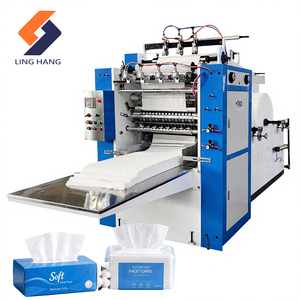
Small Fully Automatic Facial Tissue Production Line (DRC Embossing & Folding)
Integrated mini-line designed for Double Re-Crepte (DRC) and specialty tissue substrates. Features automatic embossing, precise longitudinal slitters, and high-speed interfolding.
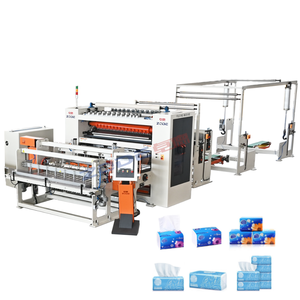
ZODE V7L High-Efficiency Tissue Paper Folding Machine Production Line
Industrial flagship V-fold tissue line featuring multi-lane suction folding cylinders, pneumatic parent roll loading, and real-time electronic counting for mass production.
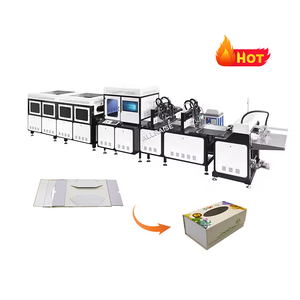
Automatic Facial Tissue Gift Box Making & Cardboard Folding Packaging Machine
Specialized downstream box former and inserter for luxury facial tissue gift packages, rigid cardboard folding boxes, and boutique commercial tissue products.
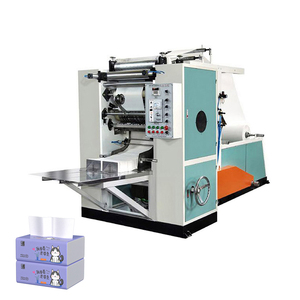
Full Automatic Interfold Facial Tissue Making Machine Production Line
Complete system integrating pneumatic parent roll stand, steel-to-rubber embossing unit, vacuum folding head, automatic log transfer, and continuous band-saw cutter.

High Quality Soft-Pack Facial Tissue Folding & Converting Machine (Small Footprint)
Engineered for ultra-soft virgin pulp and bamboo tissue paper. Prevents static buildup and surface tearing while maintaining delicate 2-ply and 3-ply embossing depth.
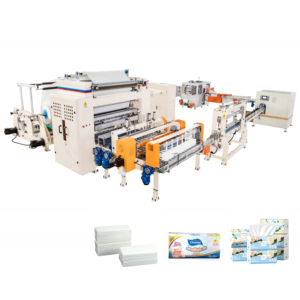
Automatic Facial Tissue V-Folding, Cutting & Box Carton Packing Line
Fully integrated line seamlessly connecting the V-fold tissue folder with an automated log saw knife and high-speed box cartoning equipment for commercial dispensing packs.
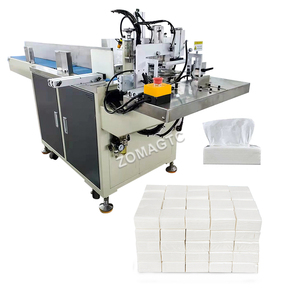
Semi-Automatic Facial Tissue Cutting, Folding & Wrapping Machine
Cost-effective solution tailored for small-to-medium converting workshops. Offers reliable manual bagging transfer paired with precision automated cutting and folding units.
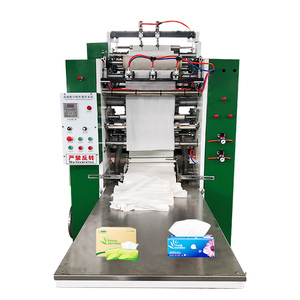
Young Bamboo V-Fold 3-Line Facial Tissue Machine with Log Saw & Wrapper
Optimized for non-wood eco-friendly bamboo fiber pulp. Features 3-lane output design, dual embossing rollers, inline slitters, and automatic bundle packing connection.
Why Industry Leaders Partner with Seasia & ZODE Equipment
Building reliable converting machinery requires combining robust structural engineering, precision mechanical machining, and intuitive electronic controls. As a certified manufacturer in Henan, China, we ensure every machine delivers consistent performance under continuous industrial workloads.
Technical Evolution & Future Trends in Facial Tissue Folding Machinery
Understanding the ongoing technological advancements in tissue paper processing helps tissue converters stay competitive as raw material costs, labor dynamics, and consumer preferences shift. Modern facial tissue machinery is evolving rapidly across several key engineering disciplines:
1. Advanced Pneumatic & Vacuum Interfolding Systems
Traditional mechanical jaw-folding mechanisms often struggle at higher production speeds due to mechanical wear and web slippage. Modern high-efficiency folding machines utilize vacuum suction cylinder folding technology. Controlled by multi-stage vacuum blowers and precision air-distribution valves, sheets are pulled alternately into V-fold or Interfold (Z/N fold) configurations with zero physical jaw impact. This reduces paper dust accumulation, minimizes sheet tearing, and extends machine operating cycles.
2. Servo Synchronization and Web Tension Dynamics
The introduction of multi-axis PLC servo-drive systems (replacing legacy chain-and-gear setups) allows independent speed control over parent roll unwinding, web alignment, embossing, slitting, and folding cylinders. Real-time optical sensors constantly measure web tension, auto-adjusting unwinding speed to prevent paper snap when using lightweight (12.5–15 GSM) recycled paper or fragile 100% virgin pulp.
3. 3D Point-to-Point Embossing & Lamination Integration
Consumer demand has shifted heavily toward ultra-soft, highly absorbent 3-ply and 4-ply facial tissues. Machine manufacturers are integrating advanced steel-to-rubber or steel-to-steel embossing rollers featuring micro-laser engraved geometric, floral, or custom branded patterns. Combined with glue lamination units (using eco-friendly water-based adhesive), converting lines produce premium plied sheets with enhanced hand-feel and bulk density without increasing basis weight.
4. Sustainable & Alternative Fiber Compatibility (Bamboo & DRC Non-woven)
Environmental regulations and sustainable forestry initiatives are driving converters to process alternative fibers such as unbleached bamboo pulp, sugarcane bagasse, and DRC (Double Re-Crepe) non-woven substrates. Our machines feature adjustable blade angles, modified vacuum timing, and anti-static bars specifically calibrated to handle the higher fiber rigidity and surface tension of alternative raw materials.
Strategic B2B Sourcing Trends for Global Tissue Converters
For enterprise purchasing directors, supply chain managers, and factory managers, procuring facial tissue folding equipment from China requires balancing immediate capital expenditure (CapEx) against long-term operational efficiency (OpEx). Key sourcing trends driving international procurement decisions include:
A. Modular Expansion & Fully Integrated Turnkey Lines
Purchasing isolated folding units is increasingly being replaced by end-to-end integrated converting suites. B2B buyers now prioritize suppliers capable of delivering a synchronized line: Parent Roll Unwinder → Embossing → Slitting → Vacuum Interfold Folder → Automatic Log Conveyor → High-Speed Log Saw Cutter → Soft Packaging / Box Cartoning Machine → Auto Case Packer. Turnkey integration eliminates equipment compatibility issues and cuts line commissioning time by over 50%.
B. Rigorous Evaluation of Total Cost of Ownership (TCO)
While initial machine purchase price is a major factor, leading tissue paper manufacturers evaluate suppliers based on overall lifecycle costs. Key TCO metrics include energy consumption per metric ton of tissue produced, blade replacement frequency, vacuum pump horsepower requirements, and spare parts availability. Premium Chinese suppliers now incorporate energy-efficient inverter motors and long-life tungsten carbide cutting knives to optimize operational overhead.
C. Remote Diagnostics & Smart Factory Integration
The integration of IoT gateways and industrial Ethernet (Profinet/EtherCAT) allows engineers to remotely inspect machine diagnostics, update PLC software programs, and assist factory technicians across continents. This capability significantly reduces downtime caused by operational errors or configuration adjustments.
Frequently Asked Technical & Procurement Questions (FAQ)
Detailed answers to the most common engineering and commercial questions asked by international buyers before placing an order.
Ready to Upgrade Your Tissue Converting Plant?
Contact our engineering specialists today to receive customized machine proposals, technical layout drawings, and competitive factory-direct quotations.