A Tissue Making Machine turns paper pulp into soft, thin sheets used for facial tissue, toilet paper, and paper towels. In a typical production line, pulp and water form a wet sheet on a moving wire. Pressing removes some water, while heated cylinders dry the sheet. A creping blade then lifts the paper from the dryer, creating the familiar softness and slight stretch. The finished web is wound into large rolls. From there, separate converting equipment may cut, fold, emboss, or package it.
The exact setup depends on the product, raw materials, and required output. Some machines use fresh fiber, while others can process suitable recycled fiber. Operators monitor details such as sheet moisture, tension, and blade condition; small changes can affect strength, texture, and run stability. It is easy to focus on production speed. Quality matters just as much. A fast line that makes uneven tissue is not a good result.
That sounds simple on paper. Real lines are less tidy. Fiber quality can vary, and settings that work for one grade may not suit another. That is why a machine’s design, controls, maintenance plan, and operator experience all matter. Understanding these basics makes it easier to compare equipment and ask practical questions before choosing a system. It also helps clarify what “tissue making” includes—and which finishing steps happen elsewhere.
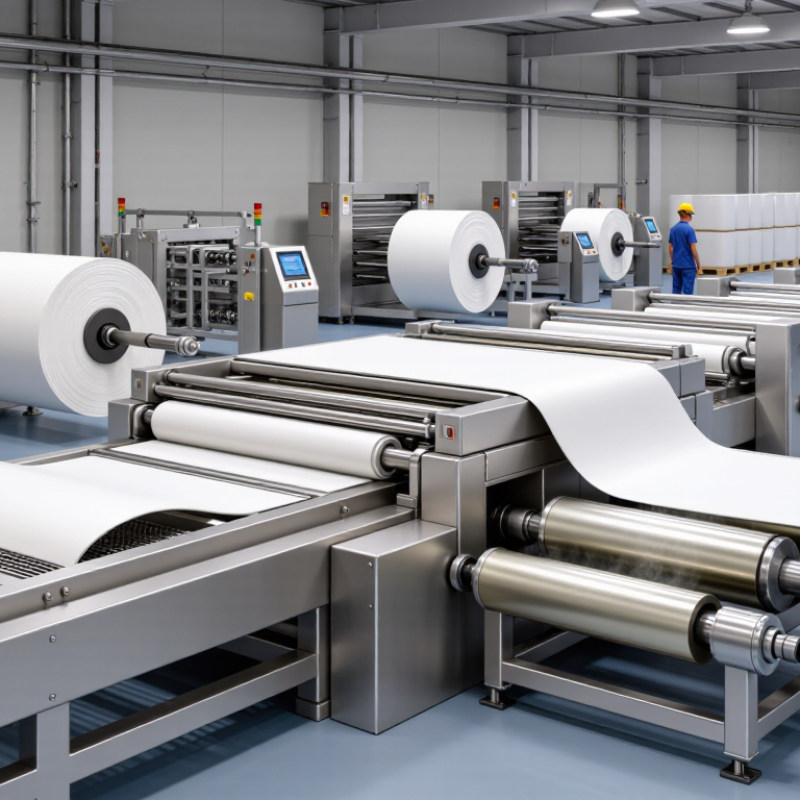
A tissue making machine forms a thin, absorbent web from prepared fibre and dries it into paper. Tissue grades are often described by basis weight, measured in grams per square metre (g/m²). The 10–40 g/m² range covers lightweight facial and toilet tissues, as well as heavier napkins and towel papers. A 10 g/m² sheet feels delicate under the fingers; a 40 g/m² sheet generally feels more substantial. Still, the neat numbers do not tell the whole story. Not by themselves.
Fibre choice, creping, and drying also affect softness, strength, and absorbency. Two papers with the same basis weight can behave differently when pulled from a dispenser or pressed against a spill. On a production line, operators check the web for even formation and monitor moisture and tension. A small variation can show up as a thin spot, a rough edge, or a sheet that tears too easily. Basis weight matters, but it is not a quality score.
Tips: Compare samples at the same basis weight and ply count. Feel for softness, then test a dry sheet and a damp one. Note the result; memory is less precise than a simple record. If a grade feels wrong, check the fibre mix and converting settings before assuming weight is the cause.
A tissue machine forms a thin, wet web, but pulp preparation determines what reaches its headbox. The stock system turns pulp into a steady, clean suspension of fibers and water. Operators adjust fiber blends, screen out debris, and control consistency before the stock flows toward the forming section. Refining can improve fiber bonding, but too much may reduce softness or slow drainage. The trade-off is real. AF&PA’s 2023 recycling report estimates that 46 million tons of paper were recycled in the United States in 2023, representing a 65–69% recovery rate. That figure covers paper broadly, not tissue furnish alone. Recovered fiber still needs careful cleaning and screening before it can support tissue production.
Water, chemistry, and timing matter just as much as fiber choice. A small consistency swing can change sheet formation; uneven flow may leave visible weak spots or holes. Pumps and approach-flow equipment must deliver a stable mix, while operators monitor pressure, temperature, and furnish quality. FAO’s Forest Products Yearbook 2022 reports about 401 million tonnes of global paper and paperboard production. That broad market scale helps explain why mills focus on reliable fiber preparation, though tissue has different performance demands. It is not always tidy. Recycled fibers vary, and a recipe that runs well on one shift may need adjustment on the next.
| Pulp Preparation Stage | Main Purpose | Typical Data or Operating Range | How It Supports the Tissue Machine |
|---|---|---|---|
| Fiber source selection | Selects and prepares the pulp furnish, which may include virgin pulp, recovered fiber, or a blend. | Furnish composition varies with the product, fiber availability, and mill design; there is no single standard blend. | Fiber type and condition influence tissue strength, softness, absorbency, and runnability. |
| Pulping and repulping | Separates pulp fibers in water and disperses suitable recovered paper into a pumpable stock. | Hydrapulper consistency is commonly in the low single-digit percentage range; actual settings depend on the furnish and equipment. | Creates a reasonably uniform fiber slurry for cleaning and screening. |
| Cleaning and screening | Removes contaminants such as grit, plastics, and oversized or unwanted material. | Cleaner and screen arrangements, operating consistency, and reject rates are mill-specific. | Helps protect downstream equipment and reduces defects caused by contaminants. |
| Refining | Applies mechanical treatment to fibers to adjust bonding and strength characteristics. | Refining intensity is controlled for the furnish and product; excessive refining can reduce drainage and affect softness. | Balances sheet strength with tissue properties such as softness and absorbency. |
| Furnish blending and additives | Combines prepared fiber streams and, where required, adds process chemicals or functional additives. | Recipes and addition rates vary by grade and process; dosing is controlled to suit the mill’s targets. | Provides the specified furnish and supports consistent formation and product performance. |
| Approach flow and dilution | Blends, screens, and delivers diluted stock consistently to the headbox. | Headbox stock is highly diluted; a typical order of magnitude is a few tenths of one percent solids, with the exact value depending on the machine. | A steady, uniform flow helps the headbox distribute fibers evenly across the machine width. |
| Tissue machine forming | Forms a wet fiber web from the headbox stock and removes water through drainage and vacuum. | Tissue basis weights commonly fall within roughly 10–40 g/m², depending on the product and number of plies. | The prepared stock becomes the tissue web, which is then pressed, dried, and converted into finished products. |
Note: Ranges are indicative industry-level values, not universal set points. Actual operating conditions depend on furnish, product grade, equipment, and mill design.
What Is a Tissue Making Machine?
How Forming, Pressing, and Yankee Drying Shape the Paper Web
A tissue machine turns a dilute fibre slurry into a thin, delicate web. At the forming section, a headbox spreads the furnish across a moving wire. Water drains through the mesh, while vacuum boxes draw out more moisture. Fibre distribution matters: uneven flow can leave weak streaks or holes. Small details matter. Operators watch the wet sheet closely because it is fragile and easy to break.
Pressing removes water before the sheet reaches the heated Yankee dryer. The press nip must extract moisture without crushing too much bulk, softness, or absorbency. That balance is imperfect; a setting that improves drying can compromise feel. On the Yankee cylinder, heat evaporates remaining water, and a doctor blade crepes the sheet into fine folds. These folds help give tissue its characteristic softness and stretch. The European industry’s 2023 Key Statistics report from CEPI records about 7 million tonnes of sanitary and household paper production. That scale makes efficient water removal important, but machine settings still depend on furnish, basis weight, and the properties required in the finished sheet.
How forming, pressing, and Yankee drying shape the paper web
As water is removed, the tissue web becomes stronger and more handleable. These representative values fall within commonly reported operating ranges; actual dryness varies with furnish, machine design, and operating conditions.
A tissue making machine turns a thin, wet sheet into a stable jumbo roll through controlled drying, creping, and winding. On the heated Yankee cylinder, the web dries while remaining attached to the surface. A doctor blade then lifts it away. Its edge creates tiny folds across the sheet, giving tissue much of its softness, stretch, and bulk.
Creping is sensitive work. Blade angle, pressure, sheet moisture, and machine speed all affect the result. Too little creping can leave tissue harsh; too much may weaken it or create uneven wrinkles. Operators watch the sheet and listen for changes in the machine’s sound. Small changes matter. The process is precise, but it is not perfectly predictable.
After creping, the web travels to the reel, where it winds into a large parent roll. Careful tension helps keep the roll firm and even without crushing the delicate sheet. If winding is too loose, layers may shift; if it is too tight, the tissue can lose bulk. The finished jumbo roll is later unwound and converted into smaller products. This stage can look simple from a distance. It isn’t. A small defect may grow across many layers, so operators check roll edges, surface firmness, and web stability throughout the run.
A tissue-making machine forms a continuous sheet from diluted pulp, then presses, dries, and winds it into a large parent roll. At 2,000 metres per minute, the web travels about 33 metres each second—roughly 120 kilometres per hour. That figure is a useful benchmark, not a promise that every machine runs at top speed. TAPPI technical papers on tissue production describe speed alongside furnish, sheet strength, and drying conditions, because a fast line is only productive when the fragile web stays intact.
Scale matters just as much. A wide machine can produce a broad, heavy parent roll in minutes, while operators monitor tension, moisture, and tiny breaks across the sheet. Even a short web tear can interrupt production and leave a visible defect. The European Commission’s 2015 pulp-and-paper Best Available Techniques reference document treats paper production as a continuous industrial process, with energy and process control central to performance. Tissue lines add a delicate constraint: the sheet must remain soft and thin while moving at highway speed. Impressive, but not effortless. Speed figures can obscure changeovers, maintenance, and quality losses; actual output will vary.
It forms a thin, absorbent web from prepared fibre and water, then dries it into paper.
It describes the paper’s mass per square metre. A 10 g/m² sheet usually feels delicate, while a 40 g/m² sheet feels more substantial. Not a quality score.
No. Fibre choice, creping, and drying also affect softness, strength, and absorbency. Two sheets with equal weight can behave differently.
It blends fibres with water and removes debris before the stock reaches the forming section. Uneven consistency can create weak spots or holes.
Refining can strengthen fibre bonding, but too much may reduce softness or slow drainage. The balance can be tricky.
A doctor blade lifts the dried web from a heated cylinder, creating tiny folds. These folds add softness, stretch, and bulk.
Too little creping may leave tissue harsh. Too much can weaken the sheet or create uneven wrinkles. Small changes matter.
It helps form a firm, even jumbo roll. Loose winding can let layers shift; excessive tension can crush the tissue’s bulk.
Compare samples with the same basis weight and ply count. Feel each sheet, then test it dry and damp. Keep a simple note; memory is imperfect.
A Tissue Making Machine transforms prepared pulp into lightweight tissue papers, typically ranging from 10 to 40 g/m². Depending on the intended grade, the finished tissue may be designed for softness, absorbency, strength, or a balance of these qualities. The process begins with pulp preparation, where fibers are mixed with water and refined into a consistent furnish that can be evenly distributed across the machine.
As the pulp mixture moves through the machine, forming equipment creates a continuous paper web. Pressing removes some of its water, and a heated Yankee dryer completes much of the drying. Creping then loosens the web from the dryer surface, helping give the tissue its characteristic softness and bulk. The sheet is wound into jumbo rolls for later converting into finished products. Modern lines can operate at speeds exceeding 2,000 meters per minute, making them capable of producing large volumes while carefully controlling sheet quality.